








Newsletter Subscribe
Join thousands of readers who get our Sunday Briefing: one email, five essential stories, zero fluff. Subscribe NOW!
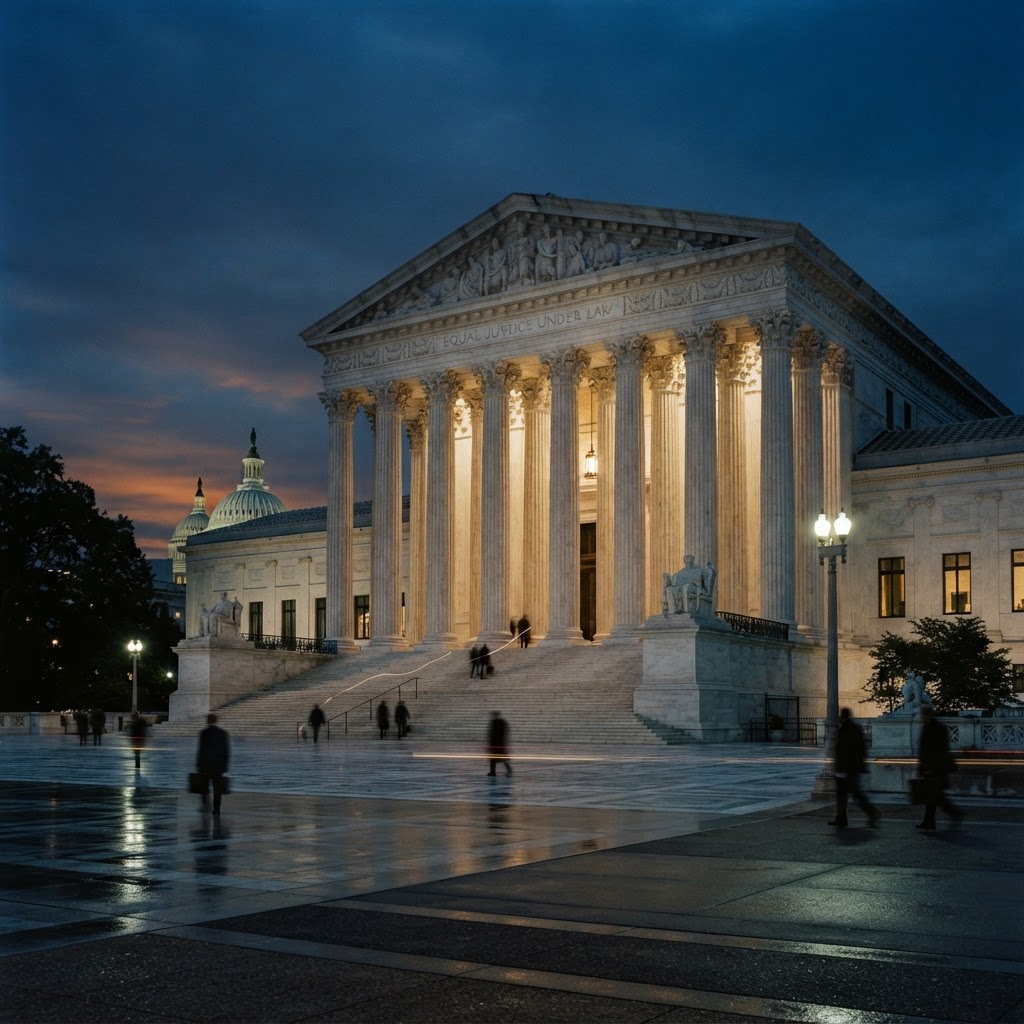
The 2026 Supreme Court term marks a fundamental shift in American governance, as recent rulings dismantle decades of administrative stability and expand executive reach.
Talking Points:
* The myth of judicial neutrality.
* Why 2026 feels like a permanent shift.
* Rejecting the status quo.
Ninety years of administrative history vanished with a single 6-3 vote. I remember sitting at my desk, coffee gone cold, watching the screen as the implications of supreme court rulings 2026 became clear. We were told the law provides guardrails. I learned long ago that guardrails are often just suggestions.
Institutional stability is a comfortable story we tell ourselves to sleep at night. That story ended this term. The current court doesn’t just interpret statutes; it rewrites the mechanics of our government. This isn’t just a pivot. It is a full-scale demolition of the administrative state.
Talking Points:
* The demise of Humphrey’s Executor.
* The constitutional crisis of at-will removal.
* Why agencies are now political battlegrounds.
Chief Justice Roberts penned the majority opinion in Trump v. Slaughter, effectively burying the ghost of Humphrey’s Executor. For nine decades, we operated under the assumption that some agencies should remain insulated from partisan winds. Slaughter changed that. It signaled that statutory for-cause removal protections for FTC commissioners were dead on arrival.
This ruling creates a direct path for executive power expansion 2026. If the President can fire an agency head because they refused a political favor, the concept of an independent agency becomes a joke. I have spent decades watching how regulatory bodies function when they fear the White House. It is never pretty.
Talking Points:
* Defining the unitary executive theory.
* Why independence is now a legal vulnerability.
* The selective application of removal authority.
When we talk about the unitary executive theory, we are talking about total control. The court’s latest obsession is proving that the Constitution never intended for agencies to act alone. By stripping away independent agency removal authority, they have turned bureaucrats into pawns.
Trump v. Cook saved the Federal Reserve, which feels like a strange, arbitrary lifeline. Why protect the Fed but gut the FTC? The logic is thin. It feels more like protecting the stock market while abandoning the rest of our regulatory infrastructure to the whims of whoever holds the Oval Office.
Talking Points:
* The shift toward partisan policy cycles.
* The death of stability in federal oversight.
* How businesses are bracing for the chaos.
I used to tell my students that federal oversight was the slow, reliable hum of the machine. Now, it is a strobe light. We are seeing constant, violent shifts in policy based on who sits in the White House. The EEOC’s decision to pull its anti-harassment guidance is a prime example of this instability.
Regulatory volatility 2026 is the new standard. One administration writes a rule, the next kills it, and we all lose time and money in the process. It is exhausting to watch, and it makes planning anything for the future a massive headache.
Talking Points:
* Increased interest rates as a weapon.
* The politicization of labor law enforcement.
* Why enforcement priorities change overnight.
Look at the NLRB. They hiked their interest rates to 7% earlier this year, a move that stings any business getting dragged into a dispute. These agencies are not just changing rules; they are wielding their remaining power with a sharper edge. It is a direct reaction to the pressure they feel from the bench.
Everything is connected. When the Supreme Court signals that agencies are fair game, those agencies start acting more aggressively to survive the next term. It is a defensive, reactionary stance that leaves the public holding the bag.
Talking Points:
* The ambiguity of recent court rulings.
* Why the court avoids clear lines.
* The danger of shadow docket lawmaking.
Content moderation remains a messy, undefined pit. The court’s First Amendment social media rulings have been frustratingly vague. They seem to enjoy the ambiguity. Silence is a powerful tool when you want to exert control without leaving a trail of precedent.
Shadow dockets mean we don’t get the full reasoning. We just get the result. When the court acts this way, they aren’t just ruling on a case; they are setting a tone. It is cowardly, and it leaves the rest of us guessing about the rules of the game.
Talking Points:
* Why ideological consistency is the new normal.
* The loss of the center in SCOTUS.
* How judicial activism wears a mask.
We need to stop pretending the court is a neutral arbiter. The 6-3 split isn’t a coincidence. It is a persistent ideological alignment that dictates the direction of national policy. I have watched this court lean harder into its preferences every year, and this term was the most obvious display yet.
They talk about constitutional precedent, but they ignore it when it gets in their way. It is judicial activism in the most literal sense. They aren’t upholding the law; they are shaping the country into their preferred image.
Talking Points:
* The nightmare of an unpredictable landscape.
* Moving away from the Chevron deference legacy.
* Why the future of US regulatory boards is broken.
Business owners are currently spinning in circles. The death of the Chevron deference legacy was just the start. Now, with the removal power gone for so many agencies, you can’t rely on long-term administrative stability anymore. You have to assume everything will change every four years.
My advice? Don’t bet on the rules staying the same. Keep your legal team close and your compliance records closer. The days of relying on an agency to tell you what is right are over. You are on your own now.
Talking Points:
* Why 2026 isn’t an outlier.
* The lasting impact on the administrative state.
* Inviting readers to share their take.
This term wasn’t just a series of random decisions. It was a calculated move toward a different way of running the country. The 2026 rulings are a blueprint for a future where the president holds all the cards. We are moving away from expertise and into the era of absolute political control.
I expect the next few years to be even more chaotic. How are you adjusting your operations to this new reality? Drop a comment and tell me if you think this is a necessary correction or a total disaster for our institutions.
Question: What does the Slaughter ruling actually mean for federal employees?
Answer: It means that leaders of certain independent agencies can be fired by the President for political reasons, removing the insulation that protected these agencies from direct partisan interference.
Question: Does this ruling apply to every single federal agency?
Answer: No, the Court specifically carved out an exception for the Federal Reserve in the Trump v. Cook decision, meaning not all independent agencies are treated the same under the new removal power rules.
Question: Why does the change in the NLRB interest rate matter so much?
Answer: The hike to 7% increases the cost of litigation and settlement delays for businesses, making it more expensive to challenge or be involved in labor disputes at the administrative level.
Question: Can the EEOC still enforce anti-harassment laws?
Answer: Yes, the agency can still enforce existing laws, but the decision to revoke internal guidance suggests a shift in how they prioritize enforcement and interpret their own mandates under new political leadership.
Question: Is the 6-3 split consistent in every Supreme Court case?
Answer: While the ideological divide is frequent on major administrative and political cases, the Court is not uniform and has occasionally ruled against the administration on specific issues like trade and tariff authority.