






Newsletter Subscribe
Join thousands of readers who get our Sunday Briefing: one email, five essential stories, zero fluff. Subscribe NOW!

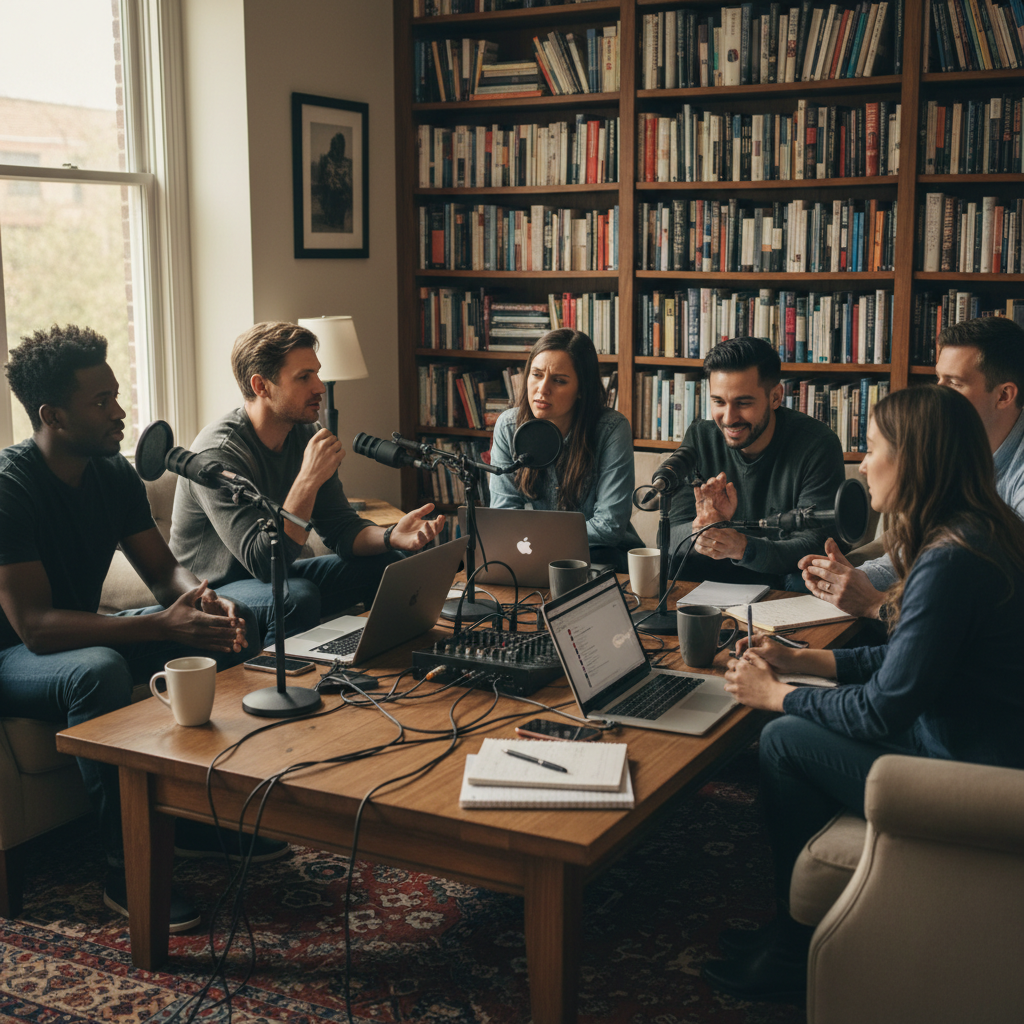
Political podcasts are on the rise, but are we just reinforcing our own beliefs? Explore the echo chamber effect, media bias, and the role of critical thinking in navigating this new landscape.
Every morning, I find myself glued to my headphones, sifting through political podcasts to gain clarity on the news rolling in. In the vast world of media, it’s unsettling how many of us are trapped in a cycle of confirmation bias. According to studies, over 60% of listeners choose political content that echoes their views, leaving little room for dissenting opinions! This phenomenon raises a crucial question: are we truly being informed or just placating our existing beliefs? Let’s unpack this.
Talking Points:
Political podcasts have exploded in popularity over the past few years. They offer those of us who dread the monotony of cable news an alternative. But with the surge in accessible content, we also face the risk of seeking out podcasts that reinforce our existing beliefs rather than challenge them. It’s a bit like binge-watching your favorite series, only it’s the news.
Recent analyses show that while many top political podcasts provide insightful commentary, they can also fall victim to the same pitfalls that plague traditional media: sensationalism and bias. The best political podcasts in 2026, like The NPR Politics Podcast and The Rest Is Politics, strive for balanced discourse, but they can’t escape the echo chamber effect many listeners cultivate.
Talking Points:
As we delve into the best political podcasts of 2026, a couple of names stand out. The NPR Politics Podcast provides daily insights into current events, making it a must-listen if you want to keep up without sensationalism. Another favorite, The Rest Is Politics, hosted by Alastair Campbell and Rory Stewart, doesn’t shy away from tough discussions, reminding us that political dialogue can be both engaging and informative.
But, are these podcasts immune to bias? Not necessarily. Their framing of issues often reflects the personal philosophies of their hosts. This brings us back to a central idea: can we trust political podcasts without a critical lens?
Talking Points:
The echo chamber is as real as it is dangerous. When we only consume content that resonates with our preconceptions, we risk losing the ability to think critically about complex issues. Political podcast listeners often report feeling more polarized, which leads to confusion in discussions. Unchecked media consumption significantly influences our civic engagement and vote choices.
The frustrating part? Many people believe they’re informed simply because they’re tuned in. The reality is that most analyses fail to point out the limitations and biases inherent in their chosen podcasts. Exploring multiple viewpoints in our podcast diets could be key to breaking that echo chamber.
Talking Points:
Let’s tackle media bias. It’s everywhere, especially in political podcasts. A 2006 study highlighted that media bias can significantly sway public opinion and even impact voter behavior. With this in mind, listeners should develop the ability to identify bias when it appears.
It’s no surprise that many podcasters have a predetermined agenda. Whether it’s leaning left or right, this bias complicates the landscape of political discourse. As consumers, we must acknowledge that our understanding is shaped by how information is presented. It’s a challenge not just for us but also for democracy itself.
Talking Points:
In today’s politically charged environment, critical thinking isn’t just a skill; it’s a necessity. When you listen to a podcast, ask yourself—what’s the agenda? Who benefits from this narrative? This level of scrutiny helps cut through the noise.
Learning to separate emotional responses from rational analysis can also be difficult, especially when it comes to contentious issues. Challenge your beliefs regularly. Look for evidence that contradicts your views; it may hurt at first, but it’s refreshing. Trust me—those moments of discomfort lead to growth.
Talking Points:
It’s vital to seek out diverse perspectives in our media consumption. If your podcast library is lacking in variety, you might want to add shows that challenge your views. Check out Pod Save America for its candid take on current events or The Daily for a more traditional journalistic perspective.
Balancing your listening habits can balance your understanding. Every time I listen to a strongly opposing viewpoint, it feels a bit like exercising a muscle: uncomfortable but necessary. You’ll find that those discussions shape your discourse and often make you a more persuasive communicator.
Talking Points:
Media literacy is no longer optional; it’s an essential skill set. Understanding how to evaluate sources helps you discern credible information amidst the sea of partisan noise. Familiarize yourself with the tools available—like fact-checking websites or analytics tools that can trace podcast origins and funding.
With rising misinformation, listeners can’t simply latch on to flashy titles or celebrity hosts. We need to bring our skepticism and analytical tools to the table. Identify the funding sources—many podcasts receive backing from specific organizations, which can influence content!
We’re in a time where political podcasts can either enlighten or enflame our opinions. Taking that information with a skeptical mind is paramount if we want to avoid falling into the echo chamber. By seeking out diverse viewpoints and practicing critical thinking, we can better appreciate the complexities of political discourse. I urge you to share your thoughts on this subject! What are your favorite political podcasts, and how do you evaluate their content? Let’s keep the conversation going!
Q1: How do I know if a political podcast is biased?
A1: Look for telltale signs like loaded language, selective sourcing, and a lack of competing viewpoints. Comparing content across multiple podcasts can provide additional context.
Q2: Can listening to opposing viewpoints really change my perspective?
A2: Absolutely! Engaging with differing opinions can challenge your assumptions, expand your understanding, and ultimately lead to a more nuanced view of complex issues.
Q3: What are some political podcasts that provide balanced views?
A3: Podcasts like The NPR Politics Podcast and The Rest Is Politics are often praised for their objective approaches to current events, making them excellent starting points.
Q4: How can critical thinking improve my podcast listening experience?
A4: Critical thinking encourages you to ask questions about the podcast’s agenda, evaluate its arguments, and identify biases, leading to a richer understanding of the material.
Q5: Is media literacy essential when listening to political podcasts?
A5: Yes, media literacy is critical! It equips listeners to differentiate between credible information and partisan noise, helping facilitate informed discussions about the issues that matter.