






Newsletter Subscribe
Join thousands of readers who get our Sunday Briefing: one email, five essential stories, zero fluff. Subscribe NOW!
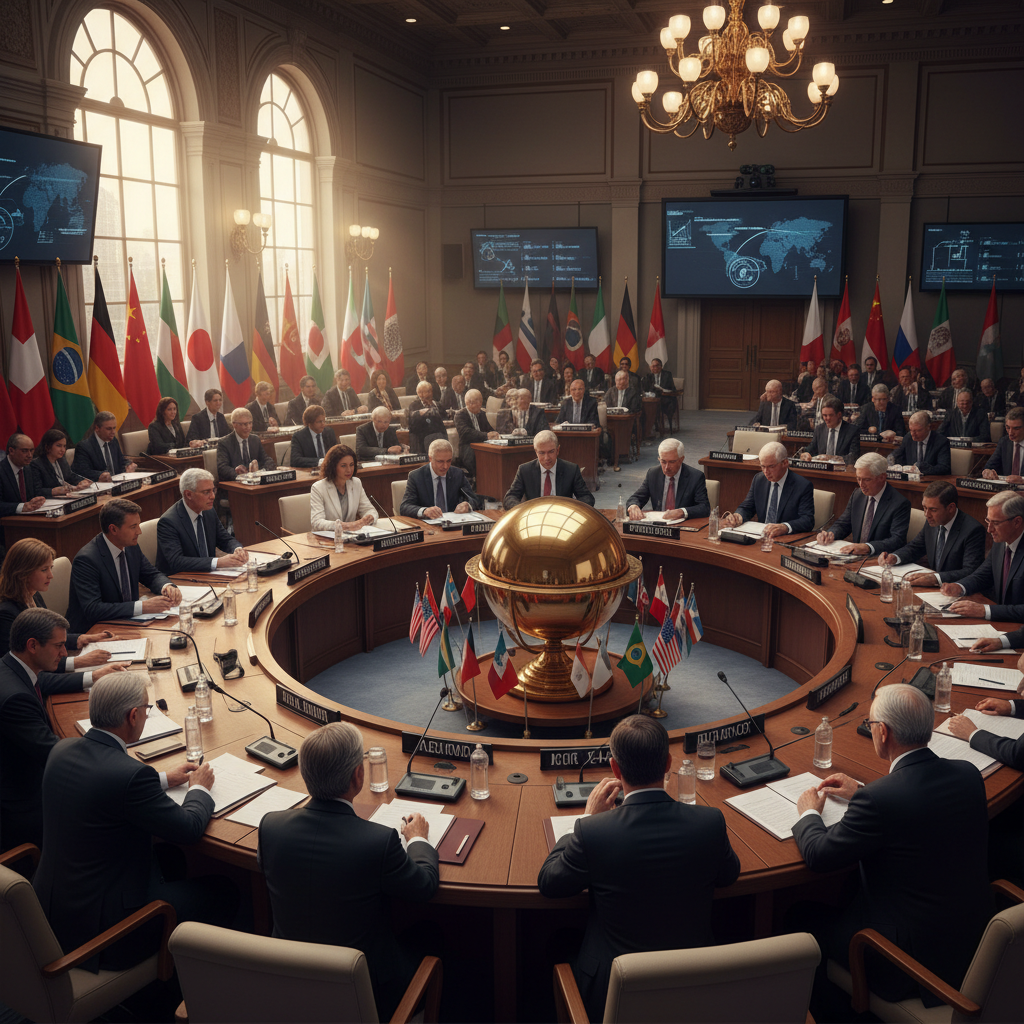
Explore the complexities of international relations in "International Relations: Unmasking the Illusions of Global Diplomacy," revealing the power dynamics and exploitation that often lurk behind the guise of cooperation.
The world often sings praises about international cooperation, with leaders touting diplomatic successes like they’re the latest blockbuster flick. But let’s be real—what’s really happening behind that curtain? In my years of grappling with the murky depths of international relations, I’ve often felt more like I was peering through a funhouse mirror than witnessing genuine cooperation. Beyond those press releases, the façade of global diplomacy often reveals a more cynical reality.
Talking Points:
You turn on the nightly news, and it’s all about peace talks and treaties, yet the underlying truth is layered and complex. Isn’t it ironic? Nations band together for big shows, only to retreat into self-serving motives once the cameras are off. Not every country enters these agreements from altruistic motives. History shows us that true cooperation is as rare as a unicorn sighting. Take the UN, for example; it often seems like a glorified echo chamber, where rhetoric flows freely but action is as elusive as smoke.
Talking Points:
Peeling back the glossy surface of diplomacy leads us to the harsh reality of power dynamics. There’s always some sort of game being played, a tug-of-war of interests where nations pursue their agendas and abandon principles that don’t serve them. Remember when nations banded together to combat global warming? Fast forward to the latest climate talks, and those ambitious promises seem more like a game of smoke and mirrors. It’s a high-stakes chess match, where pawns are often sacrificed and the kings are states blinded by their own ambitions.
Talking Points:
If you ever thought trade agreements were about fair exchanges, think again. The reality is that these agreements often serve as veils for economic imperialism. For example, that shiny new free trade deal? It often opens doors for corporations to walk in and rake it in without a second thought for local economies. Multinational corporations love these setups—they can extract resources and leave devastation in their wake. Simply put, global trade frequently enriches the wealthy while keeping the vulnerable shackled.
Talking Points:
Here’s where it gets particularly insidious. Western nations love to promote their values abroad, presenting them as “universal truths.” But let’s break this down: does anyone actually believe that American democracy is a one-size-fits-all solution? Cultural hegemony is alive and well, and the fallout can be devastating. Local customs and identities often get swallowed whole in this ideological export, leading to a homogenized world where unique voices struggle to be heard. It’s a classic case of “my way is best”—and spoiler alert: it rarely is.
Talking Points:
When we hear about military intervention, many conjure images of noble endeavors to protect human rights. But how often does it play out that way? Take a closer look, and you’ll often find that intervention is dressed up in altruism but driven by power and resource control. The narratives spun to justify conflicts might sound heroic, but often they mask agendas steeped in economic and geopolitical interests. Ask yourself: are we witnessing a savior complex or nearly covert acts of aggression?
Talking Points:
International organizations are often lauded for their roles in maintaining global peace. Yet, are they truly protecting smaller nations, or are they merely puppets manipulated by more powerful states? Many smaller countries often find themselves at the mercy of larger ones, forced into agreements that serve the interests of global superpowers. The effectiveness of these organizations is frequently called into question—is collaboration or coercion the order of the day?
Talking Points:
Here’s a kicker. Scholars and politicians alike raise the banner of human rights with one hand, while the other hand enables atrocities that go against those very ideals. It’s alarming, isn’t it? Countries often overlook human rights abuses when they serve their national interests. The sobering fact remains: human rights violations are frequently swept under the rug in the name of diplomacy, exposing hypocrisy within the very institutions that claim to uphold these rights.
Talking Points:
Then there’s the environment. Nations rush to extract resources with little regard for the ecological fallout. Many multinational corporations play a directly exploitative role, negotiating deals that prioritize profit over planet. This isn’t just about pollution—it’s about entire ecosystems being dismantled in the name of development. Local populations often find themselves paying the price, forced to contend with the consequences of decisions made well beyond their borders.
Talking Points:
Let’s face it, the specter of colonialism didn’t just vanish. Neocolonialism has emerged as its modern counterpart, perpetuating patterns of dependency and exploitation. Whether through economic policies or international pressure, many Global South countries find themselves caught in a loop, serving the whims of richer nations while struggling to maintain any semblance of sovereignty. It’s a new coat of paint on an age-old oppression.
Talking Points:
Global inequality remains one of the greatest failures of the international system. The disparities in wealth and resource distribution are shocking and paint a grim picture. Between the Global North raking in 90% of global wealth and the South scrambling for scraps, it’s hard to argue that international relations are indeed designed to benefit all. Policy decisions made in high-powered meetings often overlook the human impact—resulting in millions left behind.
Talking Points:
As globalization sweeps over nations, the idea of political sovereignty is becoming increasingly irrelevant. Many countries find their policies hijacked by external pressures to conform to international norms. It begs the question: what does sovereignty even mean when nations are often forced to play by rules determined by others? It’s a frustrating realization that the fabric of our global political landscape often favors the powerful at the expense of the disenfranchised.
Talking Points:
You can’t have a serious discussion about international relations without addressing social justice. It’s baffling how often discussions ignore this crucial element. The policies crafted high above often disregard the voices from those directly affected, perpetuating injustice. Activism is pivotal in pushing for a more equitable approach to global governance but often faces an uphill battle against entrenched interests. It’s time we elevate social justice in the realm of foreign policy, making it a non-negotiable element.
As we untangle the intricacies of international relations, one thing remains clear: the need for honesty and integrity in global diplomacy is paramount. The illusions we’ve been fed often divert attention from the pressing need for equitable solutions to global issues. The old patterns of exploitation and oppression must be challenged if we aim to create a fairer world. So, what can you do? Engage with these conversations locally, push back against narratives that deny historical injustices, and advocate for policies that consider equity and social justice as their cornerstones. Change is possible, but it requires that we hold power to account. Share your thoughts below—how have you witnessed these dynamics play out in your own life?
Many argue that international organizations often act as puppets for powerful nations, failing to genuinely protect smaller countries’ interests and perpetuating existing inequalities.
It frequently shows up through trade agreements that favor wealthier nations, allowing corporations to exploit resources in poorer countries without fair compensation or consideration for local communities.
Cultural hegemony influences how countries perceive democracy and governance, often imposing Western values on others while disregarding local contexts, leading to tensions and loss of identity.
While it’s an ideal worth striving for, true cooperation often collides with national interests, making it challenging. Addressing power imbalances is critical for any real progress.
Individuals can advocate for equitable policies, support grassroots movements, and educate themselves and others about global injustices, pushing for change both locally and internationally.