








Newsletter Subscribe
Join thousands of readers who get our Sunday Briefing: one email, five essential stories, zero fluff. Subscribe NOW!

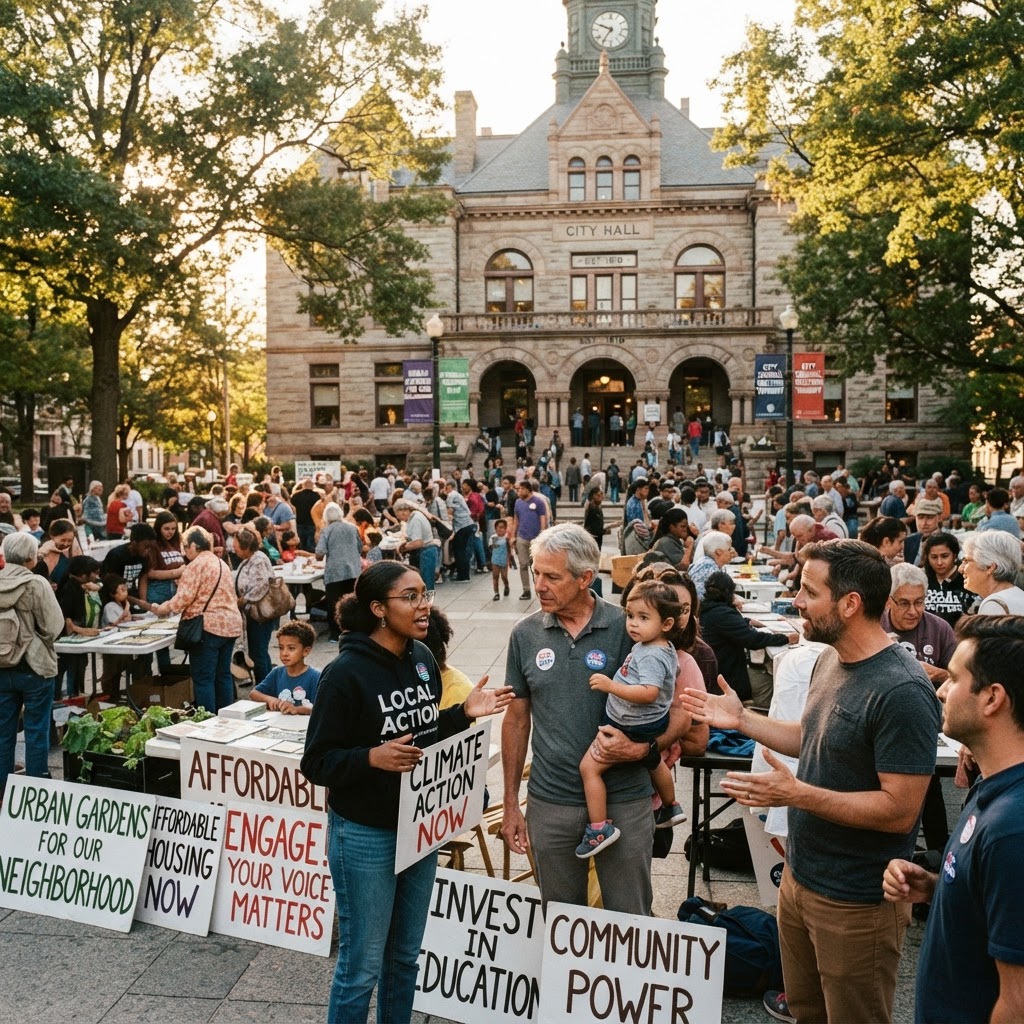
Local politics often flies under the radar, yet it's where real change can happen. This guide challenges you to engage in local governance, tackle the bureaucracy, and influence policy beyond just voting.
Oh boy! You know what gets my blood boiling? The fact that local governments—yes, the ones responsible for daily services like your trash collection and school funding—often fly under the radar. The disconnection people feel from local politics is staggering. We’ll complain about our roads, public safety, or education, but how many of us actually step up to change the narrative? If the answer’s ‘not many,’ then it’s time to roll up those sleeves!
Talking Points:
Let’s tackle the elephant in the room: feeling ineffective. We’ve all been there. It’s easy to think that our voices don’t matter in local politics, especially when surrounded by towering bureaucracies and seasoned politicians. But that’s a myth! Everyday citizens have the potential to make seismic shifts in local governance.
I once thought showing up to a town hall meeting was pointless. I felt like a small fish in a big pond. But on a whim, I decided to speak up about a local zoning issue affecting my neighborhood. The reaction? People started listening. My small story sparked a conversation that led to a community forum. Yes, it takes guts—and maybe a little cynicism—but these meetings can be the breeding ground for real change.
Talking Points:
Here’s the kicker: local politics is often where the real damage happens. Want to influence local policy? Start thinking about who runs the budget meetings and community boards. You may think that what happens at the federal level is crucial, but if your mayor decides to slash funding for schools, that affects your neighbor’s child, your property values, and your community’s future.
In my early days, I figured I could ignore municipal government participation. I was wrong. Think about the implications of zoning laws. They can transform the neighborhood’s character and accessibility for decades, yet many of us don’t bother to attend those planning meetings. The decisions made at this level have ripple effects well beyond that stuffy conference room.
Talking Points:
Have you ever scrutinized your local government’s structure? I’m talking mayor-council, council-manager, or commission forms. Each has its own quirks and power dynamics. In my case, the council-manager model seemed straightforward—until I discovered the number of committees underserved voices had to navigate to access power. Responsibilities often get buried under layers of bureaucracy—just like that tax increase you didn’t see coming.
Understanding who makes the decisions isn’t just for the politically astute. It empowers you to figure out where you can fit in. Public accountability is crucial! Find out who’s on your zoning commission or public safety board. Engage with them. Don’t let them hide behind closed doors.
Talking Points:
Let’s face it: voting is not the pinnacle of civic engagement, even if we want to pretend otherwise. It feels good to shout about which candidate is better, but by the time election day rolls around, you’ve done just a fraction of what’s necessary to influence local governance.
When I finally started attending town hall meetings, a whole new world unfolded. My vote became a stepping stone—not the finish line. Was I mad that I only participated in elections before? You bet! Each local meeting opened discussions I’d never even thought about. Show up, speak out, and make your concerns known year-round. Your voice needs more than a moment in a ballot box.
Talking Points:
Let’s be real: attending a town hall can feel like watching paint dry. The key is to go in prepared. Set a clear intention! Whatever you do, don’t walk in without knowing what’s on the agenda. I’ve made that mistake before, and all I can say is, snooze fest, anyone?
Bring a notebook; take notes that matter to you! Jot down questions and thoughts. Engage where you can. If discussions seem irrelevant, make them relevant—ask the hard questions! Plus, bring someone along. You’ll be amazed at how a buddy can help keep the energy up. There’s power in numbers.
Talking Points:
Once you’ve dipped your toes in attending meetings, it’s time to take a bigger plunge. Committees and boards are where transformative action often happens—or where dreams of change go to die. You don’t have to wait for an election cycle. Sign up to volunteer, even if it feels intimidating. I wasn’t sure they’d want to hear from a newcomer at first. Turns out, most local organizations thrive on fresh perspectives, even those individuals who seem to be the gatekeepers of power.
Take it from me: those little volunteer positions snowball into bigger opportunities to make real change. Local grassroots organizing stems from these small but crucial commitments.
Talking Points:
Networking in local politics is a different beast. It’s not obligatory cocktail parties with plastic smiles; it’s about genuine relationships with the community leaders and influencers. So get cozy with the people shaping the policies that affect you!
The first time I tried networking, I fumigated the room with awkwardness! After that, I decided to treat it like everyday socializing—because it is! Attend events, have conversations. Engage over coffee, not just at the right moment—make it continuous! People love others who care genuinely about their constituencies. Build rapport; know when to drop anecdotes or ask for advice. Those connections can break down barriers that others may set up for you.
Talking Points:
Halloween used to be my favorite holiday. Why? Because I got to pretend to be someone else. But the thought of running for office? That’s where the mask situation becomes a whole different layer of nightmare. The reality? It’s a commitment that requires genuine passion and a clear purpose.
If you’re fed up with what’s happening in your town, don’t just jump in without thinking it through. Make sure your motivations are rooted in service, not ego. This isn’t a soapbox for your grandstanding. Look at my neighbor who ran for city council last year. She had a vision, and she worked. But it took years of groundwork. Think long and hard before taking that leap.
Talking Points:
Alright, here’s the kicker: when you start to truly engage, be prepared for pushback! When I began advocating for change in my area, the entrenched powers didn’t take kindly to unsolicited advice. Pushback is inevitable—especially when you’re challenging the status quo. Don’t let that deter you. Forming alliances with like-minded individuals can be your ticket past the bureaucratic gray walls.
Listening and engaging through patience can sometimes break down barriers. Instead of approaching with guns blazing, learn when to compromise. Change may come slowly, but persistence—backed by a strong support system—is key to disrupting the occasional ‘no’ you’ll hear. Keep your heads up; you’re playing the long game.
Talking Points:
If there’s one thing I can tell you from my own experience, it’s that local activism feels like whipping a dead horse sometimes. There are days where it’s easy to lose hope. You pressure for change, and all you feel is the frustration of inertia. But you must remember: long-term persistence is everything.
Celebrate small wins! They’re easier to come by in local politics, and they build momentum. Is a committee finally discussing the issue you raised six months ago? Awesome! Shout about it. Write an article, share it on social media. These moments remind you why you started pushing in the first place. Get back in there, eyes on the prize!
At the end of the day, shouting about the system doesn’t change it. You get to decide how you engage with local politics. The harsh truth is that cynicism is easy, but it leads to inaction. If you want your community to thrive, stop complaining and take those first steps.
Seriously, give it some thought! Get involved in local grassroots organizing. Join political action committees. Show up at town hall meetings. The choice is yours, and it’s a choice that can make real, tangible differences in your everyday life. And you know what? I’d love to hear how you plan to shake things up! Share your thoughts below!
Getting involved in local politics is crucial because local governments are responsible for essential services that directly affect your daily life. By participating, you have the power to influence local policy and advocate for your community’s needs.
You can participate by attending town hall meetings, joining community boards or political action committees, volunteering for quality-of-life issues, or simply advocating for changes among your neighbors and friends.
Facing pushback is common when engaging in local politics. Prepare for resistance by building coalitions, listening to opposing viewpoints, and remaining patient while you advocate for your cause.
Stay informed by subscribing to your local newspapers, following community forums, engaging with local organizations, and attending town hall meetings where relevant issues are discussed.
The most common structures include the mayor-council system, council-manager, and commission forms of government. Understanding these structures can help you navigate local governance more effectively.