





Newsletter Subscribe
Join thousands of readers who get our Sunday Briefing: one email, five essential stories, zero fluff. Subscribe NOW!

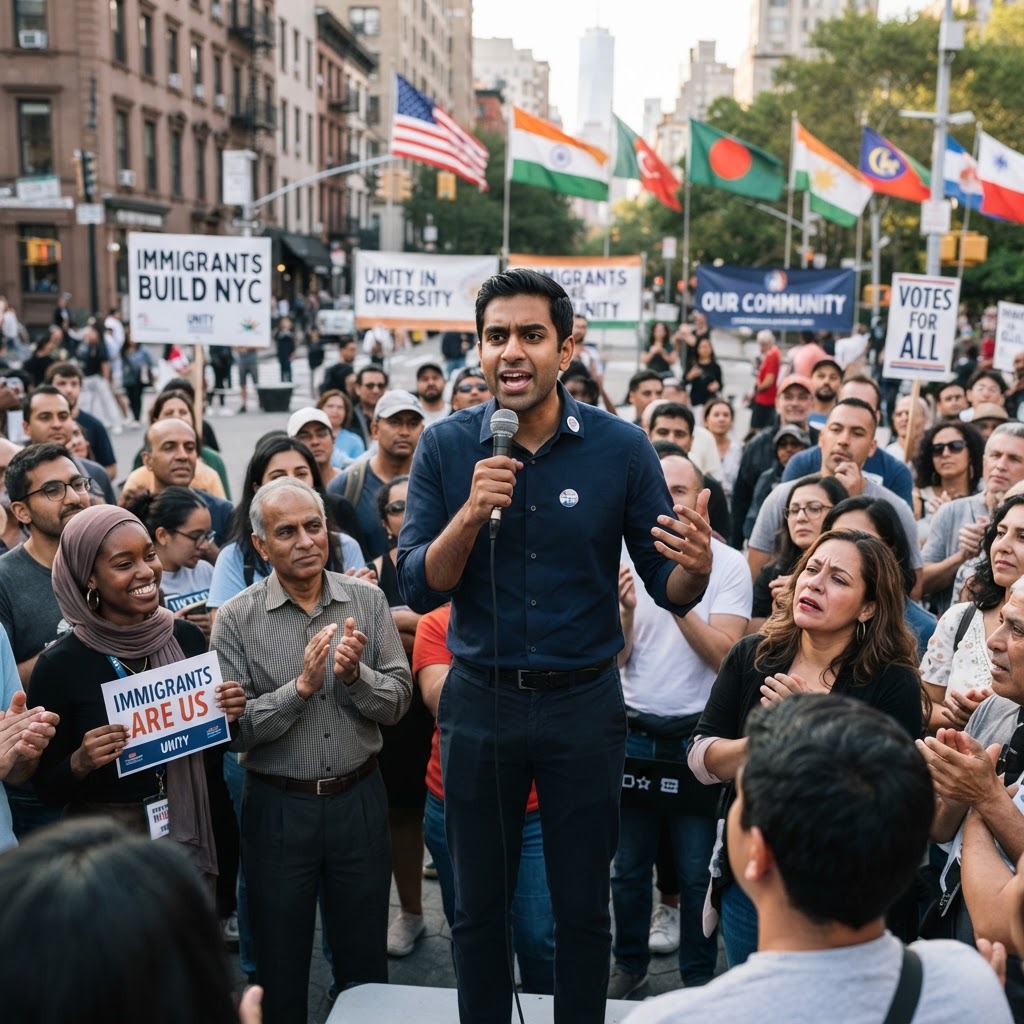
Exploring Zohran Mamdani’s stirring Independence Day speech reveals a refreshing angle on patriotism: dissent as a form of love for America. Behind the iconic George Washington desk, Mamdani challenges the exclusionary narrative and celebrates diverse American identities. It’s a call for unity against divisive politics, compelling us to rethink the foundation upon which America stands.
There’s something almost theatrical about political speeches, isn’t there? They’re staged and choreographed events, designed to pull at the heartstrings while conveying carefully crafted rhetoric. This was on vivid display during New York City Mayor Zohran Mamdani’s commemorative speech on July 3, 2026, just a day before the nation’s 250th birthday. The setting? A desk once used by George Washington. Juxtaposed against a backdrop of newly naturalized citizens, Mamdani’s words were not just about his American journey; they were about redefining what it means to be patriotic today.
Talking Points:
Patriotism has morphed into a well-crafted performance, where every word and image serves a purpose. With Mamdani literally behind the iconic desk of George Washington, he turned history into a prop. When you think of patriotic discourse, you might picture flags, fireworks, and fervent national pride. But what if the real show is about who gets to sit at that desk? Who gets to define America? It’s a potent reminder of how political theater can illuminate or obscure the narratives of millions.
Talking Points:
Now let’s talk about that desk. It’s not merely antique furniture; it represents the foundational principles of a nation. Washington’s desk speaks to governance, democracy, and the struggles of many. Yet, here was Mamdani, an immigrant from Uganda, embodying a sort of ironic twist. As he spoke, it was clear: the desk was a reminder that the narrative of American identity is not set in stone. It invites scrutiny and challenges the exclusionary nationalism that often characterizes discussions around American identity.
Talking Points:
Mamdani tackled the uncomfortable truth—the idea of ‘Two Americas.’ You know, the one that starkly contrasts affluent citizens against marginalized groups? By pointing this out, he pulled no punches. He dismantled the comforting illusion of unity often presented in speeches centered on American pride. Instead, the dichotomy he presented forces us to question: Who are we actually celebrating? This critique is crucial, especially in light of growing ideological polarization.
Talking Points:
Mamdani’s speech essentially served as a counterpoint to then-President Donald Trump’s America 250 address. While Trump painted a picture of America steeped in exclusivity, Mamdani reached out across the divide. By celebrating new citizens, he reshaped the narrative around pro-immigration political discourse. His message? Inclusion is not just a buzzword; it’s a necessity if we want a holistic national identity. This is where Mamdani’s rhetoric shines, delving deep into the ethos of what it means to truly belong to this nation.
Talking Points:
Have you ever noticed how often labor forms the backbone of populist messages? Mamdani’s speech was no exception. He evoked images of the hardworking immigrant, the sweat and toil that go into making this country thrive. It resonated, not just as a political tactic but as a heartfelt message that labor should be honored. By emphasizing this, he not only celebrated those who often go unnoticed but also challenged the traditional narratives stemming from elitism.
Talking Points:
Mamdani introduced a radical concept into the conversation: patriotism should include dissent. By framing acts of protest and refusal to conform as expressions of love for the nation, he tore down the old “love it or leave it” mantra that stifles divergent voices. It’s a daring notion! Especially considering that dissent is often the first casualty in homogenized narratives. This redefinition invites citizens to participate in a more active form of patriotism—one that is engaged and critical.
Talking Points:
Speaking of bold tactics, let’s unpack Mamdani’s use of implication. Rather than name names—say, calling out Trump directly—he let the implications swirl around the room like smoke. It’s a clever move and not one without merit. By evading direct confrontation, he allowed his broader critique to resonate with the audience, fostering unity among those who feel sidelined. It’s less about the anger of confrontation and more about building solidarity.
Talking Points:
In his address, Mamdani pointed out how division has become a cheap trick in modern politics. It’s easy to exploit fears to create factions. But he called for unity, urging listeners not to fall for these tactics. This is crucial if we are to move past the petty squabbles that bog down real progress. His critique serves as a reminder: citizens have the power to demand better from their leaders, to reject the narratives that pit us against one another.
Talking Points:
Mamdani’s speech challenged the prevalent narrative surrounding immigrants. Instead of relegating their stories to footnotes in history, he demanded their rightful place in the narrative of American history. This isn’t simply historical revisionism; it’s a necessary reclamation. By acknowledging that immigrant experiences are integral to the American story, he reframes heritage as not static but fluid—one that evolves over time.
Talking Points:
As much as the speech resonated, it’s essential to recognize when rhetoric outpaces policy. Mamdani’s impassioned words highlight significant issues, yet the real litmus test is whether action follows. Political theater can be powerful but carries the risk of becoming mere theatrics without substance. It’s crucial for audiences to stay engaged and demand accountability from their leaders, ensuring that groundbreaking speeches translate into tangible changes.
Mamdani’s Independence Day address was a master class in political rhetoric. Through powerful symbolism and nuanced critique, he crafted a narrative that questioned the very fabric of American identity while redefining patriotism as a form of dissent. His speech calls us all to think critically—who we are, what we celebrate, and how we can challenge exclusionary narratives. So, what’s your stance on patriotism? Let us know in the comments below—your voice matters!
Mamdani’s main message revolved around redefining patriotism. He argued that true patriotism includes dissent and that immigrants are integral to America’s narrative.
Using George Washington’s desk as a backdrop, Mamdani highlighted the significance of American ideals and the need to challenge exclusionary narratives.
No, Mamdani did not directly mention Donald Trump. However, his speech served as a contrast to Trump’s America 250 address.
In a time of increasing ideological polarization, Mamdani’s pro-immigration rhetoric champions the notion of inclusion, vital for a cohesive national identity.
Rhetoric needs to be backed by actionable policy changes. Citizens should hold leaders accountable to ensure that meaningful changes occur in immigration and national identity policies.