



Newsletter Subscribe
Join thousands of readers who get our Sunday Briefing: one email, five essential stories, zero fluff. Subscribe NOW!

AI in political misinformation is eroding our shared reality. Here is how deepfakes and algorithmic bias are weaponizing our democracy.
Talking Points: The erosion of shared reality, algorithms replacing organic debate, the shift from debate to cognitive warfare.
We used to argue about facts. Now, we argue about whether facts exist. I remember when a news report meant something. You read it. You grumbled. You moved on. Today, the ground beneath our feet feels like shifting sand. AI in political misinformation has turned our shared reality into a fractured mess. It is not just bias anymore. It is total epistemic chaos.
Algorithms love a good fight. They do not care about truth or democracy. They care about clicks. They feed us what makes us angry. Then, they feed us more of it. My screen looks nothing like yours. That is by design. We are living in silos built by code.
Talking Points: Deepfakes in elections, the death of seeing is believing, trust in institutions collapsing.
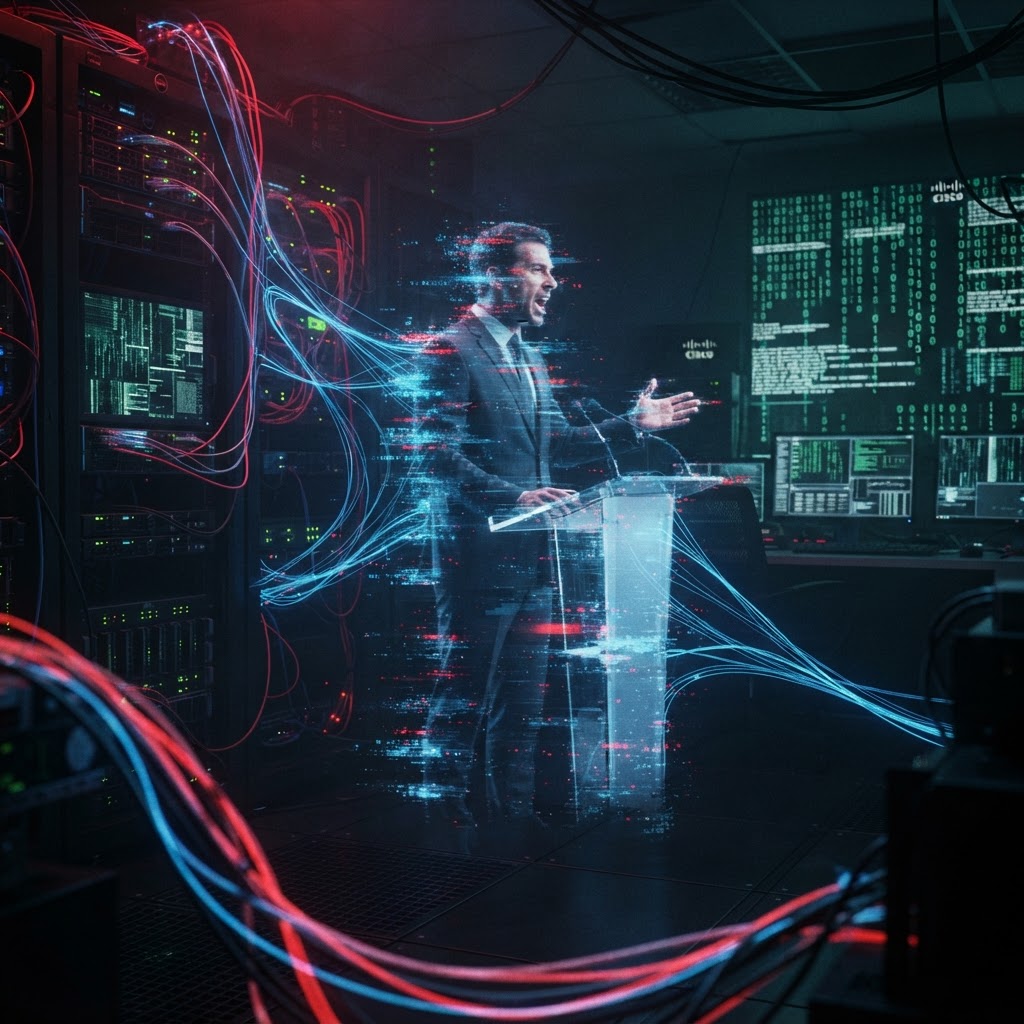
I saw a video of a candidate once. He looked stiff. His eyes did not blink quite right. It was a fake. But thousands shared it before anyone checked. Deepfakes in elections are not a future problem. They are here. The European Parliamentary Research Service expects 8 million deepfakes by next year. That is a massive jump from 500,000 just a short time ago.
People believe what they see. When you show someone a video, their brain reacts differently than it does to text. It feels real. It taps into our gut instincts. If you manipulate those instincts, you win. We are seeing trust in our political institutions wither away. Nearly half of people worried about misinformation say it hurts their faith in the system.
Talking Points: The human cost of propaganda, AI-generated political propaganda volume, cost-effectiveness for bad actors.
Propaganda used to be expensive. You needed printing presses. You needed teams of people. Now? You just need a prompt. AI-generated political propaganda scales in ways humans never could. A few lines of code can create thousands of fake articles. Between late 2023 and the end of that year, sites hosting false articles shot up by over 1,000 percent. That is not organic growth. That is weaponized efficiency.
I think back to the days of manual pamphlets. They were slow. They were flawed. But they were human. Now, the human cost of creating lies is plummeting. You can flood a market with synthetic media before anyone catches on. It is like trying to stop a flood with a teaspoon.
Talking Points: Prioritizing outrage, information density and persuasion, platform regulation failures.
Platforms want your attention. Outrage keeps you glued to the screen. AI-driven messaging knows this. It plays the game better than any human strategist. Research shows information density explains 44 percent of the persuasive impact of these messages. It is data-dense. It sounds authoritative. It works.
I get frustrated watching the regulation debates. Governments are performing theatre. They talk about rules while the platforms keep the machines running. We need to stop pretending the platforms will fix this themselves. They make money off the mess.
Talking Points: Computational propaganda impacts, voter manipulation, the Irish presidential election incident.
Democracy is brittle. It relies on voters who have a clue. In the 2025 Irish presidential election, a deepfake video nearly derailed the process. It showed a winner quitting. It used fake footage of national broadcasters. People were fooled. If you can make voters doubt their own eyes, you can steal an election.
AI disinformation campaigns are not just noise. They are precise tools. They target who is most likely to swing. They deliver exactly what will make them stay home or vote for the wrong guy. It is scary. It is calculated.
Talking Points: Exploiting psychological biases, post-truth politics, digital literacy gaps.
Why do we fall for it? Because our brains are lazy. We look for patterns. We look for confirmation. AI exploits these cognitive traps. It is basically cognitive warfare. You don’t have to change a mind. You just have to confuse it until it gives up.
I try to stay sharp. I check my sources. Even then, I get tripped up. Imagine how it feels for someone who does not spend their life studying this. We need real digital literacy. Not just “don’t click on links.” We need to understand how the machine is playing us.
Talking Points: Post-truth landscape, AI inaccuracies, the pace of misinformation.
Fact-checking is a losing battle. By the time a claim is debunked, it has already been shared a million times. Studies show over 60 percent of responses from AI-powered search engines contain errors. Why trust a machine that hallucinates facts? We are in a post-truth landscape. The truth is becoming a minority opinion.
I find the reliance on AI for answers alarming. It sounds smart. It sounds confident. But it is often just guessing. We are outsourcing our thinking to engines that don’t know what truth is.
Talking Points: The EU AI Act, labeling requirements, fines as a deterrent.
Finally, some rules are coming. The EU AI Act is a start. Article 50 forces companies to label deepfakes. If they don’t, they pay 6 percent of global revenue. That is a lot of cash. Maybe that will scare them into honesty. Or maybe they will just build better fakes.
I hope the labels work. But I doubt it. A label won’t stop the person who wants to believe the lie. We need to look at the source of the misinformation. We need to punish the people who build these campaigns.
Talking Points: Recognizing synthetic patterns, platform responsibility, individual vigilance.
How do we spot the fake? Look for the patterns. Does the story sound too perfect? Does it hit every emotional trigger? If it feels like a movie, it might be. Detecting AI election interference is a team sport. We need independent watchdogs. We need transparency.
Don’t be a passive consumer. Question the headline. Check the site. If the site is three days old and only posts rage-bait, stay away. My best advice? Be a cynic. Your brain will thank you later.
Talking Points: Building institutional resilience, individual agency, concluding call to action.
We aren’t dead yet. Democracy can survive if we wake up. We have to stop relying on the platforms to protect us. We have to protect ourselves. It takes effort. It takes time. It is worth it.
What have you seen lately? Have you spotted a fake? Tell me in the comments. We need to build a map of this mess together. Stay sharp. Don’t let the machines do your thinking for you.
1. Question: Is all AI-generated political content malicious? Answer: No, it is not. Some campaigns use AI to reach more voters or translate content into different languages, which can increase accessibility if done transparently.
2. Question: Can we rely on fact-checking websites to stop deepfakes? Answer: Fact-checking is important but slow. AI spreads misinformation faster than humans can verify it, so it cannot be the only solution to this problem.
3. Question: What is the most effective way to spot a deepfake video? Answer: Look for unnatural blinking, odd skin textures, or glitches around the mouth. Often, if a video feels too emotionally charged to be real, you should treat it with extreme skepticism.
4. Question: Why do social media platforms struggle to block AI misinformation? Answer: Their business models prioritize engagement, and misinformation often generates high engagement. Furthermore, detecting synthetic content at the massive scale of daily uploads is a huge technical challenge.
5. Question: Does the EU AI Act apply to everyone? Answer: The EU AI Act applies to entities operating within or affecting the EU market, mandating labels for deepfakes. It serves as a regulatory signal that governments are finally beginning to take the threat of synthetic content seriously.