








Newsletter Subscribe
Join thousands of readers who get our Sunday Briefing: one email, five essential stories, zero fluff. Subscribe NOW!

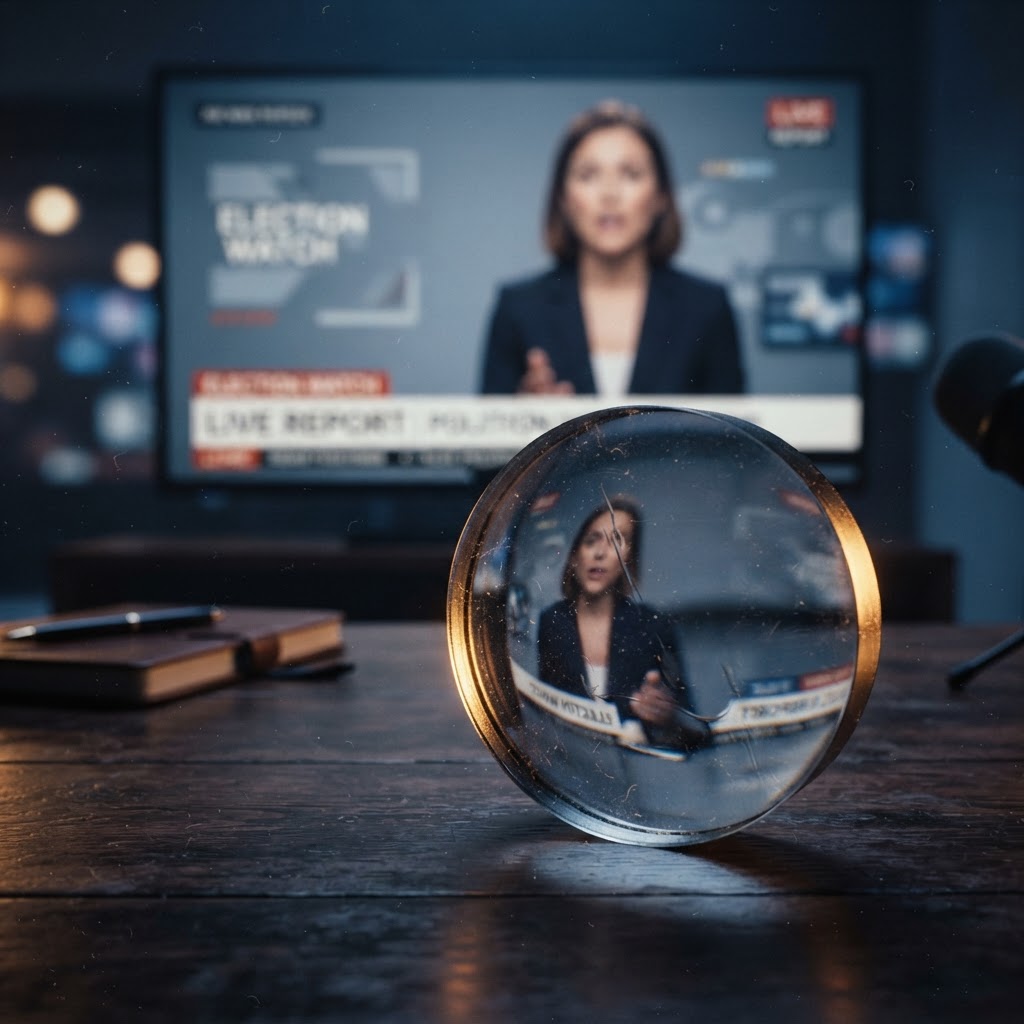
Political reporting has morphed into a profit-driven spectacle. From the 'both-sides' trap to the cozy relationship between press and power, here is why your news is broken and how you can reclaim your media literacy.
Talking Points:
* The historical creation of media objectivity in the 1920s.
* Personal experiences with shifting journalistic standards.
* Why the myth of the neutral observer damages public discourse.
I remember reading the paper with my grandfather every Sunday morning. He treated every headline like a holy commandment etched in stone. Back then, we assumed the journalist was a neutral referee just calling balls and strikes. It turns out, that whole idea of objectivity was cooked up in the 1920s as a way to sell more papers to everyone at once. It was a business strategy disguised as a moral code. Now, I look at the news and just feel tired.
The industry convinced us that if you put two people with different shirts on a screen, you found the truth somewhere in the middle. That is a lie. Real people don’t talk like that. Real problems rarely have a clean middle ground. We bought into a professional aesthetic that prioritized the appearance of balance over the reality of facts. Ethics in political reporting became a prop for PR teams rather than a guiding principle for the newsroom.
Talking Points:
* The propaganda model and media profitability.
* Why outrage-based programming generates more revenue than boring facts.
* The decline of the watchdog role.
Let’s be real about the money. Corporations own these outlets and they have one job: make profit. Edward Herman and Noam Chomsky pointed out decades ago that media bias isn’t just some accident. It is a feature of a system that needs to keep you watching. When the bills are paid by ads, the content must be addictive. Boring news doesn’t sell toothpaste.
Outrage is the most addictive drug on the planet. I’ve seen producers skip a boring piece on city budgets to run an emotional, loud segment on a scandal that doesn’t affect anyone’s life. It is theatrical. It is gross. It is standard operating procedure. When journalistic integrity in politics takes a backseat to quarterly earnings reports, the public loses a vital sentry.
Talking Points:
* How false balance creates distorted public discourse.
* Examples of where neutrality fails the reader.
* Why some things aren’t two-sided.
I once watched a panel discussion where one person argued for a policy based on math and the other argued based on feelings. The host treated them as equal authorities. That is the both-sides trap. It gives legitimacy to lies just to keep the segment feeling balanced. If one person says the sky is blue and another says it is green, you don’t report that the truth is somewhere in between. You report the facts.
Media bias and political news have become a circus where the clown gets as much airtime as the scientist. This makes news consumption confusing for everyone. It turns political punditry vs reporting into a blur. You shouldn’t have to hire a detective just to know if a report is fact or opinion. But here we are.
Talking Points:
* The danger of trading critical coverage for interviews.
* The Guard Dog Theory in practice.
* Why reporters fear losing their connections.
I’ve seen reporters trade their spine for a phone call from a politician. If you ask a tough question, the candidate stops taking your calls. Then your editor gets mad because your rival got the scoop. So, you start playing nice. This is how the media becomes a guard dog for the powerful instead of a watchdog for the people.
It’s a nasty game of favors. When journalists depend on access, they stop questioning authority. They start running PR campaigns for people they are supposed to be investigating. Ethics in political reporting disappears when you are afraid to lose your dinner invitation. Public discourse suffers when the people with the mics are too close to the people with the power.
Talking Points:
* Confirmation bias and our personal role in media selection.
* How echo chambers make us angrier.
* The role of algorithms in narrowing our view.
We love being right. Confirmation bias is a hell of a drug. I catch myself doing it all the time, looking for news that makes my own opinions feel justified. If a headline matches what I already believe, I click it. If it doesn’t, I scroll past. It’s lazy. It’s dangerous.
Algorithms love this behavior. They feed us more of the same, trapping us in digital echo chambers. When we stop hearing anything that challenges us, we stop thinking. We just start reacting. This polarization is exactly what the platforms want. It keeps us logged in and fighting with strangers until 2 AM.
Talking Points:
* Why corrections don’t fix the damage of bad reporting.
* The rise of ethics washing as a PR shield.
* Why accountability is dying.
I’ve seen outlets run a sensational story that turns out to be wrong, then bury the correction on page 40. The damage is done by then. People already shared the headline. They already formed an opinion. The lie travels around the world while the truth is still lacing up its shoes. Accountability has become a joke.
Then there is ethics washing. Companies post a mission statement about truth and transparency on their website. It’s just branding. It’s meant to make you feel good while they keep doing the same old thing. We need to stop trusting slogans and start demanding real consequences for sloppy work. Real accountability starts when readers stop buying the BS.
Talking Points:
* The impact of media consolidation on local voices.
* How corporate owners dictate the narrative.
* The loss of local news as a community anchor.
A few huge companies own almost everything you see on cable. They don’t want local reporters telling the truth about city hall if it bothers their advertisers or corporate partners. They want a uniform message. It kills local perspective. It kills the unique heartbeat of community journalism.
When editorial independence is gone, the news is just a corporate product. It tastes the same everywhere. It’s processed, bland, and sanitized. We need smaller, independent voices that aren’t answering to a massive parent company. We need newsrooms that are beholden to their neighborhoods, not their shareholders.
Talking Points:
* Why we focus on drama over boring policy details.
* The impact of sensationalism on voter engagement.
* How to find the real substance.
Policy is boring. I get it. It’s math, law, and long meetings. Drama is easy. It’s yelling, insults, and soundbites. Sensationalism in journalism wins every time because we click the drama. We choose the spectacle over the policy every single day. We are part of the problem.
If we want better reporting, we have to start demanding better information. Stop clicking the clickbait. Seek out the long-form analysis that explains the “how” instead of the “who said what to whom.” The spectacle is a distraction. The policy is where your life actually happens.
Talking Points:
* Building media literacy habits.
* Strategies for evaluating sources independently.
* Why we need to be skeptical of everything.
It’s time to grow up. Stop waiting for the media to tell you the truth. You have to do the work yourself. Check the primary source. Look at who paid for the study. Ask yourself why this story is being pushed right now. Intellectual rigor isn’t just for academics; it’s for anyone who wants to survive the modern info-wars.
I try to follow a rule: if a story makes me feel really angry, I stop reading. I wait an hour. I find two other sources that might have a different take. It’s a pain in the neck. But it works. It keeps me from being a pawn in their game.
Talking Points:
* Summary of why we must demand better.
* The power of the consumer to change the system.
* Final call to action for the reader.
The fourth estate is in bad shape. It’s bloated, polarized, and addicted to drama. But it is not dead yet. We have the power to starve the clickbait and support the real work. We can be smarter. We can be harder to manipulate. The system will only change when we stop playing by its rules.
What about you? Where do you find news that doesn’t make your head explode? Share your favorite independent sources or tips for spotting spin in the comments below. Let’s talk about how we can start expecting more from the people who tell us what’s happening in our world.