







Newsletter Subscribe
Join thousands of readers who get our Sunday Briefing: one email, five essential stories, zero fluff. Subscribe NOW!

Modern political discourse has devolved into a performative spectacle designed for clicks rather than progress. Learn why the system is failing and how to reclaim your intellectual autonomy.
Talking Points:
* The performative nature of modern debate
* Why public discourse feels like a script
* The illusion of meaningful exchange
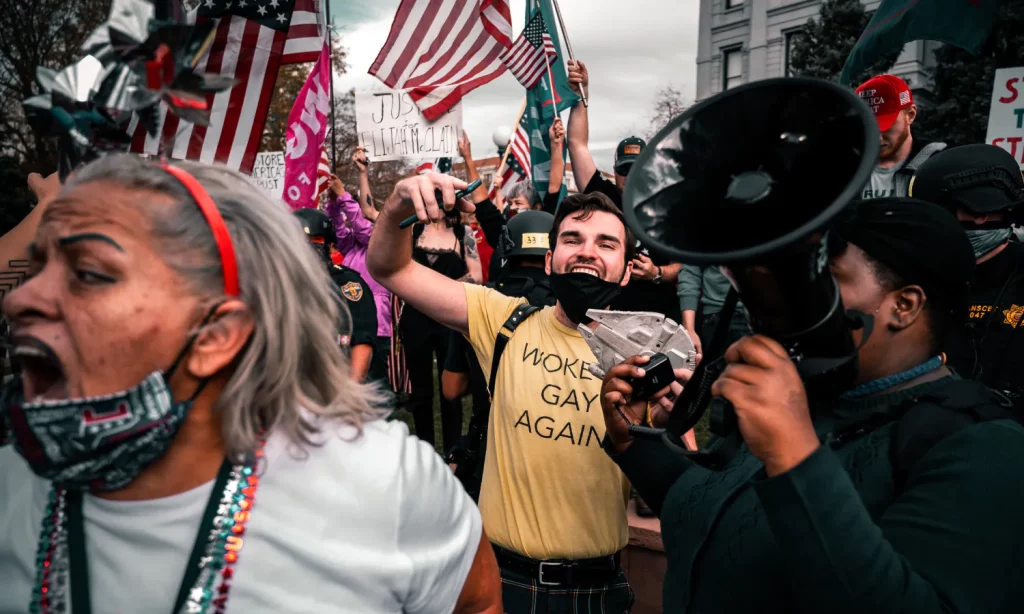
I sat through a televised debate last week, feeling my blood pressure rise. It wasn’t about policy. It was about who could yell over the other person the loudest. The moderators looked tired, and the audience seemed ready to riot. We have turned our political life into a bad reality show. It is a spectacle, nothing more.
Political discourse analysis reveals that this isn’t an accident. We are watching a curated performance. When I first started following politics years ago, I thought it was about finding common ground. I was wrong. It is about holding your ground while attacking the person standing next to you. The screen flickering in front of you is a weapon.
Talking Points:
* How platforms profit from anger
* The role of algorithmic amplification
* Manufacturing consent through rage
Social media is the engine of this collapse. You see a headline that makes your jaw drop. You click. You get angry. You share. That is exactly what the platforms want. It is called algorithmic amplification, and it works like a charm. My screen is constantly fed content designed to keep me agitated.
This isn’t about informed citizens. It is about clicks, views, and ad revenue. They have built a system where reasonable conversation dies because it isn’t profitable. You are being pushed toward extreme positions simply because they are loud. Your attention is the commodity being sold to the highest bidder.
Talking Points:
* The shift from policy to personality
* Why politicians act like influencers
* The strategic use of identity-based communication
Politicians are now influencers in cheap suits. They don’t care about legislation as much as they care about the clip that goes viral. I watched a senator post a video that was clearly staged for social media clout. It had nothing to do with solving problems for their constituents. It was pure theater.
J.L. Austin knew about this years ago. Language has physical effects. When they use inflammatory language, they create real-world division. They are building a brand, not a legacy. It works because it taps into our tribal need for a hero or a villain. We are just the extras in their show.
Talking Points:
* How we isolate ourselves by choice
* Confirmation bias as a mental shield
* The danger of epistemic closure
I have friends who only watch one news source. They tell me they are being informed, but they are just being reinforced. We all love to be right. It feels good when someone on TV agrees with your internal monologue. That is confirmation bias in action, and it feels like a warm blanket.
But that blanket is suffocating. When you stop listening to anything that challenges your worldview, you fall into epistemic closure. You are trapped in a bubble. Nobody gets out of that bubble without a fight. It makes it nearly impossible to have a real debate because we are no longer speaking the same language.
Talking Points:
* Deconstructing political rhetoric
* Strategic use of buzzwords
* How language limits our thinking
Words are tools, and politicians use them like hammers. They frame every issue as a battle for survival. You hear the same talking points repeated until they lose all meaning. It is rhetorical manipulation, plain and simple. They want to shut down your brain before you can start asking questions.
I remember when a word meant something specific. Now, everything is a crisis or a conspiracy. They keep us off-balance. If you are constantly reacting to the latest manufactured outrage, you don’t have time to look at the actual data. That is the point. They want you exhausted and reactive.
Talking Points:
* Why people stopped believing the experts
* The feedback loop of media polarization
* Is the system actually broken?
I used to trust the evening news. Now, I double-check everything. Is that me being cynical, or is it just being smart? The media polarization effects are real. Every channel has a color, a slant, and an agenda. It is hard to find the truth when everyone is selling a perspective.
Institutional distrust has reached an all-time high. People think the game is rigged because they see the strings. Maybe they are right. If the institutions act like partisan players, they lose the right to demand our faith. It is a downward spiral that benefits nobody but the people shouting from the sidelines.
Talking Points:
* Why we stopped listening to understand
* The problem with partisan bias in news
* Why debating feels like a trap
Try having a conversation with someone who disagrees with you. It usually takes about thirty seconds for it to go sideways. We don’t listen to understand anymore. We listen for the flaw in the argument so we can pounce. It is a trap, and we all fall into it.
Partisan bias in news ensures that we start from two different versions of reality. If we can’t agree on the facts, we can’t debate the solutions. The good faith argument is dead because it doesn’t serve the bottom line. Conflict creates engagement, and engagement creates money.
Talking Points:
* How to question what you read
* Training your brain against bias
* Why being skeptical is a skill
I started questioning my own reactions. Why did that headline make me mad? Who gains if I believe this? Critical media literacy is the only defense we have. It isn’t easy. You have to fight your own brain’s desire to be right. It takes effort.
Read the sources. Check the date. Find someone who hates the article and see what they have to say. It is annoying, but it is necessary. You are reclaiming your mind from the algorithms. Don’t be a passive consumer of political sludge.
Talking Points:
* Societal fragmentation and its consequences
* The erosion of public debate
* Why we are all losing
Look around. Families are split. Communities are torn. We are so busy fighting over the theater that the real stage is falling apart. The erosion of public debate means we don’t fix real problems. We just trade insults. It is a waste of time and energy.
Societal fragmentation is the price we pay for the current political circus. We are so busy labeling each other that we forget we all have to live here. It is exhausting. I am tired of the shouting. We need to find a way to step back from the ledge.
Talking Points:
* How to stop being a pawn
* Turning off the noise
* Taking back your agency
Stop letting the TV tell you how to feel. Turn off the notifications. Go read a book that challenges you. It is your life. Don’t let them program your brain to hate your neighbor for a few ratings points. You have more power than they want you to know.
Start thinking for yourself. It is lonely sometimes, but it is worth it. Question everything, especially the stuff that feels good. I hope you decide to take back your mind from the machines. Let me know what you think in the comments below.
1. What is political discourse analysis? It is a method for studying how language functions in political contexts, focusing on how power and ideology are shaped through communication.
2. Why is performative politics so effective today? It relies on emotional connections and identity, which bypasses the slow process of logical reasoning, making it easier to mobilize mass support quickly.
3. Are all media outlets equally biased? While all media has some level of bias, the intensity and intent vary, but the profit model of modern media heavily rewards polarized content.
4. How does confirmation bias impact my political views? It makes you seek out information that validates your current beliefs while ignoring or dismissing facts that contradict your existing perspective.
5. What is the best way to develop media literacy? Start by checking multiple sources for a single story, looking for the original data behind a claim, and pausing to evaluate your emotional reaction before sharing.