







Newsletter Subscribe
Join thousands of readers who get our Sunday Briefing: one email, five essential stories, zero fluff. Subscribe NOW!

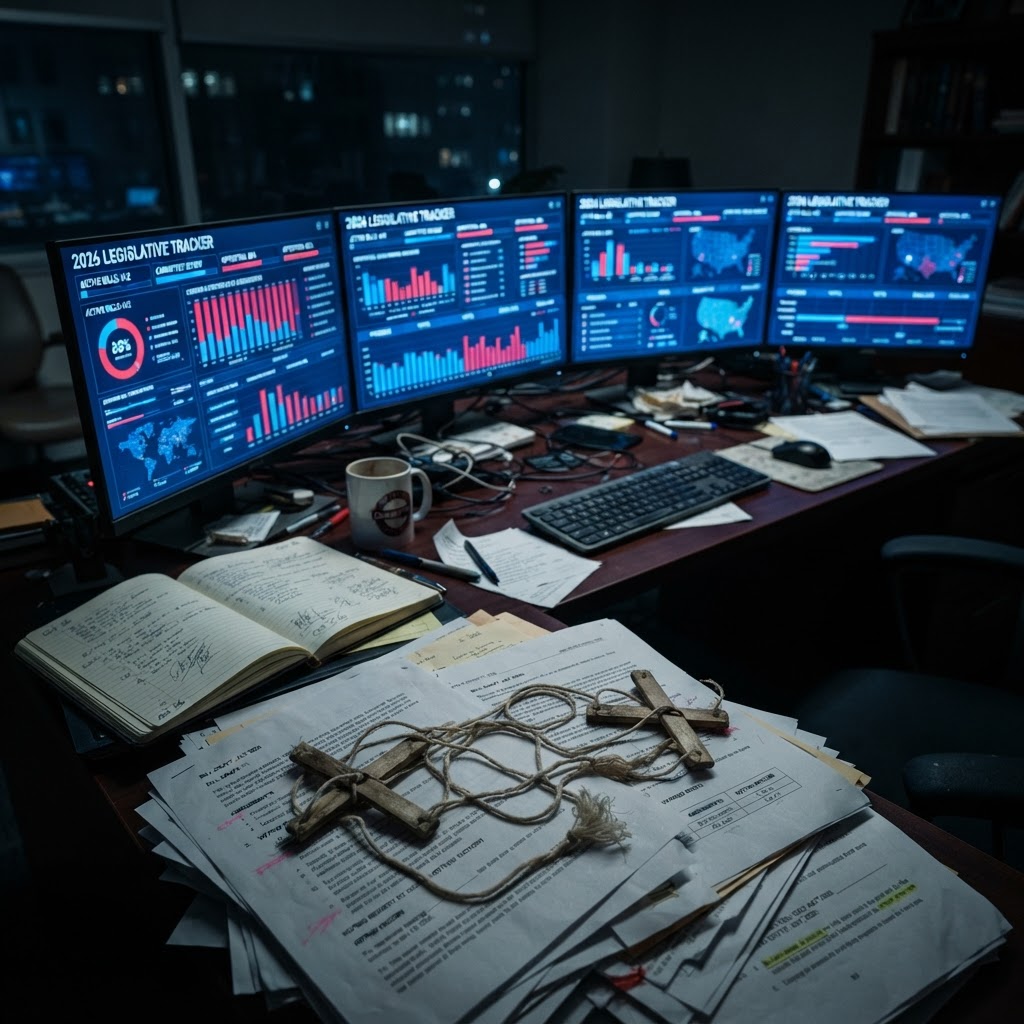
I recently spent an entire morning watching a high-powered lobbyist sweat over a spreadsheet. He had seventy-nine thousand rows of data staring back at him. He believed he was winning. He was actually just drowning in noise.
I recently spent an entire morning watching a high-powered lobbyist sweat over a spreadsheet. He had seventy-nine thousand rows of data staring back at him. He believed he was winning. He was actually just drowning in noise.
Talking Points:
There is a massive obsession with tracking every single movement in every state house. We treat a legislative session like a high-stakes stock ticker. The reality is that the vast majority of those 79,342 bills introduced in the first half of 2026 were never meant to become law. They were press releases written in legal jargon.
When you see a legislative tracker 2026 dashboard lighting up, ask yourself who actually wins. It sure isn’t the taxpayer or the corporation trying to manage real risk. It is the platform vendor selling you the illusion of being informed.
Talking Points:
I remember when we used to read bill text by hand. It was tedious, but it was honest. Now, we pay thousands for algorithmic monitoring that sends alerts for everything from tax code changes to naming a local bridge. We call it political bill monitoring, but it’s really just expensive anxiety management.
These automated systems capitalize on the fear of missing out. You think if you don’t track it, you can’t stop it. The truth is, most of what you are tracking is just legislative churn meant to keep the staff busy.
Talking Points:
We hit a milestone in August 2026 with 2,193 AI regulation bills 2026 floating around state houses. It sounds impressive. It sounds proactive. It is mostly just political posturing.
Most of these drafts ignore the actual technical architecture of the systems they want to control. They aren’t building guardrails; they are building campaign material. You need to distinguish between a serious attempt at governance and a headline-grabbing stunt.
Talking Points:
Education policy has moved from school boards to the state capital. It is a messy, partisan fight. Every cycle brings a new wave of mandates that disrupt the classroom flow for political optics.
Tracking these bills is exhausting for anyone involved in the system. They move fast and rarely settle. You are watching a game where the rules change every time the wind blows.
Talking Points:
We fall for the idea that seeing the bill is the same as seeing the policy. That is a dangerous mistake. Most of the real damage or benefit happens after the governor signs the paper.
Agencies write the rules. They define the statutory compliance. Your tracker might tell you the bill passed, but it misses the entire process of how that law will actually strangle or support your industry later.
Talking Points:
There is a massive industry built on selling you noise. They want you to think you need every update, every tweak, every minor amendment. It keeps your subscription active.
It is time to be honest about the cost. If your policy advocacy isn’t translating to actual results, you are paying for an expensive hobby. Stop paying for volume and start paying for impact.
Talking Points:
In 2026, the election cycle made everything slower. We saw a lot of posturing, but very little movement. I watched too many clients panic over bills that had zero chance of survival.
Let the noise die down. Most of the bills you are tracking will be dead by the time the session ends. Focus your energy on the ones that actually have legs.
Talking Points:
If you want to move the needle, put down the phone. Stop reading the legislative session updates for five minutes. Go talk to the actual humans who write the code and the laws.
Political lobbying is not about who knows the most bills. It is about who has the credibility to define the policy outcome. Real change happens in rooms, not on screens.
Talking Points:
We need to stop feeding the beast. If the tracking service isn’t giving you actionable intel that leads to a win, fire them. Demand more than just a list of numbers.
Be the person in the room who knows what matters. Let the others obsess over the minor churn. You will be the one holding the actual influence.
Talking Points:
You have better things to do than track a bill that isn’t going anywhere. Focus on your actual goals. Stop refreshing the feed. Start making moves.
Have you found yourself trapped in the cycle of monitoring meaningless data? Tell me how you fixed your strategy in the comments below. Let’s talk about what actually works.
What is the primary danger of over-relying on legislative trackers?
The biggest risk is mistaking noise for signal, leading to wasted time and budget on bills that have no chance of passing.
Why do most state bills never become law?
Legislatures use bill introduction as a signaling tool to satisfy political bases rather than as a serious attempt at crafting policy.
How can I effectively track state bill tracking 2026 without the noise?
Focus on the committee process rather than individual bill introductions, as bills that gain actual committee traction are the only ones worth your attention.
Why is the 2026 legislative year different from others?
Election-year dynamics create a slower, more performative environment where lawmakers avoid complex legislative work in favor of campaign messaging.
What should I prioritize instead of automated monitoring?
Build direct relationships with staff and legislators who have a history of moving policy, as personal trust trumps algorithmic data every time.