







Newsletter Subscribe
Join thousands of readers who get our Sunday Briefing: one email, five essential stories, zero fluff. Subscribe NOW!

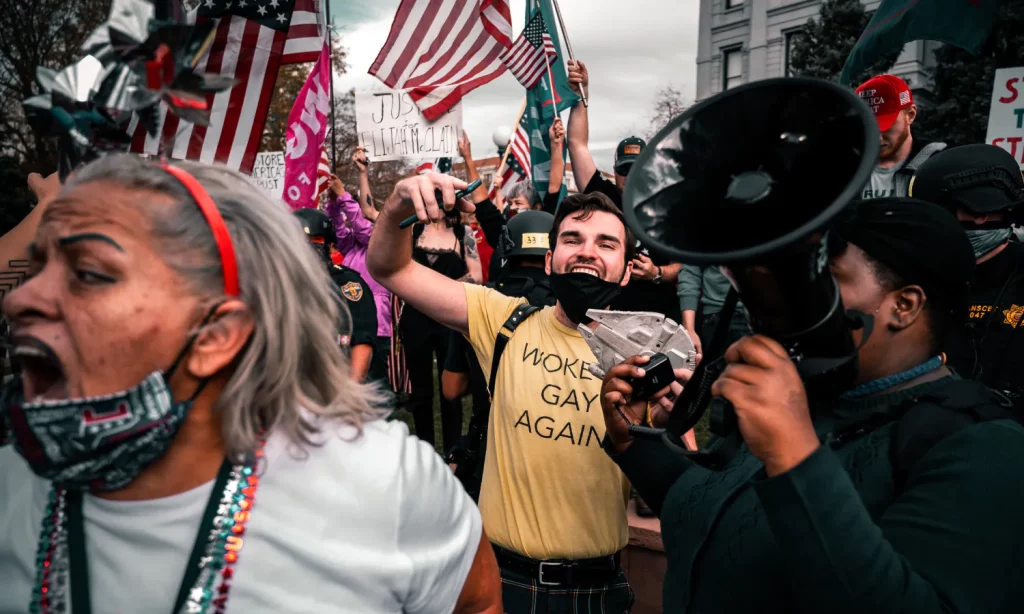
The progressive media landscape is stuck in the past. To survive the shift toward independent creators and falling public trust, blogs must abandon the comfort of the echo chamber.
Talking Points: The shift from television to digital news sources. Low public trust in traditional institutions. The fragmentation of media consumption habits.
Fifty-six percent of Americans now pull their news from social media every single week. Televisions are gathering dust. I remember when we believed a single blog post could shift a national election. That arrogance was our undoing. We sit in these digital silos feeling righteous while the actual influence drains away. Only 37% of people trust the news they read today. That is a grim metric of our failure.
Progressive news blogs keep peddling the same tired formats from 2008. They ignore that the independent media landscape has changed. Your audience is not waiting for your 2,000-word manifesto on the nuances of tax policy. They are watching a fifteen-second video on their phone in the grocery line. If we refuse to adapt, we will vanish. Being right does not matter if nobody is listening.
Talking Points: The internal division within progressive circles. Avoiding the trap of a single partisan voice. Why media bias and accountability matter now.
I once spent an entire afternoon writing a takedown of a candidate. I thought I was speaking for the masses. I was just talking to myself. There is no unified progressive narrative. We are a collection of shouting matches masquerading as a movement.
Progressive political commentary often fails because it assumes every reader shares its specific dogma. That is lazy. When you write only for the converted, you stop being a journalist. You become a cheerleader. Accountability is not a dirty word. If we cannot critique our own house, we have no business pointing at the others.
Talking Points: The obsolescence of slow-burn blogging. The demand for speed in political discourse. How netroots culture has shifted toward creators.
Information moves faster than your editorial process. I have seen great articles fail because they showed up three days after the news cycle died. We cling to the idea of the authoritative blog post. That format is slow. It is heavy.
We need to adopt digital rapid response models. If you are not in the conversation when it starts, you are irrelevant. The era of the slow-burn think piece is over. Move fast or move aside.
Talking Points: The danger of niche obsession. How siloed activism disconnects from broader reality. The cost of losing a cross-demographic perspective.
I see blogs that only focus on one issue until their readers are numb. It kills the brain. You cannot build a movement on a narrow track. It isolates your base. It makes you a caricature.
Broaden your scope. If you only talk about climate, you miss the economic anxiety that drives real votes. Look at the data. A 38% drop in climate coverage shows people are turning away from the repetition. You need to connect the dots across issues. Otherwise, you are just preaching to the choir in a soundproof room.
Talking Points: The collapse of traditional ad revenue. The rise of independent creators as competitors. The struggle for financial independence.
Money is the elephant in the room. Advertisers left the independent media landscape for the safety of big tech. They do not want controversy. They want clicks. We have to stop acting like we are entitled to a subsidy.
More than a third of journalists are now independent creators. They operate with a phone and a microphone. They are cheaper and often more honest than the big blogs. If you cannot make your business model work, your mission will fail. Stop waiting for a savior to fund your site.
Talking Points: The difficulty of escaping partisan bubbles. Strategies for engaging skeptical audiences. Why media literacy is our best tool.
I hate the term echo chamber. It sounds like a mild annoyance. It is a prison. You write for people who already agree with you. They feel good. You feel good. Nothing happens.
Try talking to people who hate your guts. If you cannot explain your position to someone who disagrees with you, you do not understand it well enough. We need to stop chasing clicks from the base. Chase the people who are confused. They are the ones who need the truth.
Talking Points: The decay of editorial standards. Replacing opinion with evidence. Why critical thinking is superior to party loyalty.
I used to love the partisan fights. They felt like sports. Now they just feel like noise. When we treat politics like a game, we lose our credibility. Every time you gloss over a scandal because it hurts your side, you lose a reader. I have seen it happen.
Be boring. Be precise. Be honest. If a politician you like messes up, say so. Do it loud. Intellectual rigor is the only currency we have left. Spend it carefully.
Talking Points: Identifying high-quality alternative news outlets. Filtering noise from substance. Why some strategies fail and others win.
Look for the people who admit they are wrong. It is a rare sight. I follow creators who update their old posts with corrections. That is honesty. Most blogs just delete the evidence and hope nobody notices.
I learned the hard way that silence is better than spin. If you do not have the facts, wait. Do not fill the space with guesses. Your reputation is all you have. Protect it by being the source that actually checks the math.
Talking Points: The shift toward decentralized networks. Why we need new systems for truth-telling. The importance of audience ownership.
We need to build our own platforms. Stop relying on social media giants who can kill your traffic with one algorithm tweak. Build your own email lists. Build your own communities. You own nothing on someone else’s platform.
Get local. The national news is broken. Your neighbors need facts about their water, their schools, and their jobs. That is where real influence lives. Start there and stay there.
Talking Points: The necessity of critical questioning. Why the status quo is a death sentence. Moving past fear to reclaim the public conversation.
We are at a crossroads. We either evolve or we go extinct. The comfort of the echo chamber is a slow death. Get out. Be uncomfortable. Say the things that make your allies angry.
We need writers who are not afraid to be hated. Journalism is not about being liked. It is about being right. Get back to work. Tell me what you are changing in your approach below.
Stop competing for mass attention and focus on deep engagement. Build direct relationships through newsletters and community tools where you control the access, not the platform.
People are tired of spin. When media outlets act like partisan agents, they sacrifice their integrity. Once that trust is gone, it is incredibly difficult to earn back.
Yes. They allow for a personal connection and consistent delivery. They cut through the noise of a social media feed and reach readers where they actually spend time.
It is a landscape where journalists are funded by their readers rather than corporate interests. It prioritizes investigative reporting over punditry and encourages open, honest debate.
Assuming their audience will follow them anywhere. You have to go where your audience is living, rather than waiting for them to find your website.