




Newsletter Subscribe
Join thousands of readers who get our Sunday Briefing: one email, five essential stories, zero fluff. Subscribe NOW!

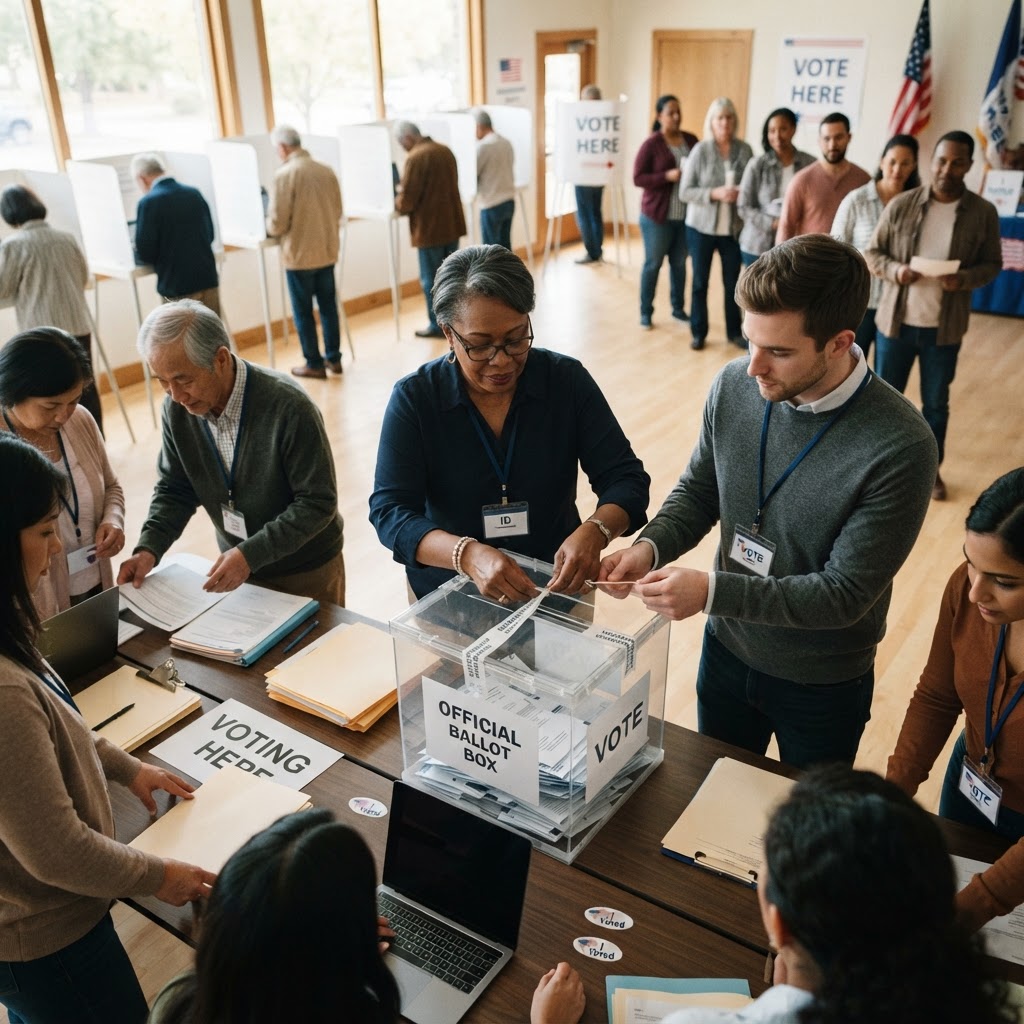
Democracy is not a spectator sport. If you are tired of complaining about election integrity, it is time to stop yelling and start working at the polls.
More than half of our local election offices are drowning. They cannot find enough people to sit at the desks on election day. We treat our electoral system like a self-winding watch, assuming it keeps perfect time without human interference. That is a dangerous fantasy. If you think the system is failing, maybe it is time to stop yelling at your television and start sitting at the precinct table.
Talking Points:
* The reliance on an aging workforce.
* The fragility of polling site operations.
* Why apathy is the biggest threat.
We love to talk about election integrity on social media, yet we leave the actual mechanics to a handful of retirees. The median age of an election worker is over 60. When these folks decide they are done, the entire process hits a wall.
I remember walking into my local precinct in 2012, feeling smug about my civic duty. A sweet woman named Gladys was struggling to calibrate a touchscreen unit that looked like it belonged in a museum. She was exhausted. I realized then that my “integrity” was just a vague concept held up by people who had every right to be home resting. We are one cold winter away from a total staffing collapse in thousands of districts.
Talking Points:
* The physical demands of the shift.
* Ballot processing and machine maintenance.
* Protecting the chain of custody.
If you think this job is just greeting neighbors, you are wrong. Poll worker duties and responsibilities include setting up heavy voting machines before the sun rises. You handle ballots, check voter identification laws, and verify registrations. It is grunt work.
My first time working at the polls, I spent six hours just managing paper jams and explaining to angry voters why they were at the wrong location. It is a long, physically draining experience. You own that space for fourteen hours. You are responsible for the chain of custody of every single vote cast in your room. That is real power, not the imaginary kind people argue about online.
Talking Points:
* Residency and citizenship status.
* Age requirements for service.
* The conflict of interest rules.
Before you run off to join, look at the poll worker requirements. You generally need to be a U.S. citizen and a registered voter in the county where you serve. Most states have these rules to keep outsiders from causing trouble.
Do not assume you are eligible just because you are a patriot. If you have a criminal record, check your state laws. Many states restrict felons from serving in an official capacity. It is not about your intent. It is about legal standards that vary wildly from one state line to the next.
Talking Points:
* Contacting local county boards.
* Filling out municipal applications.
* The timeline for background checks.
If you want to know how to sign up to be a poll worker, go to your county clerk’s website. Do not rely on third-party sites that collect your data. Contact your local election office directly.
I filled out my first application on a paper form that smelled like stale coffee. It was inefficient, slow, and frustrating. Expect to wait weeks for a call back. They are busy people doing a job nobody notices until something breaks. Be persistent. If they do not reply, show up at the office.
Talking Points:
* Is being a poll worker worth it financially?
* The gap between minimum wage and responsibility.
* Why the stipend is rarely a salary.
Let us talk about money. Election worker pay is often a pittance. Most places offer a stipend that barely covers the gas to get to your site and back. If you are doing this for the cash, you will quit by lunch.
Is being a poll worker worth it? Only if you care about the result. You are trading a full day of your life for a small check. Do not expect to get rich. Expect to get a sense of purpose and a massive headache.
Talking Points:
* Managing observers at the table.
* The presence of partisan poll watchers.
* Handling conflict without losing your cool.
Politics has moved into the polling room. You might find yourself sitting next to someone who has polar opposite views from yours. You have to work together. Forty-one states require balance to keep the process honest.
I once had to mediate between two voters who started screaming about a local bond measure. My job was not to take a side. My job was to keep the line moving and the peace. If you get hot-headed, you are a liability. Stay calm or stay home.
Talking Points:
* The importance of classroom sessions.
* Hands-on machine practice.
* Why you should ask hard questions.
Training is usually a mandatory class that puts half the attendees to sleep. It is often dry, bureaucratic, and outdated. Do not zone out. Learn how to fix the machine when it inevitably fails.
Ask questions about emergency procedures. What happens if the power dies? What do you do when a voter insists they are registered but the book says no? Most people sit there silently. Be the one who speaks up. It will save your day later.
Talking Points:
* The 2024 security environment.
* Harassment of staff and volunteers.
* Protecting public trust through presence.
Nearly forty percent of officials report being harassed. It is a hostile environment. You are a target for agitators who think they have found a grand conspiracy.
Ninety-two percent of offices have changed security plans. That is the world we live in now. Your presence is the only thing standing between an angry mob and a calm, orderly vote. Security is not a gadget. Security is people like you.
Talking Points:
* The personal cost of service.
* Choosing between convenience and democracy.
* Building resilience in our institutions.
Working at the polls is an act of defiance against a failing system. You sacrifice your comfort. You sacrifice your Saturday or Tuesday. You take a risk that some weirdo might film you.
But the stability of our nation rests on these small, boring actions. When you choose to stand in the room, you are proving that the system can still work. You stop being a spectator. You become a cog, and without us, the machine stops.
Democracy is not a spectator sport. If you keep complaining about electoral integrity while letting eighty-year-olds do the heavy lifting, you are the problem. Find your local office. Sign up for the next cycle. Help the people who are currently running on fumes.
Have you worked at the polls before? Tell me about the chaos you saw or the lessons you learned. Drop a comment below and let us hear the real stories behind the scenes.