






Newsletter Subscribe
Join thousands of readers who get our Sunday Briefing: one email, five essential stories, zero fluff. Subscribe NOW!
Is ranked choice voting a genuine solution for our broken electoral process or just a complicated distraction?
Talking Points:
* The illusion of political progress.
* Questioning the efficacy of electoral reform.
* Why citizens feel burned by the current status quo.
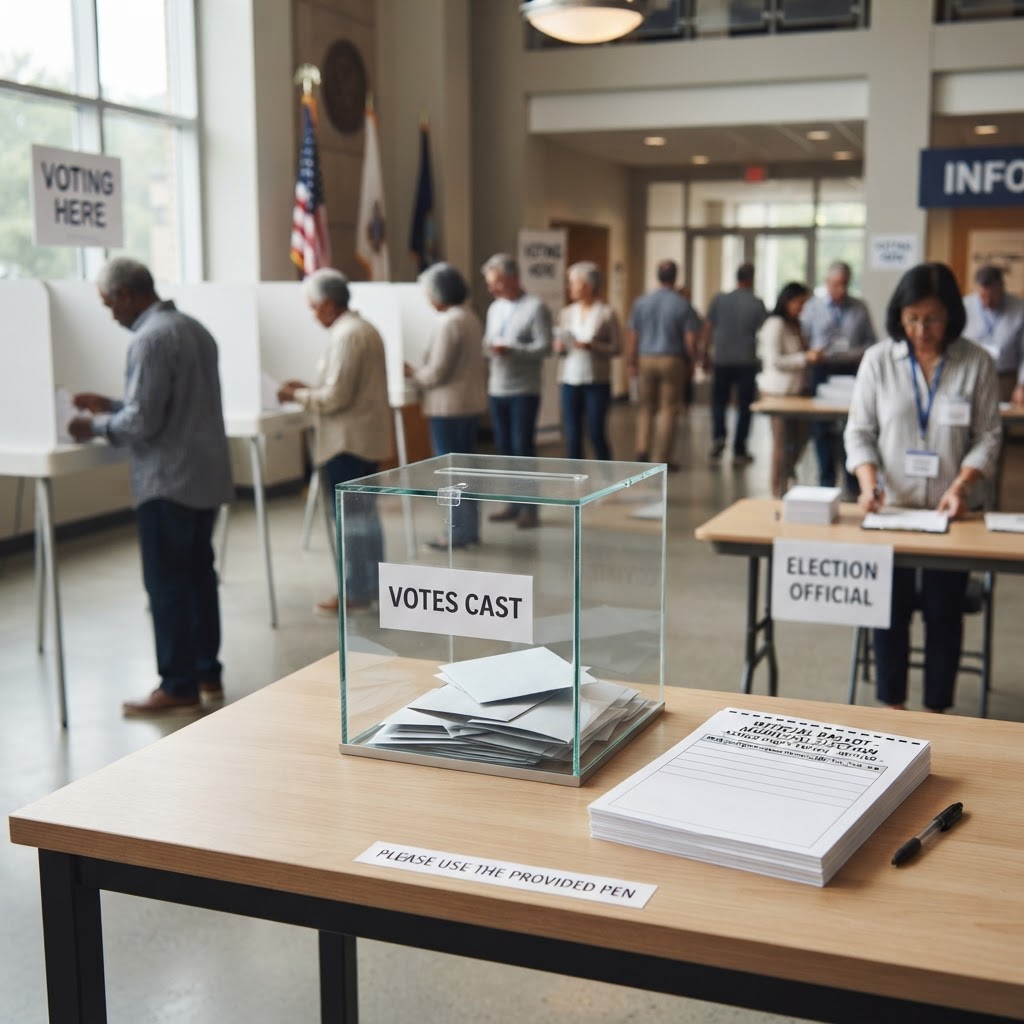
I remember walking into my local precinct back in the late nineties, feeling a sense of civic duty that has long since curdled into skepticism. We keep changing the rules, yet the same faces end up in office, staring back at us from mahogany desks. They love to push new mechanisms as if they were magic spells. The latest trend is ranked choice voting explained by politicians who treat voters like toddlers learning their shapes. It feels like a shiny new coat of paint on a crumbling foundation.
Talking Points:
* Defining the mechanics of RCV.
* The redistribution of votes.
* Mathematical complexity versus voter clarity.
How does ranked choice voting work in the real world? Instead of picking one person, you rank candidates by your preference. If someone hits fifty percent on the first count, the game ends right there. If nobody reaches that threshold, the candidate with the fewest votes gets kicked off the ballot. Their votes shift to whoever the voters ranked second. It sounds clean on paper, but the actual ballot tabulation is a headache waiting to happen.
Talking Points:
* Proponents versus the cold reality.
* Why political elites support specific changes.
* The potential for misdirection in policy.
Proponents love to scream about how this will fix our broken democracy. They claim it makes campaigns friendlier because candidates want your second-place vote. I have watched enough elections to know that mudslinging is baked into our DNA. Changing how we count ballots does not magically turn a viper into a saint. We are just rearranging deck chairs on a sinking ship.
Talking Points:
* The cognitive load of ranking candidates.
* Confusion at the ballot box.
* How complexity affects voter turnout.
Complexity is the enemy of accessibility. When I stare at a ballot with five names and a grid of bubbles, I start to sweat. The flaws in ranked choice voting become clear when you realize that many people simply do not have the time to research a full field of candidates. We are asking people to be political experts instead of just choosing a representative. If you make voting harder, you lose participants.
Talking Points:
* Does ranking prevent strategic voting?
* The reality of ballot manipulation.
* Why voters still try to game the system.
Supporters suggest that RCV stops people from being forced into strategic voting. They think if you can rank your favorite person, you won’t worry about them losing. I disagree. People still check the polls and try to guess who is viable. The strategy just changes from picking the lesser evil to picking the most likely runner-up. It is all still a game.
Talking Points:
* Can RCV break the two-party duopoly?
* The political establishment’s survival tactics.
* Maintaining control through process shifts.
Look at the power players in Washington. Do you really think they would back a system that stripped them of their influence? The two-party duopoly is a stubborn beast. If a third-party candidate ever gets real traction, the system finds a way to squeeze them out. Whether we use plurality voting or this new method, the establishment usually keeps their grip tight.
Talking Points:
* Lessons from Maine and Alaska.
* The administrative reality of new systems.
* How results can look different than expected.
Maine was the first to use this in a federal race, and it was a mess of lawsuits and confusion. Alaska tried a blend of open primaries and RCV, which only served to make the ballot a confusing document for the average person. We see these experiments as progress. I see them as a way to burn tax dollars on software updates and voter education campaigns that nobody reads.
Talking Points:
* What happens when your candidates are gone?
* The 8% exhaustion rate in Maine.
* The impact of limited choice.
One of the biggest issues is the concept of exhausted ballots. This happens when all the candidates you picked get eliminated early. Your vote effectively evaporates into thin air. In a 2018 Maine race, 8% of ballots were just tossed aside because of this. If your voice is gone before the final count, is your participation even meaningful?
Talking Points:
* The cost of extra rounds of counting.
* Software failures and administrative burdens.
* Taxpayer impact during election cycles.
Running these counts is expensive. A 2020 Georgia runoff cost taxpayers $75 million, and that was just a standard race. When you add the layer of re-tabulating votes for rounds, you are asking for more staff and more machine time. Most folks don’t realize that election integrity starts with simple, transparent processes. Over-complication is a shortcut to errors.
Talking Points:
* Is this reform or just movement?
* Looking beyond the ballot box.
* Engaging in actual democratic integrity.
We need to stop waiting for a ballot design to save us. Real democratic integrity requires an informed public and honest leaders, not just a smarter way to tally bubbles. If you care about this, look at who funds these ballot initiatives in your state. Question why they want this change now. Tell me, do you think this actually changes the outcome, or just hides the process? Let me know your thoughts below.