








Newsletter Subscribe
Join thousands of readers who get our Sunday Briefing: one email, five essential stories, zero fluff. Subscribe NOW!

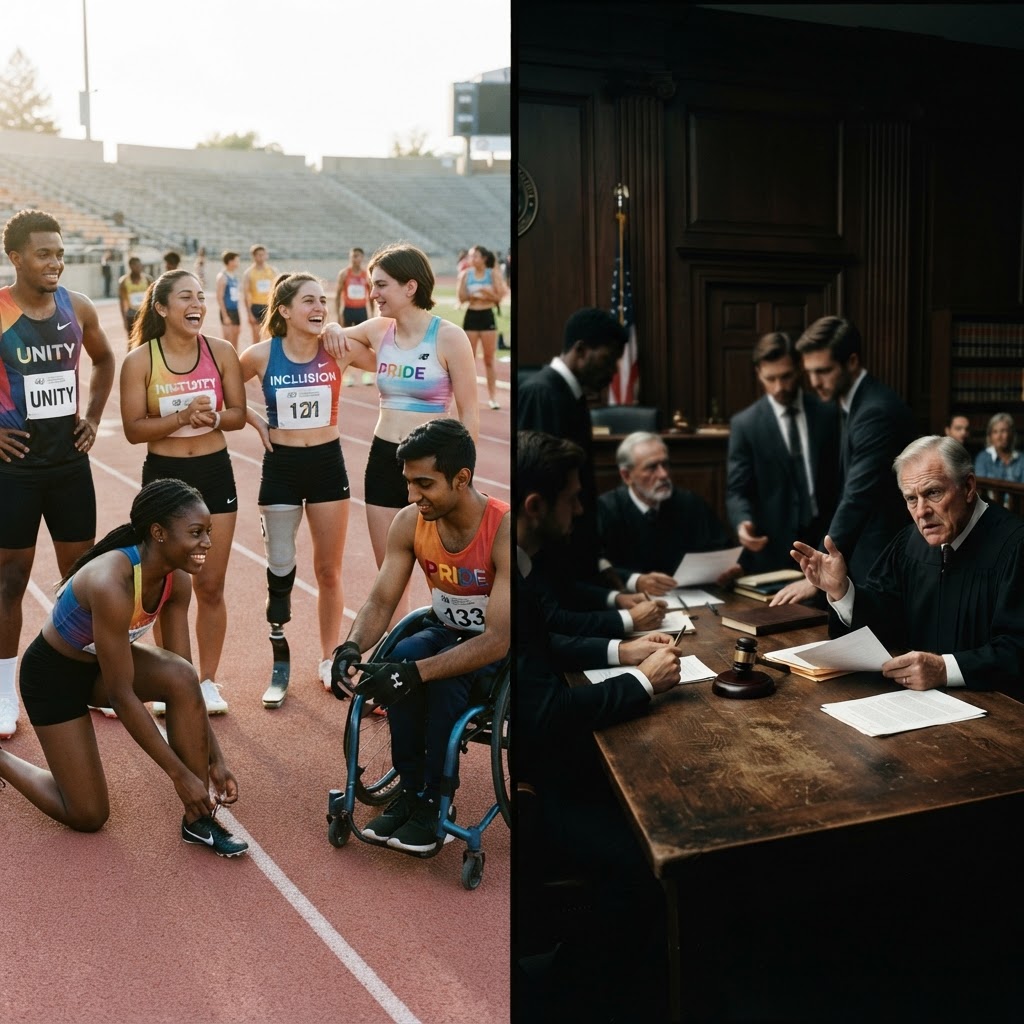
The Supreme Court’s 2026 ruling on transgender sports bans exemplifies a troubling retreat from nuanced discussions surrounding rights and equity. This article delves into the implications of this decision, discussing how it retrofits landmark laws and empowers discrimination.
The year 2026 came crashing in with a verdict that many saw as the last nail in the coffin of nuance regarding transgender rights in sports. The Supreme Court ruled in favor of Idaho and West Virginia, validating bans that keep transgender girls and women from participating in women’s sports. It’s hard to believe that we’re still wrestling with such fundamental issues of fairness and equality. What happened to the ideals of inclusion? How did we reach a point where the court can prioritize ‘safety’ and ‘competitive fairness’ while disregarding the rights of an entire group?
Talking Points:
When the Supreme Court released its decision, it felt like a collective punch to the gut for advocates of transgender rights. The court, led by Justice Brett Kavanaugh, concluded that excluding transgender athletes from women’s sports teams does not violate the Equal Protection Clause or Title IX. This was not just a legal analysis—it was a cultural statement that reverberated through communities fighting for inclusion. In essence, the ruling set a dangerous precedent that legitimizes discrimination cloaked as policy.
The consolidation of two cases—West Virginia v. B.P.J. and Little v. Hecox—not only streamlined the ruling but also showcased the court’s intent: a narrow interpretation of rights underpinned by an irrational fear of unfairness in competitive sports. The court’s reliance on arguments about competitive advantage neglected the evidence supporting the capabilities of transgender athletes.
Talking Points:
Title IX was designed to create equity in sports, to ensure that no one is discriminated against based on sex. Yet, here we are, watching it twisted to justify the exclusion of transgender girls from teams. The court’s ruling suggests that the original intent of Title IX can be conveniently ignored in favor of protecting ‘biological women.’ What does that mean for all the strides we’ve made in promoting gender equality? It’s as if the court has placed a felt tip marker over decades of civil rights progress, reducing it to a mere legal formality.
The implications are staggering. Schools and states are now empowered to sidestep Title IX’s fundamental tenets. Can we really sit by while our legal system retrofits landmark laws to enable discrimination? This isn’t just about sports; it’s about the very fabric of our commitment to equality.
Talking Points:
A 6-3 split in the Supreme Court is telling; it’s not just about those who voted in favor of exclusion, but about those who dissented. While the liberal justices agreed that the West Virginia law didn’t violate Title IX, they fiercely disagreed about the implications for the Equal Protection Clause. Justice Sotomayor’s dissent was a lone beacon of reason amidst the chaos, advocating for a more thorough understanding of rights and protections.
This dissent matters. It signifies an essential ideological divide that’s likely to persist in future legal battles. For now, however, the judiciary’s alarming deference to state legislation reeks of a slippery slope toward broader discrimination. What we’re left with is the notion that some lives are more deserving of protection than others, guided by narrow definitions of gender and safety.
Talking Points:
The court’s reliance on ‘biological sex’ is a troubling overgeneralization that fails to account for the complexities of gender identity. By simplifying gender to mere physical anatomy, the ruling dismisses the rich, nuanced experiences of transgender individuals. This undermines an entire spectrum of identities and the realities that come with them.
What’s most disturbing is how easily we accept these generalized definitions in legal frameworks. The focus shifts from individual rights to a binary system that serves a limited agenda. Can we really afford to sideline humanity in favor of rigid definitions? The implications could ripple far beyond sports, influencing policies and attitudes toward transgender rights in all facets of life.
Talking Points:
Safety and fairness have become catchphrases, co-opted by those who refuse to engage with the actual conversations about inclusivity. This manufactured moral panic suggests that allowing transgender women in women’s sports somehow threatens the integrity of women’s athletics. Yet, empirical evidence doesn’t support such claims. The fear-mongering rooted in a supposed loss of competitive integrity overshadows rational discussion and possible solutions.
These narratives encourage divisive campaigns against marginalized groups, disproportionately affecting young athletes seeking acceptance and belonging in competitive environments. If fairness means erasing the presence and contribution of transgender athletes, what does it truly cost us as a society?
Talking Points:
Justice Sonia Sotomayor stood out with her dissent, urging the Supreme Court to reconsider the implications of their ruling on individual rights. Often, we find ourselves feeling isolated in our beliefs—Sotomayor’s dissent captures that minority perspective fighting against the status quo. She articulated the risks of diminishing rights for transgender individuals: arguing that ignoring an entire community because of fear is a betrayal of our justice system.
Her opinion embodies the essence of what’s at stake; rights can’t be contingent on popular sentiment or political agendas. The tenet of justice should be unwavering, regardless of sentiment. The court’s ruling not only risks sidelining transgender athletes but could also embolden further discrimination. How do we get back to a place of sound reasoning?
Talking Points:
What exactly does this ruling signal for legislation beyond sports? The bans are not just about athletics; they extend into broader issues, sending a green light to states to implement laws targeting transgender rights under the guise of protecting women and girls. Suddenly, the gates open for discrimination in various forms backed by a judicial stamp of approval.
States can now point to this decision as a precedent for introducing laws limiting access to healthcare, education, and more. Those looking to roll back rights have a newfound justification, as if the very fabric of our rights is up for negotiation depending on the political climate. Where do we draw the line when established rights are so easily eroded?
Talking Points:
“Unsettled science” is thrown around like a universal excuse—a catch-all for ignoring the facts when they don’t align with personal prejudices. The majority opinion hinted at concerns about biological advantages, yet studies debunk those claims. What’s described as “science” often reflects societal biases rather than objective analysis.
This reliance on vague assertions of ‘unsettled science’ allows courts to skirt around accountability to properly engage with complex issues. At the end of the day, refusing to confront realities doesn’t make them disappear; it simply insulates a flawed system from accountability. Ignoring existing research means distorting truths to serve a preferred narrative.
Talking Points:
Reflecting on this ruling, it’s clear that the precedent has been set for a brutal reality for transgender individuals, particularly youth. As states follow suit, we inch closer to a legal landscape that not only fragments rights but makes them contingent on locality. It requires a collective fought battle not just for sports but survival in a system increasingly hostile to transgender identity.
This isn’t the time to be complacent. The trajectory is worrying, and we must remain vigilant. We have a responsibility to advocate for fairness, equality, and the recognition of rights for all. Join the conversation—share your thoughts and experiences in the comments. We can’t afford not to.
Q1: Why did the Supreme Court rule against transgender athletes?
A1: The ruling was based on the court’s interpretation that states had valid interests in maintaining safety and competitive fairness, justifying the exclusion of transgender athletes based on biological sex.
Q2: What can we expect from future legal battles surrounding transgender rights?
A2: The division within the Supreme Court suggests future cases may continue to face challenges, particularly regarding the Equal Protection Clause, signaling possible conflicts among states and the court.
Q3: How can Title IX be reinterpreted in light of this ruling?
A3: The ruling suggests that Title IX could be retrofitted to allow for exclusions, which could lead to further discrimination against marginalized groups if not firmly addressed.
Q4: Are there repercussions for youth participation in this ruling?
A4: Yes, this decision may have chilling effects on how transgender athletes are treated across the country, affecting their access to sports and opportunities for inclusion.
Q5: What does the dissent by Justice Sotomayor highlight?
A5: It underscores the risks of prioritizing political narratives over individual rights and promotes the necessity for a nuanced understanding of justice in the context of personal identity.