







Newsletter Subscribe
Join thousands of readers who get our Sunday Briefing: one email, five essential stories, zero fluff. Subscribe NOW!

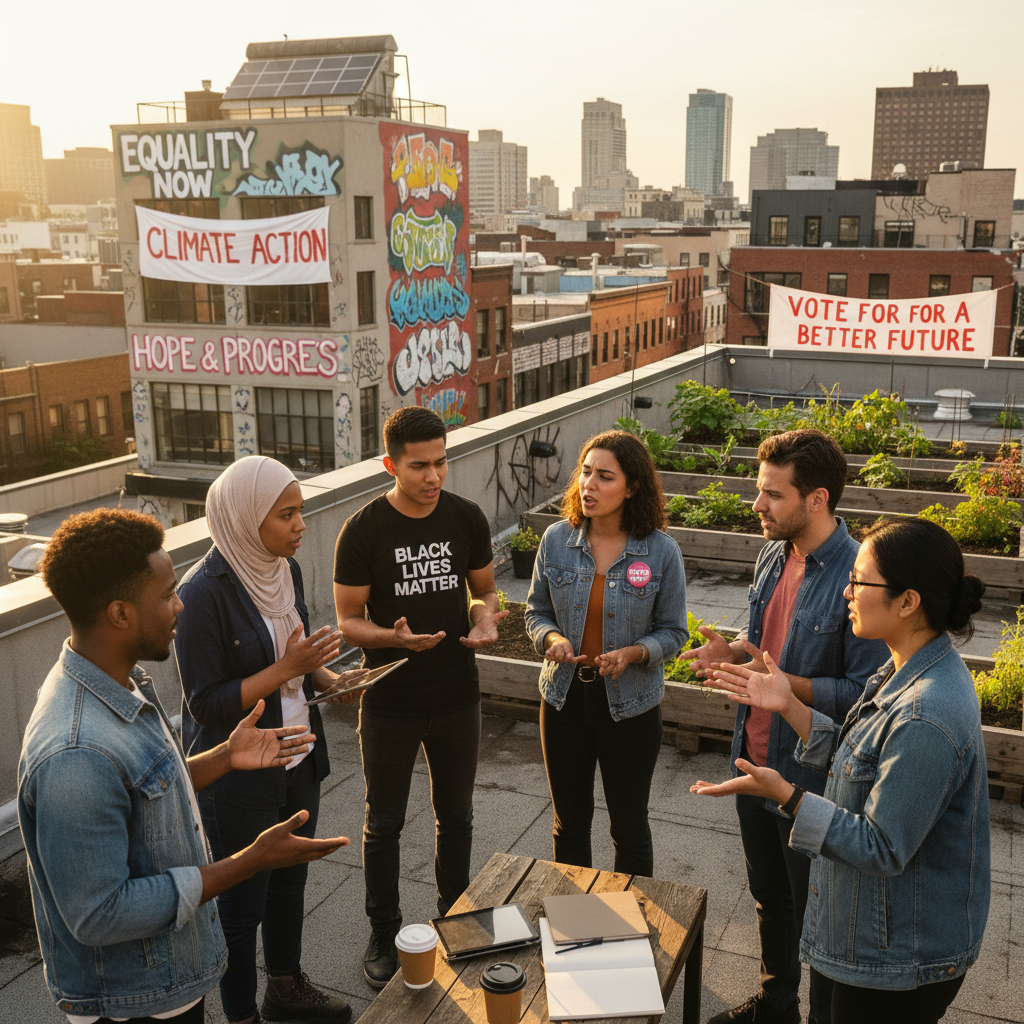
This article explores the complexities and contradictions of liberal political narratives, urging a critical examination of progressive policies and their impacts on society, while encouraging informed discourse among readers.
You know what really gets my goat? The fact that every time I scroll through social media, I’m bombarded by loud proclamations of progress—big changes, small victories. But what’s often lost in the rhetoric is the stark reality of how those changes play out on the ground. We live in an age where the narratives of liberalism flow freely, but they require scrutiny. The applause for progressive politics often drowns out necessary discussions about its consequences. It’s time we peel back the layers of these narratives and assess the implications of liberal political analysis thoroughly.
Talking Points:
Liberalism, at its core, champions individual rights, personal freedom, and political equality. These tenets sound great on paper—who wouldn’t want the right to express themselves? But classical liberalism, which emphasizes limited government and free-market economics, has morphed into what we now recognize as American liberalism, which often prioritizes activist intervention.
Let’s be honest: many folks equate liberalism with progress. Yet, aren’t we seeing a disconnect? While activism rallies for equality and social justice, what’s happening to those core liberal values under layers of bureaucracy and legislation? A closer examination reveals a complex web of ideologies that may not always align with the original intentions of liberal thought.
Talking Points:
Liberalism isn’t static; its evolution reveals shifts in societal values and responses to crises. In the 20th century, events like the Great Depression led to the emergence of social liberalism, which prioritized the welfare state and broader economic programs. This transformation saw the embrace of policies aimed at addressing poverty and inequality but also generated intense debates about government intervention.
As liberalism adapted, so did the meaning of liberty itself. The struggle for civil rights cemented the importance of social justice, pushing liberal leaders towards a more interventionist stance. But is this improvement, or simply a reconciliatory strategy amid turmoil?
Talking Points:
Social liberalism represents a movement towards collective safety nets and expanded civil rights. It champions not just the market’s role but also social services aimed at leveling the economic playing field. On one hand, this sounds noble. Who doesn’t want to see economic disparities shrink?
However, critique arises. The question lingers: does social liberalism erode individual responsibility? When government expands its reach into social services, freedom can feel constricted rather than liberated.
Talking Points:
The crux of liberal economic policy lies in tackling inequality through taxes and welfare programs. Advocates argue these systems uplift the disenfranchised, but critics have valid points. Are we fostering dependence on these systems rather than encouraging self-sufficiency?
Take a look at the rhetoric during times of economic distress—how often do we hear calls for higher taxes on the wealthy vs. initiatives for job creation? It’s a conversation far richer than statistics alone.
Talking Points:
Social justice movements have undoubtedly brought about significant shifts, often positioning themselves at the forefront of liberal agendas. They strive for representation, inclusivity, and radical change. Yet, we cannot overlook how swiftly these movements can be co-opted by politicians looking to assemble votes.
When issues become politicized, we must question whether progressivism is about genuine empathy or just political expediency. Are these movements inherently tied to electoral strategies rather than actual social change?
Talking Points:
Political polarization seems to spike just as the liberal agenda intensifies. This raises a vital question: are these progressive policies driving wedges between communities?
Increasingly, concession seems impossible. The liberal agenda can often come off as dismissive towards moderate voices, pushing voters to the extremes. With a lack of genuine dialogue, we grapple with a political climate that favors tribalism over collaboration.
Talking Points:
Let’s turn to the pudding—where are the proofs? Areas where liberal policies have been implemented, such as public education and healthcare, showcase both successes and failures. For instance, public education provides access but may also contribute to falling standards in some districts. How many times have we heard horror stories about failing schools amid promises of educational equity?
Healthcare is another shining example. The Affordable Care Act drew vast praise while simultaneously raising questions about accessibility and affordability. We must weigh these outcomes carefully.
Talking Points:
Dissent often resides where one least expects it—within the ranks of liberalism itself. Voices arising from moderate and leftist camps criticize mainstream liberalism for lacking authenticity and becoming complacent.
Critics argue that liberalism has melded too seamlessly with corporate interests, ditching original ideas of social equity for political gain. The very tenets meant to uplift society seem diluted when they mustnu0027t reconcile with money and power.
The layers of liberal political analysis deserve more than cursory glances. It’s paramount we hold discussions that disentangle genuine intentions from political maneuvering. Liberalism has the potential to incite progress, but we need to question every policy and movement’s impact on an ever-polarizing discourse. So, what’s your take? Let’s continue this conversation. I encourage you to share your experiences or perspectives in the comments!
Q1: What is the main principle of liberalism?
A1: At its core, liberalism advocates for individual rights, liberty, and political equality, promoting personal freedoms within a framework of government accountability.
Q2: How has liberalism evolved over time?
A2: Liberalism has shifted from a focus on limited government and individual freedoms to include social justice and welfare as central tenets, especially with the rise of social liberalism.
Q3: What are some criticisms of modern liberal policies?
A3: Critics argue that modern liberalism often aligns too closely with corporate interests, resulting in diluted social justice efforts and complacency rather than true reform.
Q4: How do social justice movements influence liberal politics?
A4: Social justice movements play a crucial role in shaping liberal agendas by advocating for representation and inclusivity but also raise concerns about opportunism in political discourse.
Q5: What impact do liberal economic policies have on inequality?
A5: Liberal economic policies aim to address inequality through taxation and welfare, yet there are debates around whether these systems encourage dependence or foster self-sufficiency in low-income populations.