






Newsletter Subscribe
Join thousands of readers who get our Sunday Briefing: one email, five essential stories, zero fluff. Subscribe NOW!

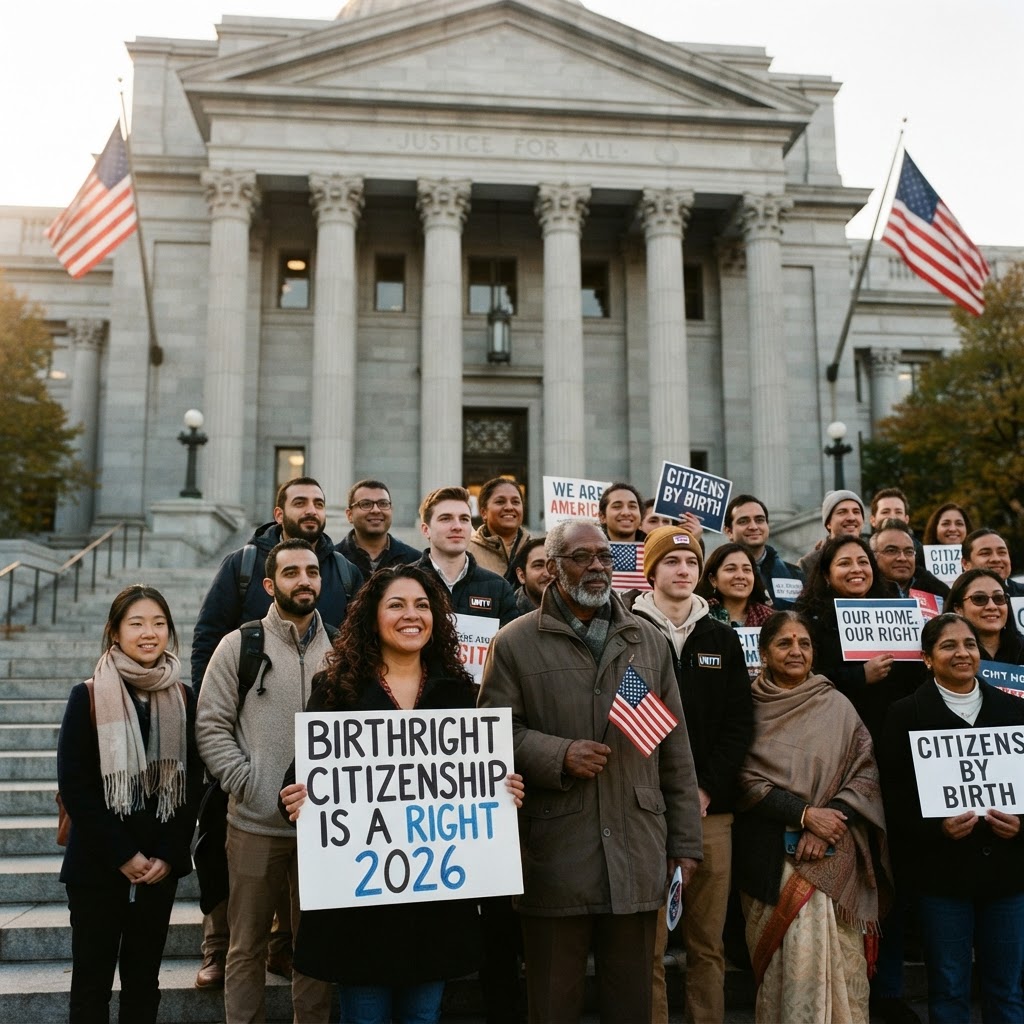
The 2026 Supreme Court ruling on birthright citizenship isn't just a legal decision; it's a reminder of the ongoing struggle over national identity and constitutional rights. As shifts in public opinion continue, it’s crucial to examine the implications of this ruling for America's future.
Introduction
Picture this: It’s 2026, and the Supreme Court drops a bombshell with a ruling that reverberates through the corridors of power. For those who think birthright citizenship is set in stone, think again! After years of vitriolic debate, this ruling has become the focal point for discussions around American identity and constitutional law. The battle lines have been drawn, and the stakes are as high as they’ve ever been.
You see, this ruling is not just a legal footnote; it’s a striking contrast to the narratives that have dominated immigration policy debates. The implications hit home for many of us — your neighbors, your community, even your family. If you don’t pay attention, the ground you stand on may shift beneath your feet.
Talking Points:
On June 30, 2026, the Supreme Court ruled decisively against an executive order intended to restrict birthright citizenship for children born to undocumented immigrants. In a 6-3 decision in Trump v. Barbara, the Court affirmed that indeed, the Constitution guarantees this right under the 14th Amendment. Chief Justice John Roberts, with a striking pen stroke, reiterated the historical roots that have anchored our understanding of citizenship in America.
This wasn’t just a unanimous decision; dissenting opinions from Justices Kavanaugh and Thomas showed stark divisions in how justices interpret constitutional rights connected to citizenship. Here’s a reality check — when it comes to citizenship debates, precedents really do matter. Roberts anchored his majority opinion in the landmark United States v. Wong Kim Ark case, which established the principles guiding birthright citizenship more than a century earlier.
Talking Points:
Let’s rewind to 1868 when the 14th Amendment was ratified. It didn’t just pop up out of nowhere; it emerged from the ashes of the Civil War. The intention? To guarantee citizenship to all individuals born on American soil, regardless of their parents’ legal status. The clash over its interpretation reflects a chronic tug-of-war between expanding rights and narrowing definitions.
Fast forward to debates today, and you see how the 14th Amendment has become a political weapon. Some tailor the narrative to suggest that undocumented individuals abuse the system through “anchor babies,” as though the mere act of birth carries with it a nefarious intent.
Yet, when you peel back the layers, it’s clear manufacturers of this narrative are often seeking political leverage rather than judicial accuracy. The arguments pit economic fears against constitutional rights, leaving a fragmented national conversation in its wake.
Talking Points:
Ah, the age-old question: who controls the framework of citizenship? The courts? The legislature? Both? Opinions on this matter resonate around dinner tables almost as much as they do in courtrooms. The ruling in 2026 serves as a touchstone, reviving discussions about statutory construction and legislative intent.
The judicial activism label flies around like confetti during a parade whenever a Court decision doesn’t gel with hardline voters’ sentiments. But let’s be honest: the Constitution was never meant to be frozen in time. Its interpretation should reflect contemporary realities, not just bygone eras. This balancing act is delicate, to say the least. Roberts’ majority opinion acknowledges the constitutional imperatives but resists the urge to bend them solely for political convenience.
Talking Points:
Let’s call this what it is: a crisis of identity. Is our nation losing grip on what it means to be a citizen? Some argue that unrestricted birthright citizenship undercuts national sovereignty by allowing anyone born here to claim citizenship. But really, does it?
Look at it this way: defining citizenship is a sacred duty, isn’t it? Birthright citizenship establishes roots — a tightly knit social fabric. What happens when that fabric tears apart under the strain of fear-mongering and partisan politics? We risk creating a population that feels like second-class citizens in a nation that once proclaimed liberty and justice for all.
Talking Points:
Isn’t it just a little maddening? Both major political parties tiptoe around the implications of the 2026 ruling for their own agendas. The Democrats lean hard on the ruling to solidify support among liberal voters, framing their immigration stance through rose-tinted lenses while the Republicans brandish it as a cautionary tale about judicial overreach.
Let’s face it: neither side truly wants to confront the underlying realities of birthright citizenship. We’re left in a limbo where clear, actionable immigration policy feels like a distant utopia. If we keep dodging the real issues, we’re bound to witness ongoing legal challenges to birthright citizenship, as factions on both sides take aim with various guns.
Talking Points:
Let’s pull back from the heated rhetoric for just a moment. How does all this really impact our day-to-day lives? The reality is that citizenship isn’t just an abstract issue — it flips the switch on people’s lives, their jobs, and their families. When children born here to undocumented parents don’t receive citizenship, communities fracture.
Contrary to what detractors say, studies have shown that immigrant populations often contribute positively to local economies. To disregard their economic impact is to ignore a vital component of our social structure. The cutting edge of this issue isn’t just jurisprudence; it’s human lives and the community dynamics that depend on them.
Talking Points:
What happened in 2026 raises eyebrows across the judicial aisle. Was it overreach? Or was it a necessary correction to ensure justice? Critics swarm around the term “judicial activism,” tossing it around like a grenade in a crowded room without considering its implications.
The scope of the Supreme Court’s authority in defining constitutional rights extends far beyond mere interpretations. It actively shapes public policy. Let’s be candid: the notion that the Court should merely reflect prevailing public sentiments is a rather troubling one. If the Court backs down from controversial rulings, do we live in a nation governed by law or one governed by popular whim?
Talking Points:
Mark my words: this ruling sets a precedent — and it could go either way. What implications does it hold for future controversies surrounding citizenship and human rights? This isn’t just a single moment in time; it could open floodgates.
Lawmakers and justices alike should be aware that today’s decisions could serve as blueprints for tomorrow’s arguments. Are we setting ourselves up for a slippery slope? The complexities of these rulings won’t go unnoticed, and future litigants will certainly scrutinize this case.
The birthright citizenship debate isn’t fading into the background. Instead, it’s at the forefront of our national identity crisis. If we ignore its implications, we risk distorting what it means to be an American. The ruling of 2026 serves as a flashpoint, compelling us to confront uncomfortable truths about our nation’s values.
I encourage you to get involved, to dig deeper into your views, to share your thoughts with your community. Whether you agree or disagree, let’s tackle this tough topic together. What are your experiences surrounding birthright citizenship? Drop a comment below and share your story!
1. What is the basis of birthright citizenship in the U.S.?
Birthright citizenship is grounded in the 14th Amendment, which states that anyone born on U.S. soil is a citizen.
2. How did the Supreme Court come to its decision in the 2026 ruling?
The Court ruled in Trump v. Barbara, affirming that the 14th Amendment guarantees birthright citizenship, using historical precedents like Wong Kim Ark.
3. What are the main arguments against birthright citizenship?
Critics argue it encourages illegal immigration and that it undermines national sovereignty, associating the term “anchor babies” with birthright policies.
4. How can the Supreme Court’s decision influence future immigration policy?
This ruling sets a precedent that may impact how future cases concerning citizenship and immigration reform are decided, shaping legal standards going forward.
5. What should concerned citizens do regarding birthright citizenship?
Get informed, engage in discussions, advocate for fair policies, and participate in community conversations about citizenship rights and immigration.