






Newsletter Subscribe
Join thousands of readers who get our Sunday Briefing: one email, five essential stories, zero fluff. Subscribe NOW!

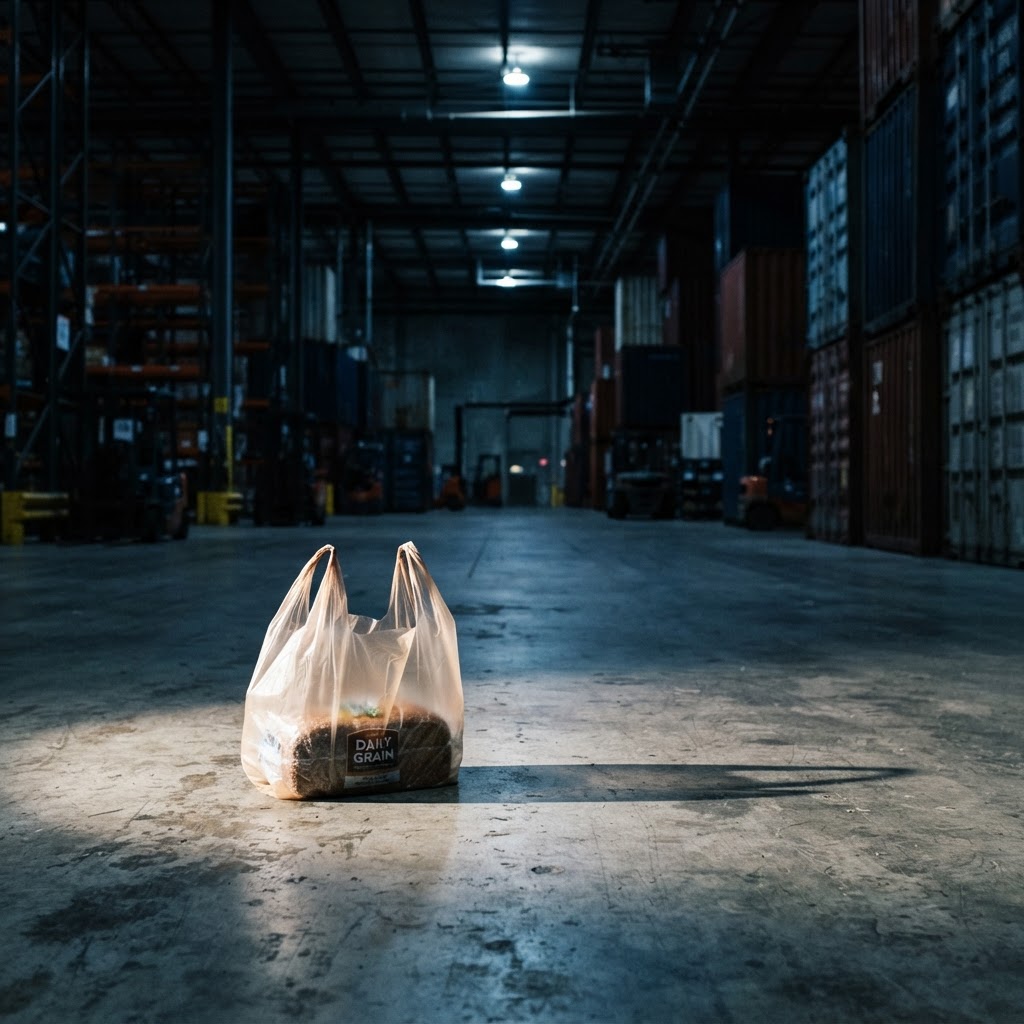
Think your grocery bill is rising for no reason? Think again. We explore the direct connection between 2026's tariff policies and the persistent price pressure hitting your household budget.
Talking Points:
I remember sitting at my kitchen table, staring at a grocery receipt that seemed to have sprouted wings. My eggs, my coffee, even my basic household cleaning supplies, all cost significantly more than a year ago. We keep hearing this fairy tale that some foreign government is cutting a check to the U.S. Treasury. It is a lie. You are paying for the impact of 2026 tariffs on consumer prices every time you scan your card at the checkout counter.
When we talk about trade policy, politicians love to project strength. They frame import duties as a penalty on outsiders. Reality is much grimmer. U.S. importers of record write the checks to Customs and Border Protection. They do not just eat that loss. They pass it down the line until it lands right on your dinner table.
It is a regressive tax. When the effective tariff rate hits 10.6 percent, as it did in January 2026, it hits those with the least disposable income the hardest. That $700 extra per household is not a rounding error. It is the cost of political theater disguised as national security.
Talking Points:
Supply chain experts understand a simple truth: costs do not vanish. They migrate. When a company imports steel or circuitry, they pay an entry tax. If they cannot absorb that cost—and their profit margins are already razor-thin—they raise their wholesale prices. Your local retailer then bumps the tag price.
This is how tariff pass-through to consumers functions in the real world. You might think the impact is limited to imported finished goods, but you would be mistaken. Intermediate goods make up a massive portion of these imports. When a domestic manufacturer pays more for raw components, they raise their prices too.
I have seen companies try to hold the line. They eat the cost for a quarter, hoping for a policy shift. They always lose that battle. Eventually, the reality of balance sheets forces them to pass the burden to you. It is not malice. It is arithmetic.
Talking Points:
Inflation reports are often sanitized. They strip out food and energy because those prices jump around. For those of us living on a budget, food and energy are our entire lives. The inflationary effects of import duties do not care about your CPI formula.
Retail price increases 2026 are not just a blip. They represent a structural change in how goods move across borders. When 72 percent of trade professionals report that volatility is their main challenge, you know the stability we once relied on is gone. Business owners are now pricing in risk premiums, making everything cost more by default.
I walked into a hardware store recently and saw prices that made me wince. The clerk blamed the supply chain. He was not wrong. When the cost of moving goods becomes a guessing game, companies pad their margins just to survive. You are paying for that uncertainty.
Talking Points:
There is talk about the $166 to $179 billion in potential refunds following the Supreme Court’s ruling. People think this will lower their grocery bill. That is pure fantasy. The government established the CAPE system to handle these rebates, but those checks go back to the importers, not you.
Think about it. If a company gets a rebate for a tax they paid two years ago, do they drop their prices? Absolutely not. They pocket the money to offset past losses or reinvest in their operations. Corporate refunds do not operate like consumer stimulus checks.
I once managed procurement for a mid-sized firm. If I got a refund for an overcharge, it went straight to the bottom line. It was a recovery of past costs, not a signal to lower future prices. Expecting a refund to fix your monthly expenses is a dangerous miscalculation of how business incentives work.
Talking Points:
Companies are not sitting idle. They are scrambling to diversify their supply chains. Moving production away from high-tariff regions takes time and capital. That transition adds massive upfront costs. Who do you think pays for those new warehouses and freight routes?
Economic consequences of US trade policy are felt long before a factory shifts locations. It is a slow, grinding process of price adjustment. Every time a contract is renegotiated, the tariff burden gets baked into the new price. This is not a short-term problem.
I see businesses failing because they cannot handle the shift. The ones that survive do so by being leaner and more expensive. We are losing the variety that kept prices low. We are left with fewer options and a higher, permanent floor for the cost of living.
Talking Points:
When the Supreme Court ruled that the IEEPA did not authorize these specific tariffs, people cheered. It felt like a victory for the rule of law. It was a massive wake-up call for how we manage emergency economic powers. However, market prices do not reset overnight.
Legal decisions take months to filter into trade contracts. Importers are stuck with current invoices. The court ruling confirmed that the power grab was over, but it did not provide an instant reset button for your utility bill. The structural damage remains.
I have followed legal precedents for years. A favorable ruling is just the first step in a long process of unravelling bad policy. Do not mistake a court victory for an instant drop in consumer prices. The system is too rigid for that.
Talking Points:
Tariffs are just a tax on existence for lower-income households. If you earn $30,000 a year, a 10 percent hike in the price of clothes or food is a catastrophe. If you earn $300,000, it is a minor annoyance. This is the definition of regressive taxation.
We need to stop pretending that this is just about trade balance. It is about how we distribute the burden of government policy. Household cost of living 2026 is being driven by these choices. Every import duty is a direct withdrawal from the savings of families who are already struggling.
I hear people say they support these policies because they like the rhetoric. I challenge them to look at their own grocery receipts. It is easy to be a nationalist until you are looking at the price of baby formula. The cost of living is rising, and the policy is the main engine.
Talking Points:
Energy is the hidden cost in everything. When trade tensions lead to retaliatory tariffs, the movement of energy becomes restricted. That creates a multiplier effect. You pay more for the goods, and you pay more to move them.
This is the reality of global trade in 2026. We are not just dealing with taxes on goods; we are dealing with a breakdown of cooperation. When countries retaliate, the supply chain breaks down further. That is cost-push inflation in its purest form.
I look at the global situation and see the same patterns repeating. We isolate, we tax, and we watch the prices rise. The cost of isolationism is not measured in abstract GDP percentages. It is measured in your wallet. It is measured in the goods you can no longer afford.
Talking Points:
Retaliatory tariffs are the final nail in the coffin. When other nations target our exports, our domestic producers lose their global reach. This reduces competition and keeps domestic prices artificially high. Our consumer purchasing power is being squeezed from both ends.
We are paying for the trade war through higher prices and lower availability of goods. The real cost is the erosion of the middle-class standard of living. We need to stop looking at trade as a zero-sum game played by governments and start seeing it as a system that impacts our daily life.
I encourage you to look at the labels on your products. See where things come from. Ask why they cost what they do. The more we ignore the source of these price hikes, the more we allow the cycle to continue. Awareness is our only defense.
Talking Points:
We have to face facts. These prices are the new baseline. Do not expect them to drop just because a law changed or a politician made a speech. We are in an era of persistent price pressure. Your best strategy is to manage your own budget with this reality in mind.
Look for domestic alternatives, but be warned: they are often priced up to match the imported competition. Shop with intention. Cut out the discretionary items that have seen the largest price hikes. Protecting your own household is more effective than waiting for federal relief.
I want to hear from you. Have you noticed these price jumps in your own life? How are you handling the extra burden at the register? Let me know in the comments section below. Let us keep this conversation honest and focused on the real numbers.