








Newsletter Subscribe
Join thousands of readers who get our Sunday Briefing: one email, five essential stories, zero fluff. Subscribe NOW!

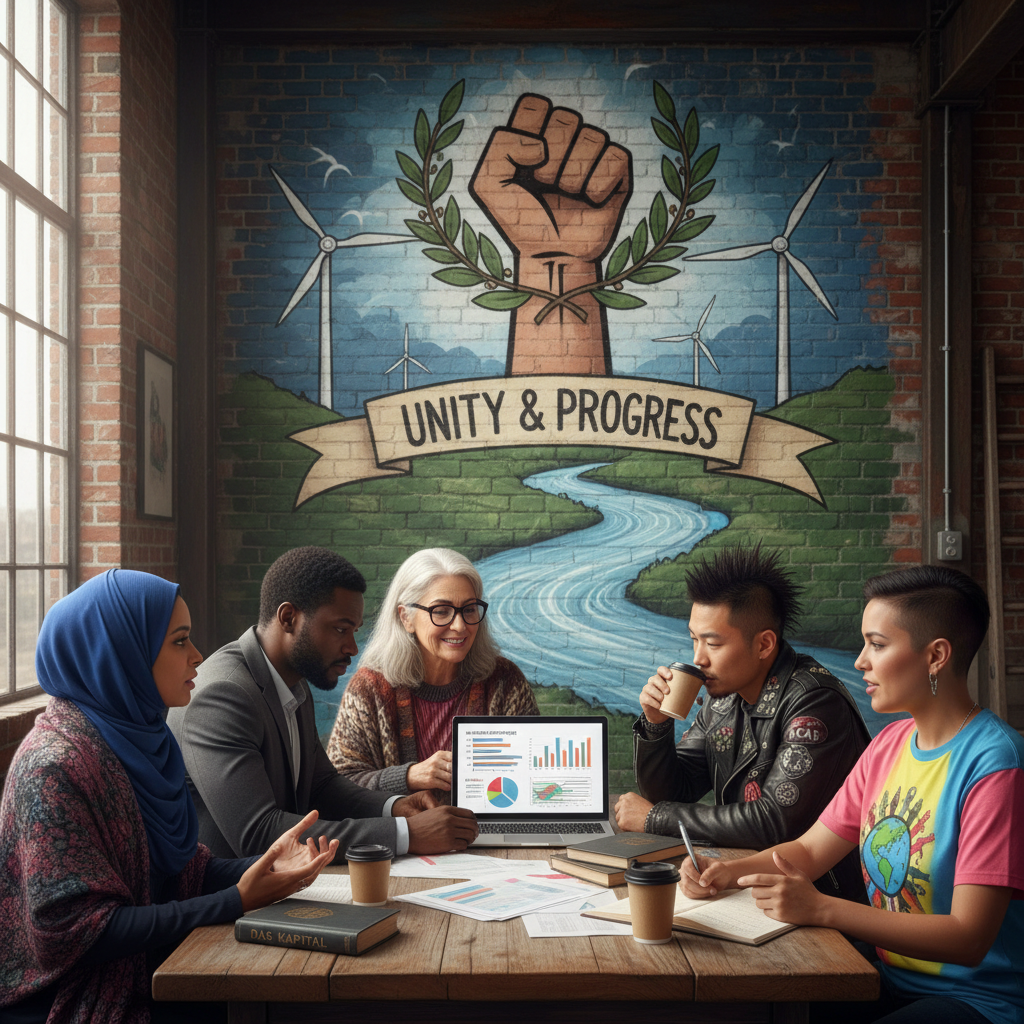
A critical exploration of left-wing politics, focusing on its historical roots, core ideals, diverse ideologies, critiques, and relevance in the modern political climate. Join me in unpacking the complexities behind the label.
Introduction
In a world increasingly polarized, it seems like left-wing politics has become a lightning rod for both fervent support and vehement criticism. Have you ever wondered why? It’s not just about political alignment; it’s about conflicting visions for society. Left-wing politics, with its roots in the ideals of social equality, beckons a closer inspection. Let’s unpack this label and see what it truly stands for in today’s context; spoiler: it’s not all fluff and rainbows!
—
Talking Points:
Do you remember your history class discussions about the French Revolution? Those radicals who sat on the left side of the National Assembly became the reference point for what would be termed left-wing politics. This political alignment arose from a fervent desire to dismantle the rigid social hierarchies that plagued pre-revolutionary France. It championed the cause for a more egalitarian society, one where opportunity wasn’t just reserved for the elite.
Fast forward to the modern era, and the definition has evolved. Left-wing politics has branched out—no longer restricted to class struggles alone. Today, it embodies various movements advocating for social justice across multiple fronts: race, gender, and the environment included. It reflects a broadening pursuit of equality, albeit with challenges and contradictions.
—
Talking Points:
When you think of left-wing ideals, the concept of social equality often leaps to mind. After all, who wouldn’t want a level-playing field? That quest for egalitarianism isn’t just a lofty aspiration; it’s a driving force behind many leftist movements. Historically, it carried the torch for underserved populations—those marginalized by society’s entrenched systems.
What does this mean practically? It raises questions about wealth distribution and whether a capitalist society can genuinely support equal opportunities. For instance, the back-and-forth discussions around taxation reveal a paramount contradiction: Can we redistribute wealth without stifling innovation and individual initiative? From my perspective, these ideological battles are essential for future discourse, as they shape the arithmetic of policies and societal expectations.
—
Talking Points:
Left-wing does not come in just one flavor! Liberalism, socialism, and even communism each offer unique lenses through which to view governance and society. Liberalism, often associated with individual rights and democratic freedoms, tends to lean towards market-based solutions, while socialism advocates for more collective ownership and regulation. Communism? Well, that’s the radical side of the spectrum—where the end goal is a stateless, classless society.
But herein lies the tricky part. Each ideology walks a tightrope between advocating for social change and providing practical solutions applicable at governance. You might say they are like ingredients in a cocktail—when mixed correctly, they can create something fruitful or outright disastrous. Engaging with these differences is invaluable. Understanding how these ideologies fuel the political spectrum allows for more nuanced discussions and reflections.
—
Talking Points:
Here’s where it gets juicy. Left-wing policies come with their fair share of critiques—many of which focus on their ineffectiveness when put to the test. Social safety nets that promise stability sometimes become overreliance traps. I remember the uproar during the debates surrounding universal basic income (UBI). Many argued that it could foster lethargy rather than encourage initiative.
Moreover, you have prominent figures like A. Sivanandan questioning whether the New Left has deviated from the original socialist aims. This disinterest from traditional labor movements has led to fragmentation, where different factions barely engage with one another. If we can’t align as leftists, how can we challenge the prevailing neoliberal frameworks that often dominate the political conversation? It’s frustrating but worth the discourse.
—
Talking Points:
Here we are—2023. Left-wing politics still seem to resonate, yet they face challenges that shape their application. Movements advocating for social justice and addressing climate change have thrust these discussions to the forefront. The Women’s Marches and Black Lives Matter protests have rejuvenated the call for policies that address history’s inequities more holistically.
However, while these movements show promise, they also highlight a significant contention: How do we fuse traditional leftism with modern issues? Addressing intersectionality is pivotal, but some argue it dilutes the core goals of social equality. If unity is key, then what major announcements should we construct to find that common ground?
—
Conclusion Talking Points:
It’s crucial to recognize that the essence of left-wing politics attempts to harness human compassion and address systemic inequalities. Yes, it may seem flawed at times and riddled with contradictions—but isn’t that the human experience?
I encourage you to reflect on these discussions and engage with them in your life. Whether you’re reading widely, attending town hall meetings, or talking with friends, the power lies in your voice and your choices. Who knows? You might uncover truths that help redefine the path forward for yourself and society alike!
—
Q1: What exactly defines left-wing politics?
A1: Left-wing politics typically emphasizes social equality, collective action, and challenges to capitalism’s inequalities, with roots dating back to the French Revolution.
Q2: How has left-wing politics evolved since its inception?
A2: Over time, left-wing politics has broadened to include various movements beyond class struggle, now incorporating issues of race, gender, and the environment.
Q3: What are the main critiques of left-wing policies?
A3: Critics argue that some left-wing policies can lead to dependency or inefficiencies, while others point to internal divisions that dilute the effectiveness of leftist movements.
Q4: Is left-wing ideology still relevant today?
A4: Yes, left-wing ideology continues to evolve and remains relevant, addressing contemporary issues like social justice, climate change, and economic inequality.
Q5: How can one engage with left-wing ideas effectively?
A5: Engaging with left-wing ideas can involve educating oneself on various perspectives, participating in discussions, and being involved in movements aligning with those values.