





Newsletter Subscribe
Join thousands of readers who get our Sunday Briefing: one email, five essential stories, zero fluff. Subscribe NOW!
This article critically examines the role of political humor, analyzing its impact on public opinion, social movements, and the ever-evolving landscape of digital satire.
You know, it’s ironic that laughter can hold more power than a battle cry. Even in the world of politics, a well-timed joke can shift public perception faster than any news headline. While some may dismiss political humor as simple entertainment, I argue that it’s a critical tool for critique, engagement, and, yes, social commentary. Recent studies illustrate that we often turn to humor in times of crisis, revealing the frustrations and absurdities of our political landscape. Who knew a meme could reveal so much about our society? It’s fascinating, but it also comes with responsibility.
Talking Points:
What exactly is political humor? It feels like a no-brainer, right? Jokes about a politician’s gaffe or a clever meme about election issues, they all qualify. But by merely labeling them as jokes, we miss the depth. Political humor often comes in different forms—satire, comedy skits, cartoons, and memes. Each represents a critical commentary on societal norms, political practices, and power structures. It’s not just chuckles over clumsy tweets; it’s a nuanced approach to spark discussions that provoke thought. What better way to dissect the farcical world of politics than through laughter?
Talking Points:
Political satire is not a 21st-century invention. Let’s flash back to the Greeks, who wielded humor as a weapon against tyranny in their theater. Fast forward to the Enlightenment era, where pamphlets featuring sharp wit could undermine authorities. Today, the medium might be social media, but the goal remains: to question power. From Jon Stewart’s poignant take on the news to social media memes that float around like confetti, political humor embodies society’s long-standing tradition of poking fun at those in charge. Isn’t it astounding how humor adapts through the ages while maintaining its critical edge?
Talking Points:
Let’s talk about mechanisms—how does humor actually swing public opinion? Recent studies show that humor can lead to increased engagement. Laughter disarms us, making it easier to accept uncomfortable truths. Remember that time a late-night host made the brutal realities of a political crisis seem more palatable through comedy? It’s not just about the laughs; it’s about sparking a dialogue. It’s critical, however, that we consider context. The same meme can thrill some while enraging others. The way we consume humor today means political jokes can reinforce—or challenge—existing beliefs. We must navigate these waters wisely.
Talking Points:
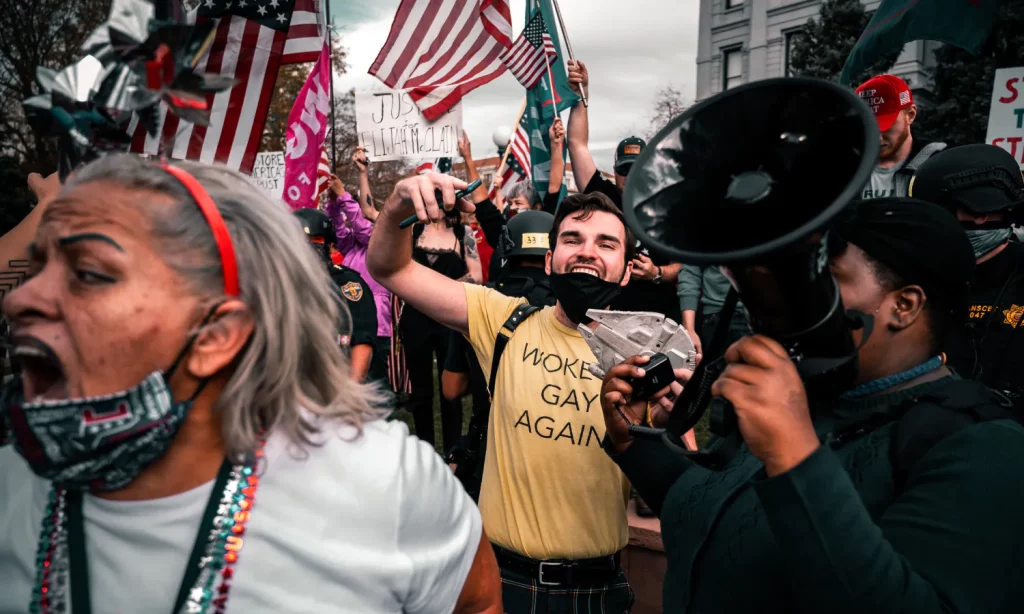
Political movements today thrive on humor! From the Women’s March to climate strikes, activists have harnessed comedy to foster unity and convey messages. Think of the clever signs detailing the absurdities of political negligence—the power of those memes lies in relatability. When movements can make people laugh, they also bring complex issues to the forefront, making them digestible. The laughter that spreads often leads to shared experiences and solidarity among activists. Have you ever shared a funny yet pointed cartoon that elegantly encapsulates a movement’s essence? That’s the power we’re wielding.
Talking Points:
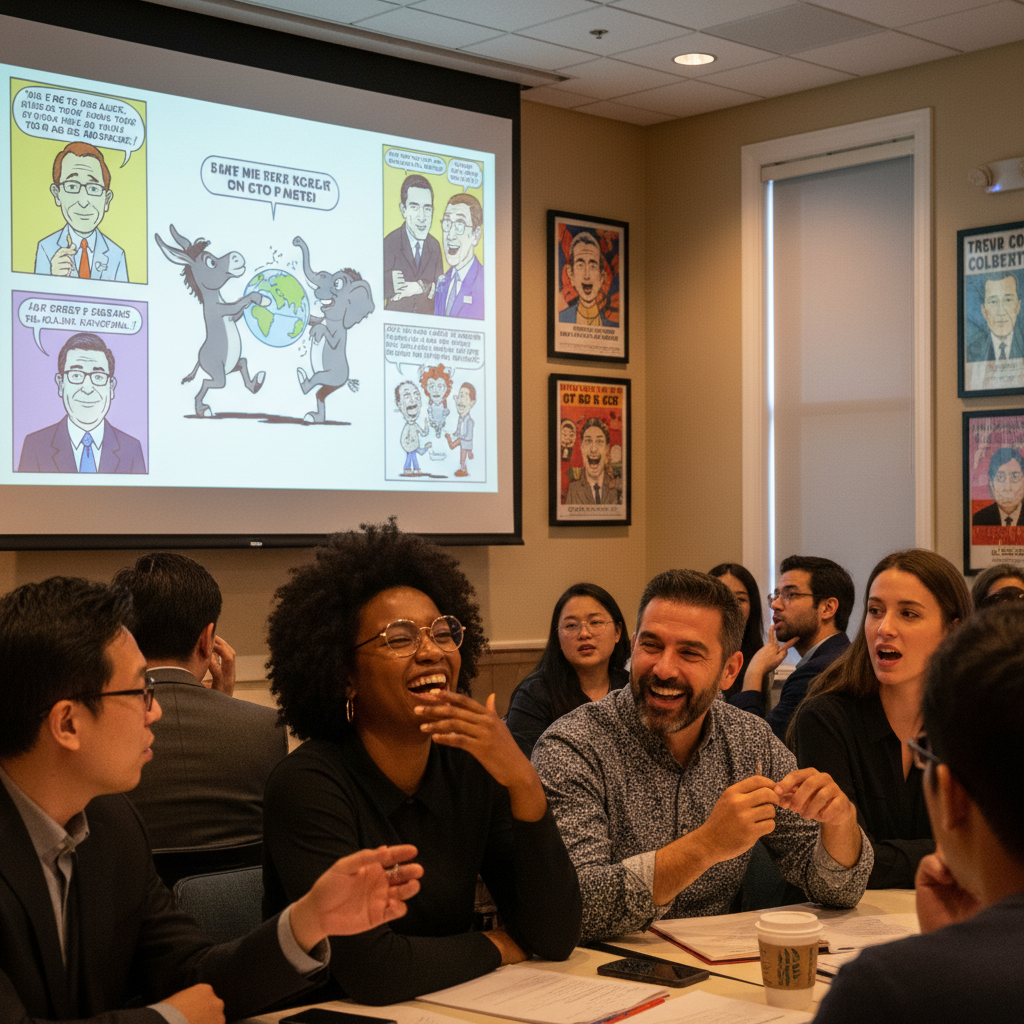
Political cartoons and memes have become the bread and butter of digital satire. The immediacy of social media allows a single cartoon to go viral, capturing the sentiments of countless individuals in just one image. It’s prevalent in our daily scrolling; how many times have memes popped up on your feed that hit the nail on the head with political commentary? This visual method bypasses extensive debates, delivering sharp humor that leaves a lasting impression. But we need to tread carefully around these potent tools. A comic relief can morph into propaganda, depending on its execution.
Talking Points:
Ethics in political humor, now there’s a tangled web! Humor can easily swing from hilarious to harmful without a second thought. The challenge lies not only in creating satire that critiques power but doing so in a way that avoids reinforcing stereotypes or alienating individuals. Everyone knows the joke about politicians being liars, but what about the collateral damage of that portrayal? Sometimes humor masks deeper societal issues, and it’s our job as consumers and creators to ensure we’re not directly contributing to harmful stereotypes. Can we joke about power without compromising our empathy? It’s a fine line to walk.
Talking Points:
Let’s dig into some case studies. Remember the 2016 elections? Political humor ignited conversations, turning the campaign into a comedy show. But not all political jokes connect with voters equally; context is everything! The pursuit of relatability often dictates who laughs and who cringes. Some politicians have recognized the potential of humor in mobilizing support, using comedic messaging to convert undecided voters. But what about those who cringe? Overzealous humor can drive voters further away, showcasing that not all humor holds the same appeal. We’re navigating a tricky landscape here.
Talking Points:
Here’s where it gets dicey: criticisms of political humor abound. Opposing sides often react vehemently, claiming that jokes can trivialize significant issues. The backlash generates noise that distracts from the messages intended—don’t you find that fascinating? In some cases, humor can reinforce divisions rather than bridge gaps. Misinterpretations run rampant in the digital age, where context gets lost in the viral shuffle. When that happens, conversations devolve quickly, creating tension rather than unity. This calls for a collective reassessment of how humor is wielded.
Political humor functions as a lens through which we engage with the absurdities of society. While we laugh, we also challenge the status quo—each punchline a potential spark for critical thought. The next time you chuckle at a meme or political cartoon, remember its power in fostering discourse. I encourage you to explore your humor; personalize it and share it within your circles. Tell me, what’s the most impactful political joke or meme you’ve come across? Let’s keep this conversation alive and unearth the laughter hidden in the serious stuff!
What defines political humor?
Political humor encompasses various forms such as satire, comedy, memes, and cartoons that critique politics and societal issues, often through the use of wit or absurdity.
How has political satire evolved over time?
From ancient civilizations to modern media platforms, political satire has adapted to different cultural contexts while retaining its purpose of critiquing power and prompting dialogue.
Can political humor actually influence public opinion?
Yes, it effectively engages audiences and can sway perceptions, but its impact varies based on context and audience engagement.
Are there ethical concerns with political jokes?
Absolutely, as poorly executed humor can reinforce harmful stereotypes or alienate individuals, which calls for a sensitive approach to political jokes.
How can I use political humor responsibly?
Be mindful of context and the audience; aim for humor that critiques effectively without causing unnecessary division or harm.