






Newsletter Subscribe
Join thousands of readers who get our Sunday Briefing: one email, five essential stories, zero fluff. Subscribe NOW!

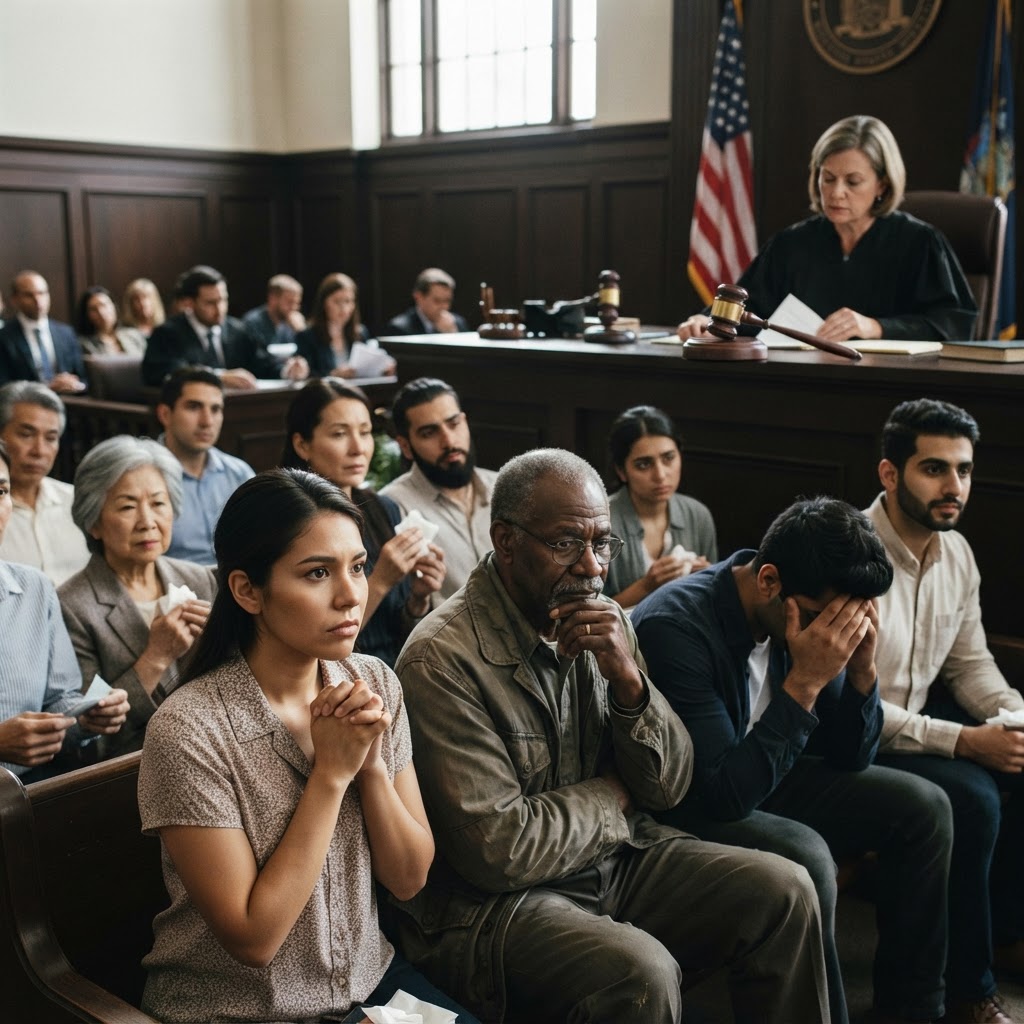
The recent ruling in Trump v. Barbara may have addressed the birthright citizenship issue, but it changes little in a system marked by cruelty and legislative failure.
Talking Points:
Somewhere around 26,000 newborns enter the world in the U.S. annually due to so-called “birth tourism,” according to estimates from the Center for Immigration Studies. But here’s the kicker: that’s less than 1% of the total births each year! It’s easy to get lost in the noise of sensational headlines. I couldn’t help but feel a mix of disbelief and irony when I heard the buzz surrounding the Supreme Court’s recent ruling in Trump v. Barbara. On June 30, 2026, the nation watched as the highest court upheld that even children born in the U.S. to parents lacking proper immigration status are citizens at birth. So, was this really the victory it’s been hailed as? Spoiler alert: it wasn’t.
Talking Points:
The 14th Amendment’s Citizenship Clause isn’t merely a trophy for political battles; it’s meant to serve as a shield against state-sanctioned cruelty. Sure, the recent ruling confirms that children born in the U.S. hold citizenship rights. But let’s not kid ourselves—this clause is a fundamental part of American jurisprudence, not some newly minted gem. Born from the ashes of the Civil War, it was designed to protect the marginalized, making sure no child is deemed stateless merely because of their parents’ legal status. Yet here we are, celebrating a win that should’ve been a given for over 125 years.
The ruling not only reinforced long-standing interpretations established in landmark cases like United States v. Wong Kim Ark (1898), but it also made clear the necessity of upholding these rights. But let’s get real. Does one ruling eliminate the systemic issues that have plagued our immigration system? Hardly.
Talking Points:
The Supreme Court’s 6-3 ruling sounds pretty decisive at first glance. Except, when you dig a little deeper, you see a 5-4 split on the main constitutional interpretation. The dissenting justices passionately warned that this ruling merely confirmed what was already established, arguing that it did not solve the immigration crisis, nor did it fix the broken asylum processes plaguing our borders. We’re left with a judiciary that essentially said, “Yes, this is the law.” Yet the systemic issues remain intact, waiting and festering under the weight of political inaction.
Talking Points:
If you’ve been paying attention, you know that the phrase “subject to the jurisdiction” has been misinterpreted and weaponized in political debates. The bad-faith arguments pushed forward aimed to undermine established law. Let me get this straight: some politicians want us to believe that children born on American soil are not entitled to citizenship if their parents are undocumented. Sounds like an argument more suited for a dystopian novel than a 21st-century democracy!
The implications of these misplaced concerns are far-reaching. They lead us down rabbit holes filled with xenophobia that have no place in a just society. Misguided interpretations of citizenship can have dangerous consequences. They reduce complex human lives into mere political pawns.
Talking Points:
In 2024, approximately 9,576 births were recorded to foreign mothers without a U.S. address. Sounds alarming, right? Except that it accounts for a minuscule fraction of the 3.5 million births each year in the U.S. Yet, the phrase “birth tourism” is tossed around as if it’s an epidemic! Why are we fixating on a fraction instead of tackling real issues? By inflating concerns over this supposed crisis, politicians steer the conversation towards scapegoating, all while ignoring millions of families struggling within our broken immigration framework. Instead of constructive dialogue, we’re left with fear-mongering, and that doesn’t help anyone.
Talking Points:
Let’s talk about administrative chaos for a moment. When the government tries to play around with citizenship classifications, it’s like watching a bad reality show unfold. The red tape stretches on infinitely, with children caught in the middle. Have you ever had to deal with government forms? It’s a marathon of headaches and miscommunication.
Changing the classification of citizenship on paperwork doesn’t just confuse bureaucrats; it stifles lives. Families find themselves separated amidst a convoluted web of legalities, with children trapped in a limbo of uncertainty. How is that just? It’s not; it’s cruel. The legal status should empower families, not paralyze them.
Talking Points:
Even with the Supreme Court’s ruling, we know the political climate is anything but friendly to non-citizen rights. If you think this ruling has dampened the rhetoric around immigration, think again! Legislative avenues are already being whispered about in chambers wanting to further restrict non-citizen rights. Do we really think this is the end of the road for controversial immigration debates? That would be naive. Courts don’t exist in a vacuum. The political environment plays a massive role in shaping not only laws but lives.
Talking Points:
Let’s get real here—the legislative failure to address immigration isn’t just a thorn in the sideline; it’s a festering wound. Laws need to evolve, or they risk leaving entire communities behind, trapped in a constant state of uncertainty. Every road I’ve traveled on this wildly complicated landscape of immigration reminds me of all the vibrant lives trapped by the failure of a system that refuses to change.
And honestly, court rulings are just laterals on a football field. If we want substantial change, we need laws that address the complexities of human lives, not just short-term fixes.
Talking Points:
We can’t put all our eggs in the judicial basket. The long-term risks of allowing courts to dictate human rights outcomes are far too great. Judicial decisions can shift with changing administrations. Just ask anyone who has followed the courts through various political cycles. The unpredictability of judicial decisions regarding immigration rights should make us hesitant to lean solely on them as the ultimate arbitrators of our humanity.
Instead, we need to advocate for meaningful legislative reform—change that is built on compassion and understanding. Let’s build structures that prioritize human dignity over political maneuvering.
What we need is not just a ruling that confirms existing law, but a sweeping transformation that addresses the underlying issues of inequality and systemic cruelty in immigration. Let’s face it: birthright citizenship is just one piece of a much larger puzzle. If we’re truly serious about reform, we must look beyond the courts. Real change only comes when we confront the systemic issues head-on and fight for a compassionate approach to human rights.
Are you as fed up with the political posturing around this issue as I am? Let’s do more than observe. We need discussions steeped in empathy and action fueled by awareness. Share your own experiences or insights in the comments below. We’re all in this together.
The ruling confirms that children born in the U.S. to parents without lawful immigration status are citizens at birth pursuant to the 14th Amendment’s Citizenship Clause.
Children born in the U.S. will retain their citizenship rights regardless of their parents’ undocumented status.
While the ruling reinforces birthright citizenship, it doesn’t resolve ongoing political issues surrounding immigration policy that could lead to further restrictions and challenges.
Much of the media has sensationalized “birth tourism,” though statistics show it represents less than 1% of U.S. births and is often mischaracterized in political rhetoric.
Legislative reform addresses the systemic issues that courts cannot resolve, leading to long-term solutions that foster equality and the protection of human rights.