






Newsletter Subscribe
Join thousands of readers who get our Sunday Briefing: one email, five essential stories, zero fluff. Subscribe NOW!

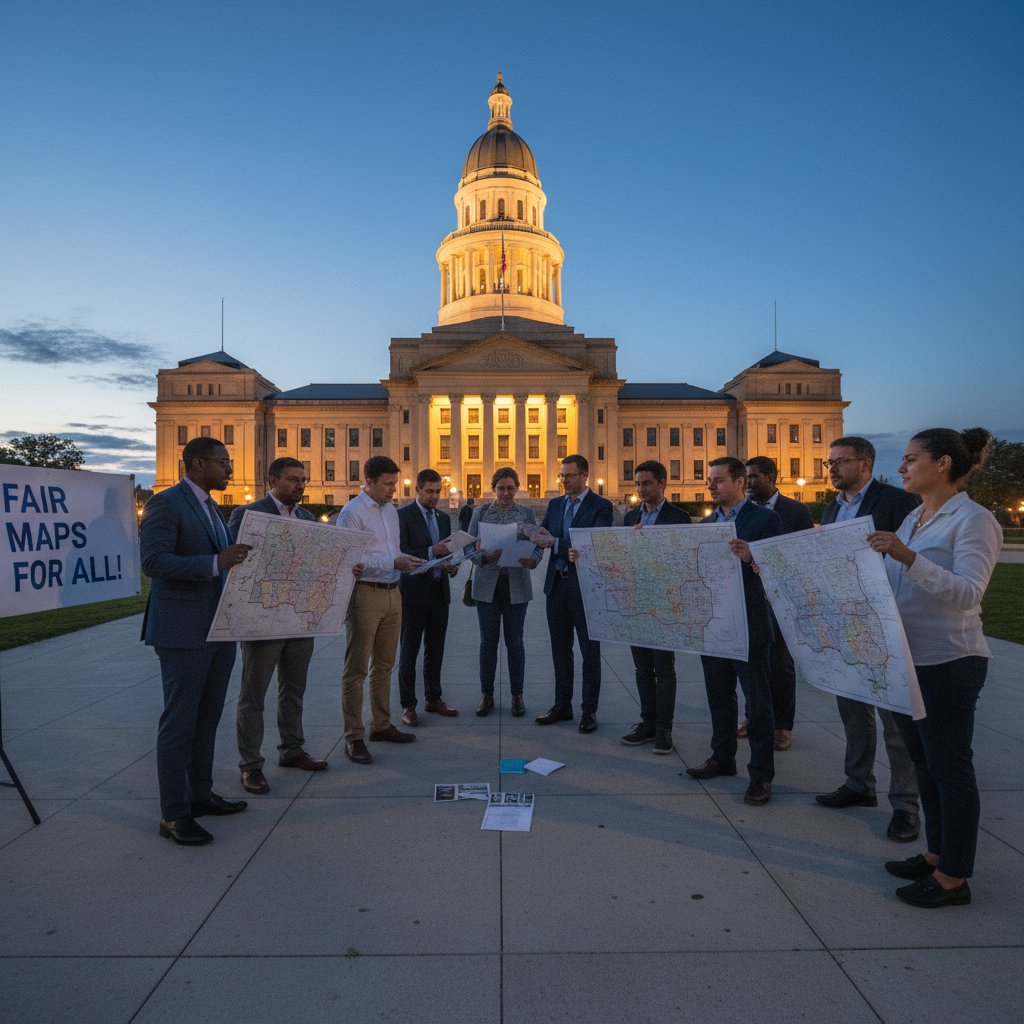
The Louisiana Supreme Court wields considerable influence in shaping legislative district boundaries, yet its role often goes unnoticed amid the redistricting spectacle. As recent court decisions impact voter representation and raise questions about gerrymandering, it becomes essential to untangle this web of judicial and political dynamics, offering a critical look at how much power resides in our courts and the implications for democracy.
Talking Points:
The process of redistricting in Louisiana can feel like watching a magic trick. One minute, district boundaries seem straightforward; the next, they twist and turn, reshaping entire electoral landscapes. The real sleight of hand, however, often lies with the Louisiana Supreme Court. Many people don’t realize how pivotal this judicial body is in determining the boundaries for both judicial and legislative districts.
As both a resident and someone who’s been engaged in discussions about political activism and voting rights, I’ve seen firsthand how these unseen forces shape our representation. The consequences of these judicial decisions ripple through our communities and are often overlooked in public discourse. That’s about to change.
Talking Points:
So, let’s unpack redistricting a bit. Every ten years, after the census, states are required to redraw their legislative and congressional district maps. It may seem mundane, but it’s a critical political process. It essentially determines who wins elections and who gets to sit at the decision-making table.
What’s striking about this process is its potential to manipulate electoral outcomes—a practice commonly known as gerrymandering. Board members can redraw lines favoring the party in power. If you’re wondering how a map can dictate a voice, you’re not alone. The reality is these boundaries impact everything from local schools to law enforcement resources.
Talking Points:
In Louisiana, the Supreme Court plays a direct role in the redistricting process. While the Louisiana Legislature is responsible for drawing the lines for its House of Representatives, the Supreme Court has jurisdiction over its own district boundaries. This means if there’s a dispute or a challenge—like inadequate representation or potential gerrymandering—the Supreme Court can step in and recalibrate the map.
This has led to some fascinating, if contentious, legal maneuverings. The recent passage of Senate Bill 255 (SB255) in 2024, which established new district boundaries for the Supreme Court itself, is a clear indicator of just how fluid and politically motivated these processes can be.
Talking Points:
Let’s break it down further with some specific instances from recent court decisions. Cases involving redistricting have often ignited debates about voting rights and representation. The Court’s rulings can either uphold or dismantle previous legislative decisions.
For instance, in various recent decisions, the Supreme Court faced matters regarding racial gerrymandering—a practice that undermines fair representation by crafting districts that dilute minority voting strength. These rulings have opened up conversations about how race, class, and geography intersect in electoral politics. Watching these cases unfold can feel like being on the front lines of a democratic struggle, often raising questions about who gets a voice and who does not.
Talking Points:
Isn’t it fascinating (and frustrating) how the law can shift political landscapes? Judicial decisions of the Louisiana Supreme Court can create or dismantle barriers to effective voter representation. When courts are influenced by political agendas, you see laws that should protect voter rights instead serve partisan interests. It’s a dance, really—one where judicial interpretations can either harmonize with public interest or stomp all over it.
Unlocking political power has its own code, and sometimes the judiciary plays the role of gatekeeper or, worse—gatekeeper in the wrong hands.
Talking Points:
Not to veer off course, but the Voting Rights Act is critical in this conversation. Established in the 1960s, it aimed to eliminate barriers to voting, especially for African Americans. Fast forward to today: it’s become both a powerful tool and a source of contention during redistricting. States like Louisiana often find themselves at a crossroads, trying to balance federal standards with local political machinations.
Much like a river that carves its own path, the Voting Rights Act influences, but does not dictate, the landscape of electoral boundaries. Sometimes, it’s the judges who decide how far the river flows.
Talking Points:
As you peel back the layers of redistricting in Louisiana, gerrymandering rears its head as one of the most contentious issues. It can be the difference between a fair election and a rigged game. The idea that district lines can be manipulated to favor one party over another is nothing new. In Louisiana, we’ve seen districts get redrawn with precision to pack votes, splitting communities for the sake of political advantage.
The real trick? Determining when legal strategy crosses the boundary into unconstitutional manipulation. The line is blurry, and sometimes it takes a strong judicial arm to keep it in check.
Talking Points:
As voters, we may like to think we hold the power, but the reality is quite different. Who really has the reins on representation? When district boundaries shift, so do the voices that get heard—or silenced.
For the average voter, the implications are vast. Communities can find themselves divided, their collective needs ignored. This isn’t just political window dressing; it results in real-life consequences. Lower voter turnout, lack of representation, and heightened disillusionment with the political process can occur when the stakes feel rigged.
Talking Points:
Looking ahead, the conversation keeps evolving. There are emerging reform proposals seeking to create fairer districting practices in Louisiana. The hope is that the judiciary does not just play a balancing act but becomes an ally in upholding voter rights through equitable boundaries. Public engagement is crucial here—we need to make our voices heard. After all, nothing changes if we don’t push for it!
Talking Points:
As we round out this discussion, it’s clear that the Louisiana Supreme Court has an immense, often unseen influence on redistricting. Understanding this dynamic is vital. We must remain vigilant and informed as the stakes are too high to ignore. Each boundary drawn can change the course of lives, laws, and futures.
What does this mean for you? Stay informed about these judicial decisions and their implications. Engage in your local politics! Most importantly, let your voice be heard—comment below about your experiences or concerns regarding redistricting in your state!
Q1: What triggers the redistricting process in Louisiana?
A1: The redistricting process in Louisiana is primarily triggered by the decennial census, which provides updated population data to help ensure fair representation in the legislature.
Q2: How does gerrymandering affect voter representation?
A2: Gerrymandering can dilute the voting power of certain demographic groups, making it harder for them to elect representatives who accurately reflect their interests and needs.
Q3: Can the Louisiana Supreme Court refuse to intervene in redistricting disputes?
A3: While the Supreme Court has jurisdiction over its own district boundaries, it can choose not to intervene in some disputes unless there is a compelling legal challenge.
Q4: What impact does the Voting Rights Act have on local redistricting in Louisiana?
A4: The Voting Rights Act aims to prevent discrimination in voting practices, influencing how districts are drawn to ensure fair representation for minority groups.
Q5: Are there any ongoing reforms being proposed for the redistricting process in Louisiana?
A5: Yes, various reform proposals have been discussed to promote fairer redistricting practices, including public engagement initiatives and independent redistricting commissions.