







Newsletter Subscribe
Join thousands of readers who get our Sunday Briefing: one email, five essential stories, zero fluff. Subscribe NOW!

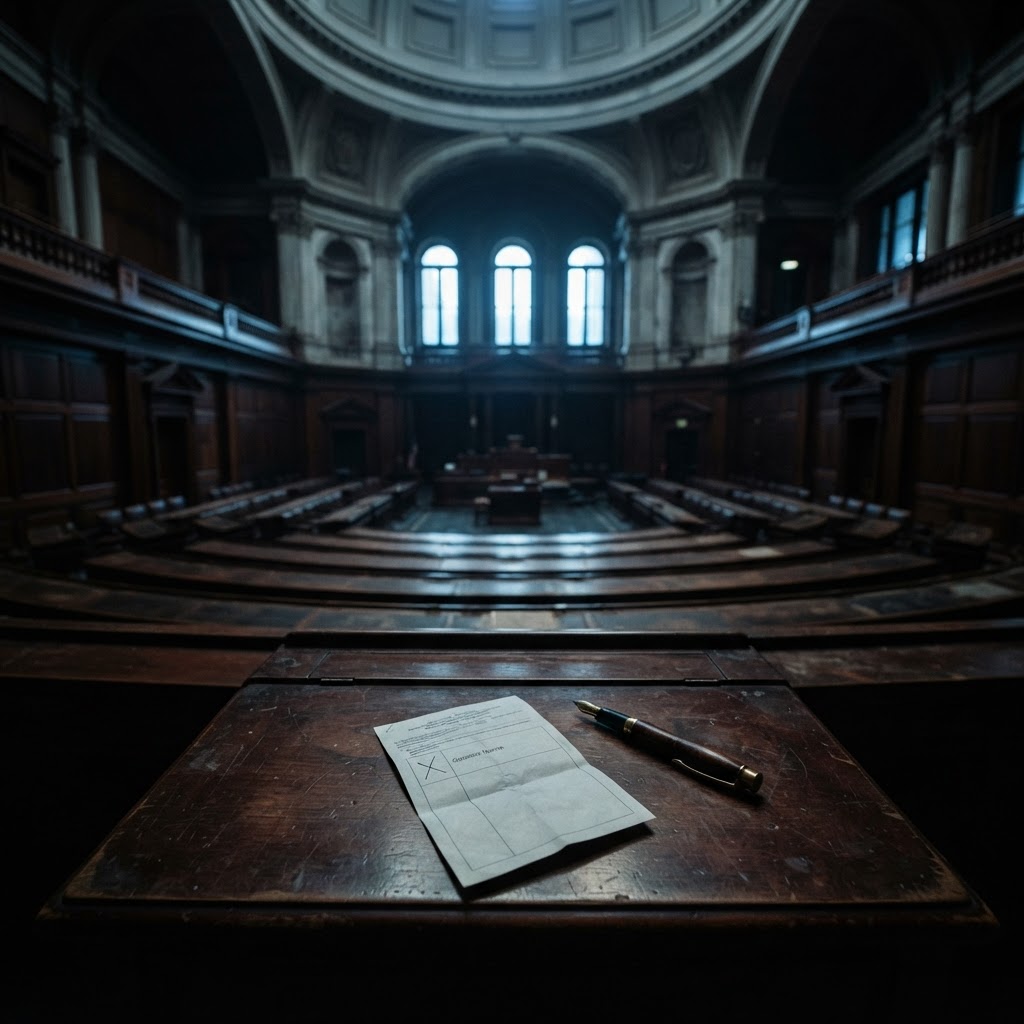
Washington is crumbling, and the 2026 midterms are just the latest act in a theater of the absurd. From the exodus of incumbents to the hollow promises of partisan hacks, here is why your vote is essential yet insufficient for fixing our broken system.
Fifty-eight House incumbents are packing their bags before a single vote is cast in 2026. This isn’t a sign of a healthy turnover. It’s an exodus. Washington is rotting from the inside out, and the upcoming cycle is just the latest act in a theater of the absurd.
Talking Points:
I’ve watched politicians for four decades. They used to debate ideas. Now they audition for cable news clips.
Watching the 120th Congress feels like observing a slow-motion car wreck. Nobody hits the brakes because they are too busy filming their reactions for social media.
Talking Points:
Political scientists love their tidy little charts. They tell us that the president’s party almost always loses dozens of seats. But data ignores the sheer chaos of our current cycle.
Predicting a simple referendum on the Trump administration policy impact is lazy journalism. It ignores the granular, messy reality of local discontent.
Talking Points:
The GOP is eating itself. They talk about a GOP midterm strategy, but they cannot even agree on a basic agenda.
Internal fighting is a luxury they cannot afford. When the House of Representatives control is on the line, fragmentation is a death sentence.
Talking Points:
Democrats are banking on the idea that people will vote out of fear. It’s a tired, predictable play. People are tired of being told to vote against something instead of for something.
I’ve talked to plenty of folks who just want the noise to stop. They don’t care about the partisan game anymore.
Talking Points:
Fifty-four percent of voters point to the economy as their biggest concern. They aren’t lying. I see it every time I hit the grocery store.
Forty percent of people say they feel worse off than they did in 2025. That’s not a talking point. It’s a tragedy.
Talking Points:
Washington loves a foreign conflict. It feels important. But for a parent in Ohio, it’s just another line item on the inflation bill.
Global instability isn’t something most people can influence. We want them to focus on the home front for once.
Talking Points:
A few seats can change everything. The Senate election outlook is a nail-biter for the wrong reasons. We aren’t voting for progress; we are voting to block the other side.
This isn’t government. It’s trench warfare in suits.
Talking Points:
Look at Texas, Florida, or California. The maps change, yet the outcome stays the same. That is not an accident.
Legislators pick their voters now. We don’t pick them. It makes the entire concept of a representative election feel like a hollow joke.
Talking Points:
We spend more time arguing about how to vote than what we are voting for. It’s a clever distraction. If you keep people focused on the process, they stop looking at the results.
Nothing is ever solved. It’s just more talking, more lawyers, and more nonsense.
Talking Points:
Can you blame them for tuning out? When you realize the game is rigged, turning off the television is the only rational choice.
I still vote, but I do it with a heavy heart. I know that my singular mark on a paper ballot won’t fix the institutional decay.
Talking Points:
You cannot just vote your way out of a burning building. You have to change the building codes.
Start local. Ask hard questions. Stop accepting the PR spin from either side. If we don’t start holding them to account, this system will collapse under its own weight.
Your vote is a tool, not a cure-all. Use it to keep them honest, but don’t expect it to fix everything on its own. Now, I want to hear what you think. Are you seeing the same decay in your own neighborhood, or is this just the bitter perspective of a cynic? Leave a comment below.
1. Question: When are the 2026 midterm elections taking place? Answer: The elections are set for November 3, 2026, to decide control of the 120th Congress. 2. Question: Are all seats in the House and Senate up for grabs? Answer: All 435 House seats are up for contest, along with 35 of the 100 Senate seats. 3. Question: Can the President postpone these elections? Answer: No, federal law sets the date, and the president has no authority to alter it. 4. Question: How does redistricting affect the 2026 cycle? Answer: States like Texas and California have implemented new maps, which shift the landscape for many congressional races. 5. Question: Why is economic affordability such a dominant issue in 2026? Answer: Over half of voters cite the economy as their primary concern due to the direct impact of high costs on their personal financial stability.