







Newsletter Subscribe
Join thousands of readers who get our Sunday Briefing: one email, five essential stories, zero fluff. Subscribe NOW!

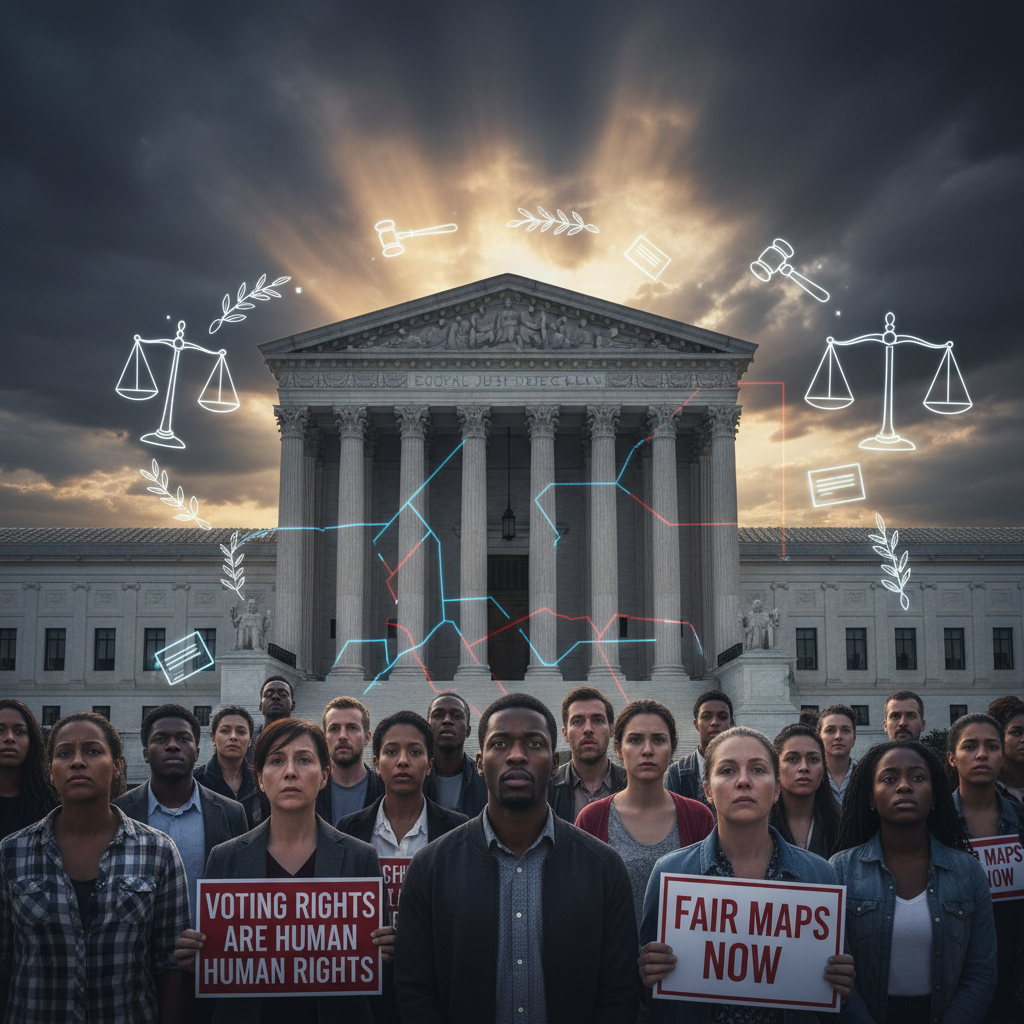
A critical examination of the Supreme Court's recent rulings on racial gerrymandering showcasing the implications for minority voter representation and the integrity of the Voting Rights Act.
Introduction
When I first heard that the Supreme Court ruled in 2026 that race-conscious redistricting under the Voting Rights Act was unconstitutional, I felt a wave of disbelief wash over me. How could this be? This decision sent shockwaves not just through communities of color, but rippled throughout the very fabric of our electoral system. It’s a testament to how judicial interpretations can significantly influence minority voting rights, often leading to ramifications far beyond the courtroom.
The balance between representation and political power is delicate, especially when it concerns race. As I sifted through these historical rulings, I couldn’t help but feel a mix of frustration and urgency; our democracy shouldn’t be structured to dilute minority voices.
Talking Points:
The concept of gerrymandering isn’t new. From the invention of the term in the early 19th century to the present day, political map-making has been used as a means to secure power. Historically, the Voting Rights Act (VRA) of 1965 sought to combat just that, addressing the systemic barriers placed in front of minority voters. Racial gerrymandering was identified as a critical issue, with courts stepping in to protect against the manipulation of district lines that could unconstitutionally marginalize black voters and other minorities.
Over time, the Supreme Court has fluctuated in its stance on racial gerrymandering cases. This inconsistency in judicial interpretation has left communities vulnerable, highlighting a conflict between upholding voting rights and allowing states to control their own electoral maps.
Talking Points:
In Louisiana v. Callais (2026), the Court’s ruling that race-conscious redistricting was unconstitutional turned the tide on how we interpret the VRA. The decision underscored a growing trend towards a ‘color-blind’ ideology that aims to treat all voters equally, yet, the reality is that systemic racial discrimination persists in our society. The implications of this ruling are staggering; they potentially undermine decades of progress aimed at ensuring fair representation for minorities in political landscapes.
The ruling threatens to dismantle protections that were set up to address issues rooted firmly in America’s racial history. With the erosion of these essential protections, I can’t help but wonder about the dynamics of power moving forward.
Talking Points:
When the Supreme Court upheld South Carolina’s congressional district map in 2024, I braced for the backlash. Here was yet another instance where a court chose to prioritize state boundaries over the essential needs of minority communities. The rejection of racial gerrymandering claims sends a message: it’s okay to ignore the demographics in favor of political convenience.
This ruling is emblematic of the Supreme Court’s increasing reluctance to engage with racial issues in gerrymandering cases. In the end, what does this mean for minority representation? The stakes are exceptionally high.
Talking Points:
The Court’s turn towards ‘color-blindness’ sounds noble on the surface — who wouldn’t want to treat everyone equally? Yet, beneath this seemingly benign philosophy lies a dangerous denial of the realities that minorities face. It ignores decades of historical context where race has been a determining factor in political disenfranchisement.
By adopting this perspective, the judiciary implicitly supports the status quo, prioritizing political operations that maintain existing power hierarchies. This ideological shift leaves us grappling with a question: can we foster true representation in government if we refuse to acknowledge the impact of race?
Talking Points:
As these judicial decisions unfold, the most vulnerable communities bear the brunt of such changes. Minority voters find themselves at an increasing disadvantage, where their ability to influence elections is diminished, and their voices are effectively silenced. The consequences are dire — we could be on a fast track toward further marginalization. In essence, each ruling undermines the ideals laid out in the Voting Rights Act, creating a precarious environment for future electoral integrity.
Talking Points:
Looking ahead, the landscape for racial gerrymandering litigation seems fraught with difficulty. Each ruling not only sets precedents for future cases but also sends a chilling message to advocates. This reality could stifle grassroots movements fighting against gerrymandering when lawsuits are met with dismissive responses from the courts. Yet, this isn’t the end of the road. Activists and legal experts are scrambling for innovative strategies and arguments to reclaim the narrative around inclusive representation. Ideas circulating include movements for new legislative actions to restore protections under the Voting Rights Act. The battle is far from over, but the odds appear stacked against those advocating for justice.
Reflecting on the recent trends in the Supreme Court regarding racial gerrymandering, it’s hard not to feel a hurricane of emotions. The authority of the judiciary to impact voting rights cannot be understated. As the lines are redrawn, so too must we navigate the path towards ensuring equitable representation. We owe it to ourselves and the future generations to challenge these precedents and to advocate for a fair electoral system that acknowledges the true diversity of our society. I encourage you to share your thoughts or experiences regarding gerrymandering in the comments section below. Let’s continue this conversation!
Q1: What is racial gerrymandering, and why is it important?
A1: Racial gerrymandering refers to the practice of drawing electoral district boundaries to dilute the voting power of racial minorities. It’s vital because it directly affects minority representation in politics and can perpetuate systemic inequalities.
Q2: How has the Supreme Court’s stance on racial gerrymandering changed over time?
A2: The Supreme Court has swung between upholding protections against racial gerrymandering and undermining them with recent decisions that favor more color-blind approaches, often ignoring the underlying racial issues in voting rights.
Q3: What are the implications of the Louisiana v. Callais ruling?
A3: The Louisiana v. Callais ruling has profound implications for minority representation, as it declares race-conscious redistricting unconstitutional, potentially leading to further marginalization of minority voters in future elections.
Q4: What can activists do in response to these judicial rulings?
A4: Activists can organize grassroots movements, advocate for new legislative measures, and utilize innovative legal strategies to combat the negative impacts of these rulings and pursue equitable representation.
Q5: What role does the Voting Rights Act play in gerrymandering discussions?
A5: The Voting Rights Act serves as a key legislation aimed at protecting minority voting rights and addressing discrimination. It’s central to debates about gerrymandering as it lays the groundwork for challenging unfair districting practices.