






Newsletter Subscribe
Join thousands of readers who get our Sunday Briefing: one email, five essential stories, zero fluff. Subscribe NOW!
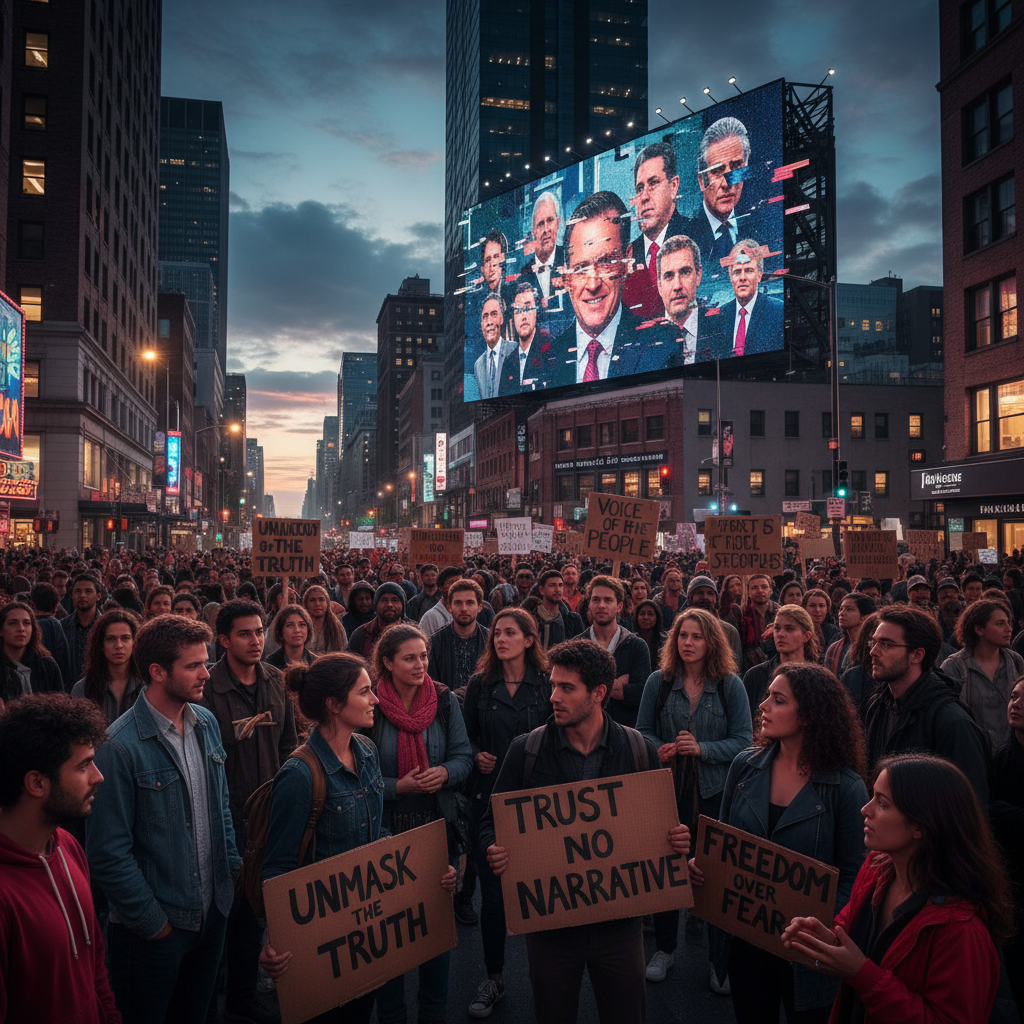
Political commentary today reveals layers of illusion—choice, media manipulation, and the rise of apathy. As voices grow polarized and democratic institutions falter, it's time to reclaim our agency in this chaotic narrative.
We’re living in a time where saying that political discourse has gone off the rails feels like both a cliché and an understatement. Consider this: a mere 6% of Twitter users are responsible for a staggering 73% of political tweets. If that doesn’t rattle your confidence in public opinion, what will? Since when did the voices of a few become the echo chamber for the many?
Let’s take a real hard look at the political commentary that’s dominating headlines nowadays. It’s time to peel back the layers of deception and illusion that are shaping our understanding of the political landscape. Welcome to a world where the supposed choices we have are often mere illusions and where the media plays puppeteer behind the curtain. Buckle up!
Talking Points:
When I think of political choice, I can’t help but visualize a buffet table filled with the same old dishes, dressed up to look different. Voting, which should be a powerful act of personal agency, often feels more like choosing from a menu of two flavors—pizza or pasta, but both come from the same kitchen. Political parties shape candidates to fit their narratives, constraining voters into a narrow band of acceptable options.
This isn’t just a cynical take; it’s the reality of how the system works. Voter disenfranchisement runs rampant. And while we chant about democracy, we’re often boxed in by pre-defined party loyalties and identities. The illusion of choice becomes a tool for political manipulation, inviting us to think we’re making impactful decisions when, in fact, we’re merely dancing to someone else’s tune.
Talking Points:
If you ever wondered how the news can be both a lifeline and a minefield, look no further. The media landscape today is awash with manipulation—it’s staggering. Whether it’s the nightly news anchors delivering scripted narratives or social media influencers touting partisan agendas, media has become the puppet master, and viewers are its marionettes.
Take the time to reflect. Ever notice how a scandal involving a politician can seem like a headline-generating bombshell one minute, yet fade into obscurity the next? This is media manipulation at its finest. The choice of what gets covered and how it gets covered defines our understanding of current events. It’s no surprise that many feel lost among the contradictions and hyperbole. Many political discussions unfold under a heavy bias, skewed by ownership structures that favor sensationalism or domination of narrative.
Talking Points:
Political polarization isn’t just a talking point; it’s a defining feature of our times. It seems like every day, the lines drawn in the sand grow thicker and more permanent. Increasingly, we view politics through a lens of tribalism where political identity overshadows personal connections. You can barely mention a candidate’s name without igniting a firestorm of divisive reactions.
This division isn’t without consequences. It breeds hostility and discourages meaningful dialogue. Friends become enemies over ideology, and once-civil discourse turns into shouting matches or, worse, silence. Public opinion swings dangerously towards extremism as moderates struggle for their voices to be heard amid the cacophony. What does that mean for democracy? It means a slow erosion of unified civic engagement.
Talking Points:
Have you felt that collective sigh of disinterest? Yes, civic engagement is on the decline, and it’s both alarming and revealing. The apathetic shrug of many citizens speaks volumes about their feelings of powerlessness in an increasingly complex political system.
Is it apathy or disillusionment? It seems that frustrated citizens across the spectrum are reflecting more disengagement than anger. The political process feels rigged; why bother? Yet, amidst this backdrop, grassroots movements are emerging, pushing for change and accountability from the bottom up. It’s a reminder that not everyone has given up on the system yet, and real change can come from empowering voices who insist on being heard.
Talking Points:
Populism is more than just a buzzword; it’s a response to the failures of established politics. When political elites become disconnected from everyday struggles, it creates fertile ground for populism to flourish. And let’s face it—populist leaders often capitalize on that disconnect by making grand promises wrapped in anti-establishment rhetoric.
By glamorizing their outsider status, these leaders attract attention and followers, presenting themselves as champions of the “common people.” The issue becomes that populist movements can also stir dangerous sentiments and resentment, further dividing society. They often thrive on oversimplification, promising change that sounds enticing but rarely addresses the root causes of deep-seated problems.
Talking Points:
Democratic institutions are supposedly designed as safeguards, yet they often feel like shackles—binding the very citizens they aim to protect. This paradox continues to perplex analysts and commentators alike. The boundaries and balances established to prevent tyranny can sometimes perpetuate disillusionment, as they can stall change.
Populist sentiments have historically challenged these institutions, and therein lies a huge risk. Weakening these checks can lead to a swift descent into authoritarianism, while robust institutions can empower citizens. It’s a delicate dance: how do we retain the integrity of our democratic processes while ensuring they address citizens’ needs?
Talking Points:
Social media has transformed the way we engage with politics. It’s a double-edged sword; on one hand, it amplifies voices that traditional media may overlook. On the other, it creates echo chambers where opposing views barely penetrate. If you’re only seeing retweets that affirm your beliefs, how do you challenge your perspectives?
Let’s talk about misinformation. It spreads like wildfire on platforms ripe with algorithms designed to keep users glued to their screens. A lie can travel halfway around the world before the truth even gets its shoes on. This highlights the urgent need for media literacy, as the capacity to discern fact from fiction is critical for sustaining healthy political discourse.
Talking Points:
Money talks, and in politics, it often shouts. Super PACs and dark money organizations have cast shadows over the electoral process and have impacted public trust. Have you ever wondered why certain candidates get so much airtime while others seem to vanish into obscurity? Look no further than their financial backing.
Recent elections have demonstrated just how easily money can shape narratives and determine outcomes. The implications for democracy are dire; when a few individuals wield such power, public perception becomes clouded by questions of integrity and accountability.
Talking Points:
Political leadership has reached a point of palpable frustration for many. Failures are often swept under rugs, while citizens remain left to sift through excuses. When leaders prioritize self-preservation over accountability, the repercussions spill over into trust and faith in the system.
We witness the consequences when ambition overtakes responsibility. Citizens are right to question leadership that consistently falls short, craving leaders who live up to the ideals they espouse. The more we demand accountability from our leaders, the more they’ll have to demonstrate real action.
Talking Points:
Globalization isn’t just a trend; it’s a transformative force shaping our political realities. While it brings considerable benefits—like economic growth and cultural exchange—it also introduces complexities that aren’t always welcome. For local communities, it can feel like a betrayal, leading to job losses and eroded local pride.
But globalization is also a powerful motivator for political activism, as citizens band together to advocate for their needs. It underscores how interconnected we truly are, yet also reveals deep divisions rooted in competition for resources. It’s a tricky paradox—how do we embrace globalization while still prioritizing local interests?
As we navigate this distorted political landscape, it’s clear that reclaiming our agency is vital. The illusions that have become the fabric of our political discourse demand scrutiny. We can no longer afford to be passive consumers of narratives shaped by the powerful. We must engage, question, and redefine what choices we want to prioritize.
Each of us has a voice—no matter how small—and together, we can work towards revitalizing democratic principles. Embrace discussions, challenge the status quo, and never underestimate the power you hold. Our future isn’t determined solely by politicians or media; it’s shaped by every one of us.
Q1: How can I stay informed about political issues without falling into partisan traps?
A1: Diversify your media sources! Engage with different viewpoints, seek out independent journalism, and don’t shy away from reading across the spectrum. This will give you a more nuanced understanding of current events.
Q2: What can I do to improve civic engagement in my community?
A2: Start by organizing community forums or informal gatherings to discuss local issues. Collaborate with local organizations and encourage others to participate in discussing civic responsibilities.
Q3: Are there ways to combat misinformation on social media?
A3: Yes! Always verify information with reliable sources before sharing. Use fact-checking websites and promote media literacy initiatives within your circles to raise awareness.
Q4: What are effective ways to advocate for political accountability?
A4: Join advocacy groups that align with your values, engage in peaceful protests, and communicate directly with your representatives. Use social media to raise awareness and pressure leaders.
Q5: How does political money affect my vote?
A5: Money can heavily influence campaign narratives, advertisements, and candidate visibility, often prioritizing well-funded candidates over grassroots initiatives. To fight against this, support political reform efforts aimed at reducing the influence of money in politics.