





Newsletter Subscribe
Join thousands of readers who get our Sunday Briefing: one email, five essential stories, zero fluff. Subscribe NOW!

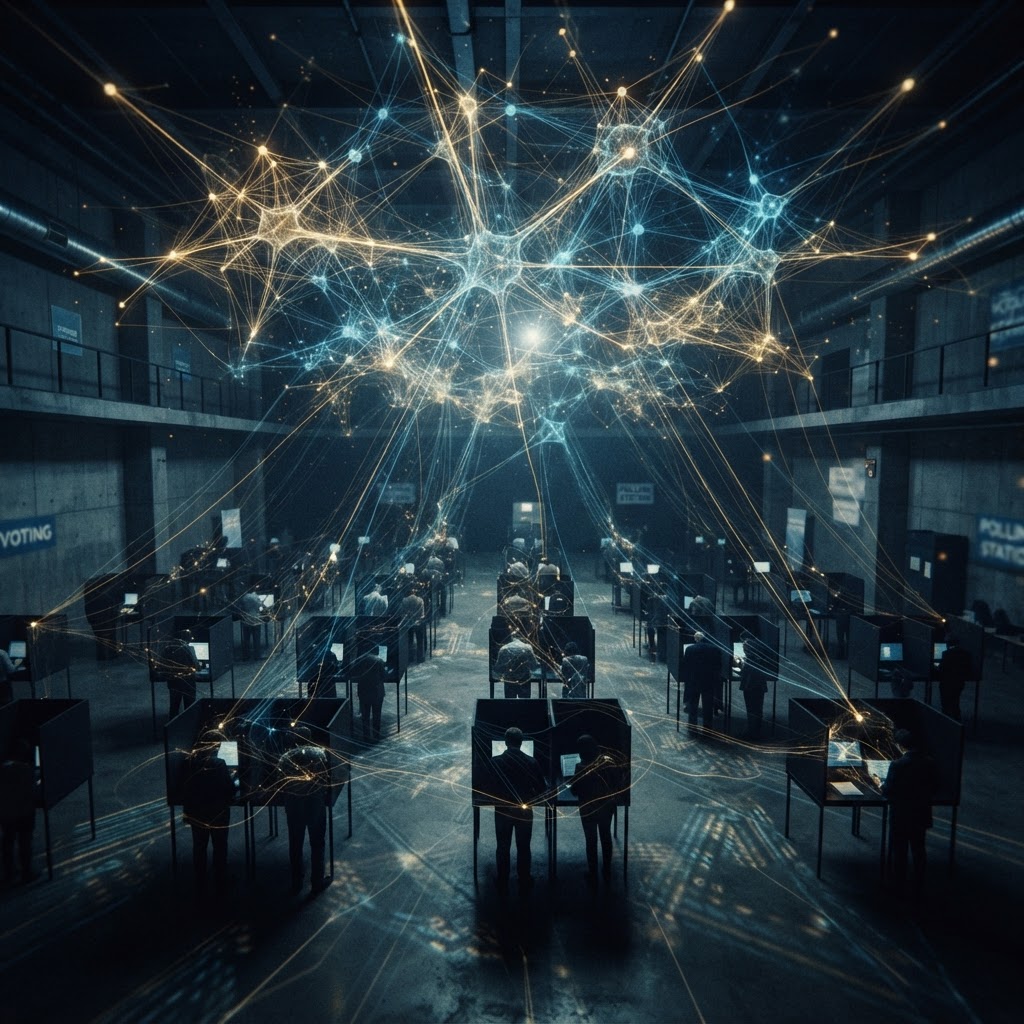
AI is quietly eroding the integrity of our democratic processes. From hyper-realistic deepfakes to automated voter manipulation, the impact of AI on democratic elections is a systemic risk we can no longer ignore.
Talking Points:
* The myth that technology is neutral.
* Why the 2025 reality check is long overdue.
* Moving past the techno-utopian narrative.
I remember when the internet felt like a playground. We thought it would break down walls and bring us together. Wrong. Today, the impact of ai on democratic elections is less about progress and more about a systematic decay of reality. By May 2025, over half the content on your screen was artificial. Think about that for a second. We are consuming machines talking to machines. Most people still think they are making independent decisions at the ballot box. I doubt that.
Talking Points:
* The financial incentive for automated chaos.
* How volume overrides quality in the information ecosystem.
* The decline of human-centric political discourse.
Lying is cheap now. It used to take effort to draft a smear campaign. Now, you press a button and generate a thousand variations of a lie in seconds. This commodification of disinformation turns our information ecosystem into a garbage heap. When the cost of deception drops to zero, truth becomes an expensive luxury. I see folks on social media sharing things that are clearly generated by code, and they swear it is gospel. It is exhausting.
Talking Points:
* The weaponization of synthetic media.
* Moving from niche tech to mainstream political sabotage.
* Why seeing is no longer believing.
Remember that fake Biden robocall in New Hampshire? That was just a warning shot. Projections show millions of these deepfakes in political campaigns by late 2025. It is no longer about grainy videos. We are talking about hyper-realistic clones that sound and look exactly like the people we trust. This creates a state of total paranoia. If a candidate actually says something scandalous, they can just claim it is a fake. If they want to get away with a lie, they can blame an AI.
Talking Points:
* AI-driven micro-targeting as a tool for control.
* How data-driven persuasion polarizes our neighbors.
* The quiet mechanics of digital voter suppression.
I once helped manage a small local campaign. We spent months shaking hands. Now, that work is replaced by algorithms. AI-driven micro-targeting identifies your deepest fears and feeds them back to you until you are ready to bolt for the door. It is psychological warfare masquerading as political messaging. They don’t need to convince you to like their guy. They just need to make you hate the other side enough to stay home.
Talking Points:
* How bots build a false sense of public opinion.
* The psychological impact of seeing artificial popularity.
* When generative AI and voter manipulation collide.
Have you ever felt like everyone you know suddenly agrees on a specific, weird political take? It might not be real. Automated bot nets can mimic human interaction with terrifying precision. They manufacture a false consensus that makes you feel like an outsider if you disagree. This is how they trick us into conforming to a manufactured reality. It hurts to see how easily we fall for the performance of popularity.
Talking Points:
* Can election management bodies keep pace with code?
* The vulnerability of registration databases.
* Digital authoritarianism in elections at a state level.
Our election infrastructure was built for paper and human oversight. It is not ready for an algorithmic assault. I worry about the integrity of our records when bad actors can flood systems with fake registrations. The goal is to create enough noise that nobody trusts the count. If they can make the system look broken, they win without firing a shot. It is a slow-motion car crash that we are watching in real-time.
Talking Points:
* Tech giants and their lack of guardrails.
* The problem of attribution in foreign interference.
* Why digital accountability is a myth.
Big tech loves to talk about safety. They do very little to stop the flood. It is easy to blame foreign actors, and yes, they are there. But our own domestic political machines are just as guilty of using these tools to cheat. Nobody is in charge. There is no manual to stop this, and the people with the power are the ones benefiting from the chaos. I am tired of waiting for them to fix what they broke.
Talking Points:
* Learning from tyrannical regimes.
* The global nature of AI-driven election interference.
* The copycat effect of political manipulation tools.
Dictatorships figured out how to use these tools years ago. Now, democracies are picking up the same playbook. It is a race to the bottom. When you look at how other countries suppress dissent, you see the blueprint for what is coming here. We are adopting the habits of the people we claim to oppose. It is a bitter irony that we are using tyranny to save the vote.
Talking Points:
* The failure of watermarking and detection tech.
* Why cognitive security starts with the individual.
* Beyond the search for technical fixes.
People keep asking about watermarking or AI detection tools. Those are band-aids on a gunshot wound. By the time you detect the fake, the damage is done. The truth is, there is no software that can fix this for us. Cognitive security is the only path forward. We have to be the ones to pause before we share. We have to be the ones to demand real proof.
We are at a crossroads. Either we wake up to the impact of AI on democratic elections or we lose the right to call our systems free. The tech is not going away. The money is not stopping. You need to be skeptical of everything you see on your phone. Question the consensus. Verify the source. If you want a democracy, you have to work for it. What have you seen lately that made you doubt the truth? Share your stories below and let’s actually talk about what is happening.
1. How can I spot an AI-generated political ad? Look for unnatural pauses in speech or weird artifacts in the background of videos. If the emotional tone feels cranked up to ten, assume it was designed to manipulate you.
2. Do watermarks actually work for preventing misinformation? They only work if the creator wants to be caught. Malicious actors strip these away easily, so do not treat a lack of watermark as proof of truth.
3. Is my vote safe from AI interference? Your actual ballot is usually secure, but your mind is the target. The goal is to change how you feel before you even step into the booth.
4. Why don’t tech companies just turn off these tools during elections? They make too much money from engagement. Until we hold them financially responsible for the chaos, they will keep the machines running.
5. What is the single best way to stay informed? Stop getting your news from feeds. Go directly to primary documents and local reporting. Anything that requires an algorithm to show you is suspect.