






Newsletter Subscribe
Join thousands of readers who get our Sunday Briefing: one email, five essential stories, zero fluff. Subscribe NOW!
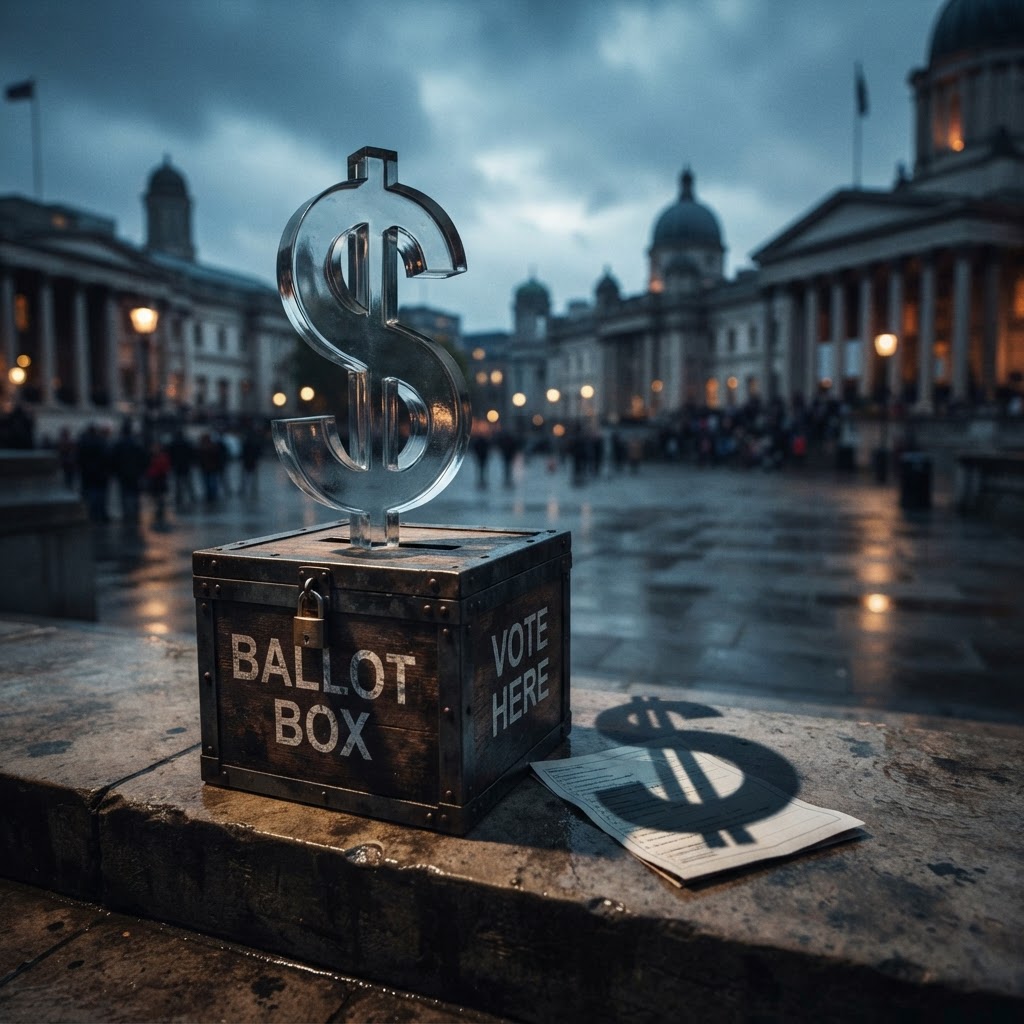
Is your vote actually counting, or is it being drowned out by billions in corporate spending? We examine the true cost of corporate influence on our democracy.
Talking Points:
I sat in a coffee shop last week watching a local council meeting on my phone. The lobbyist for a major developer was literally whispering in the ear of a council member. It felt like watching a fixed fight in a boxing ring. We are told our vote is the ultimate equalizer. That is a lie. Corporations have poured $1.58 billion into federal elections since the 2010 Citizens United decision. Your ballot is a paper slip. Their check is a wrecking ball.
Money talks. It screams over your whispers at the ballot box. I used to believe the system worked if we just participated. I was wrong. The sheer scale of corporate influence in politics makes individual participation feel like spitting into a hurricane. We are operating in a system where capital dictates policy, not citizen preference.
Talking Points:
Corporate political influence is not just big checks. It is the art of buying the rules of the game. When a firm practices rent-seeking behavior, it is not competing in the market. It is competing in the backrooms of government to stop others from competing. This is the rot at the heart of our economy.
I remember talking to a small business owner who got crushed by a new regulation. It turns out, his giant competitor paid a firm to write that regulation. The law effectively outlawed his business model. That is legislative agenda setting in plain sight. They do not just lobby for a tax break. They lobby to build walls around their monopolies.
Talking Points:
Corporations love to parade their social goals. They sponsor pride parades and plant trees. Look at the balance sheet though. When those same companies face a policy that threatens their bottom line, they drop the act. The pursuit of shareholder value maximization will always trump your well-being.
I have seen this pattern a hundred times. A company gets bad press for something awful. They pivot to greenwashing their public image. At the same time, they funnel cash into secret funds to lobby against environmental laws. They use dark money to hide their tracks when they know you would hate their real agenda.
Talking Points:
Citizens United turned the dam into a sieve. We saw states drop independent expenditure bans almost overnight. The results were predictable. Corporate tax rates fell by nearly 8% in some spots. Business-friendly tort laws became the standard.
It is not a coincidence. This was a clear return on investment. Firms that played the game saw their profits climb while our infrastructure crumbled. We paid the price for their legal victories. Your local roads remain broken so a corporation can save a few points on its tax bill.
Talking Points:
$44 billion. That is the amount the top 20 lobbying industries spent between 1998 and 2022. They do not spend that because they enjoy the process. They spend it because it works. Some studies show a $1,000 return for every $1 spent. That is a better margin than any startup.
I want to see real reform. Most campaign finance reform proposals are just theater. They focus on tiny donation limits while ignoring the lobbyist who writes the law itself. If we want to change things, we need to attack the source of the agenda. Stop the lobbyists from drafting the bills.
Talking Points:
There is a revolving door between the regulator and the regulated. You see a senator leave office today. Tomorrow, they appear on the payroll of the very industry they just supervised. It is a legalized bribe system. They trade their public service for a massive payday.
This is why regulatory capture is so hard to stop. The people in charge of the rules are just warming the chair for their next corporate job. They are not working for you. They are working for their future bosses. It makes me sick to see it happen every single cycle.
Talking Points:
Capital should go to ideas. It should go to researchers or builders. Instead, it goes to consultants in expensive suits who know which palms to grease. This rent-seeking behavior is a tax on growth. It forces us into a stagnant economy.
I know an engineer who gave up on his patent. He realized he could never compete with the lobbyist-backed giants. They used their influence to make the testing requirements impossible. Innovation dies when the law exists to protect the old guard instead of welcoming the new.
Talking Points:
We pass a reform. They find a loophole. The cycle repeats endlessly. We argue about small donation limits while the super PACs spend millions with impunity. The top 1% of donors provide 96% of that cash. It is a rigged game by design.
Stop waiting for the politicians to save us. They are the ones benefiting from this arrangement. Expecting them to limit their own funding source is naive. We need a fundamental shift in how we view the power of the corporate dollar.
Talking Points:
People think disclosure is the answer. Just tell us who spent the money. Does it really matter if the bribe is listed on a public form? You still can’t stop the policy from becoming law. Transparency is just a way to watch the system fail in real time.
I am tired of seeing “transparency” offered as a solution. Knowing the game is rigged does not help if the referee is in on it. We need the power to stop the spending, not just a list of the people who bought the influence. Accountability means consequences, not just data entry.
Talking Points:
We need to stop buying into their narratives. They want us fighting over cultural wedge issues. It keeps us from looking at the bills they are passing in the dark. If we united on the issue of corporate influence, they would lose their edge. We are the majority. They are just the loudest voices because they bought the megaphone.
Start paying attention to the specific bills in your statehouse. Call your reps and demand they reject corporate-drafted legislation. It is small, but it is a start. Do not let them isolate you into a political tribe. That is exactly where they want you to stay.
This is not a lost cause. It is a hard one. We have to stop accepting that corporate money is a natural part of politics. It is a poison. If we do not act, we will just keep watching the lobbyists draft our future while we argue over the scraps. Tell me your thoughts on this in the comments. Are you ready to stop the influence?