







Newsletter Subscribe
Join thousands of readers who get our Sunday Briefing: one email, five essential stories, zero fluff. Subscribe NOW!

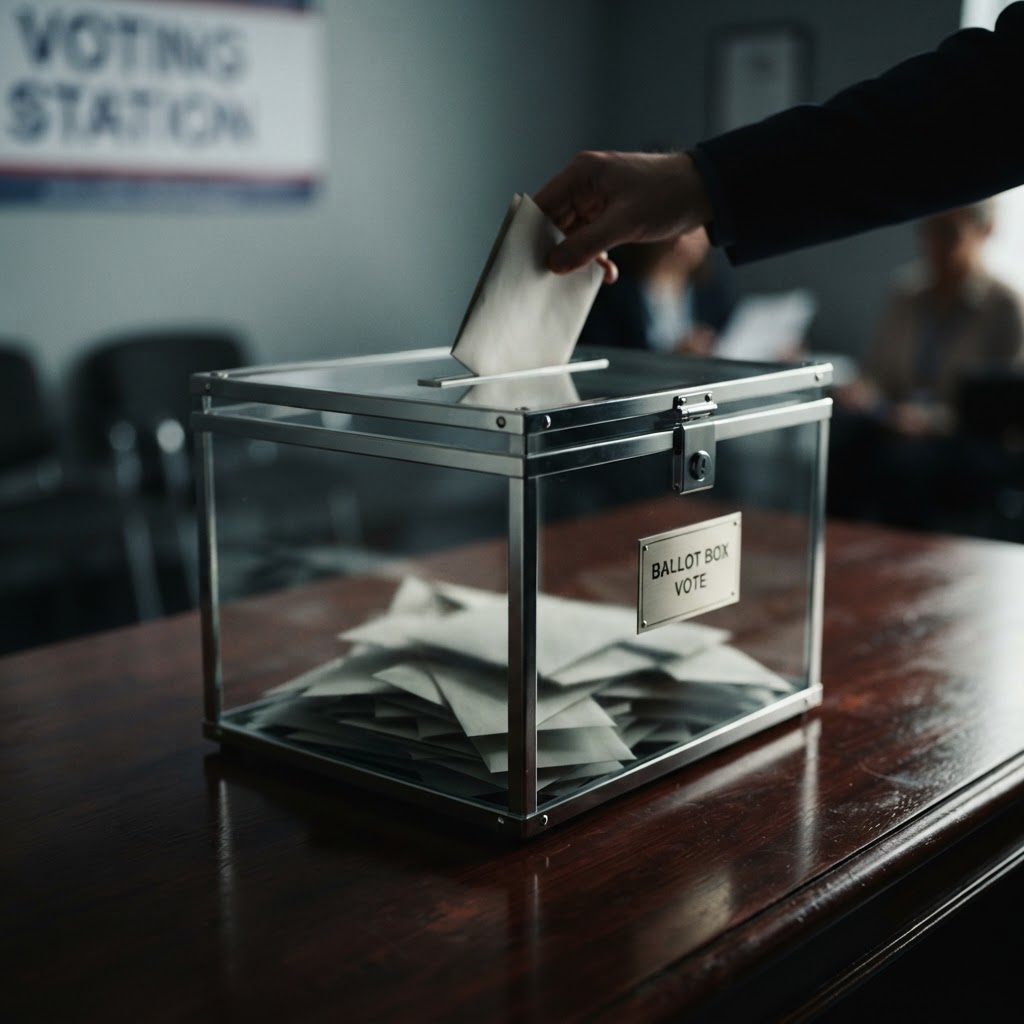
Is the system broken or just opaque? A critical look at why trusting the current election process is a gamble and how we can reclaim true transparency.
When I heard that 220 million voter files were compromised, I didn’t feel shocked. I felt tired. We talk about election integrity news as if it is a game of sports, cheering for our side while the referees look the other way. My experience with bureaucratic systems taught me one thing: if you aren’t watching the process, you aren’t part of it.
Talking Points:
* The psychological comfort of believing in a perfect system.
* Why public institutions rely on blind faith.
* The danger of ignoring statistical reality.
People love a clean narrative. They want to believe that when they cast a ballot, it travels through some magical, secure pipe into a vault of truth. I spent decades watching systems fail in quiet ways. We are sold a story of institutional trust that rarely matches the reality on the ground. When you question the process, people act like you are attacking the core of civilization. They ignore the fact that the system itself requires constant, painful scrutiny to function.
Talking Points:
* The performative nature of election monitoring.
* Why observers often see exactly what they are meant to see.
* Breaking through the facade of public accountability.
I remember sitting in a counting room years ago, watching people in vests check boxes. It felt official. Then, I realized no one was checking the software running the show. We confuse electoral oversight with the illusion of activity. If the protocols are designed to hide bureaucratic opacity, then watching the process is just watching a play. We need real visibility, not just a badge and a clipboard.
Talking Points:
* How cybersecurity infrastructure fails under pressure.
* The reality of voting system vulnerabilities.
* Why simple tech is often better than complex systems.
Every time we add a layer of tech, we add a layer of risk. I see people advocating for electronic systems that are impossible for the average voter to verify. We trade simplicity for speed. This is a bad trade. If you cannot explain how a vote is counted to a five-year-old, you probably shouldn’t be using that method to decide our leaders.
Talking Points:
* How mass media consolidation shapes the narrative.
* The weaponization of partisan narratives.
* Why independent verification is treated as hostility.
Turn on the news and you see the same story wrapped in different colors. The goal is to keep us fighting over the result while they ignore the process. When I mention election security concerns, the gatekeepers immediately label it as dangerous. They want to define the boundaries of what is acceptable to think. I refuse to play by those rules.
Talking Points:
* Why ballot chain of custody is the weakest link.
* The physical reality of moving paper.
* What happens when the box is left alone.
I once handled a box of records that changed hands five times in a day. By the third stop, I had no idea what was inside. That is the black box of democracy. We focus on the big numbers but miss the guy moving the plastic bin in the hallway. If you lose track of the physical piece of paper, the math later doesn’t matter.
Talking Points:
* Identifying patterns in election micro-data.
* Why researchers disagree on predictive metrics.
* The fine line between fraud and simple human error.
People love to point at “bellwether” counties as proof of something sinister. It usually isn’t. The 18 of 19 counties stat gets tossed around, but it’s often just noise. Real analysis needs more than just a gut feeling or a weird chart. We must stop pretending that every outlier is a conspiracy, but we must also stop pretending that every oddity is just a quirk. Truth lives in the messy middle.
Talking Points:
* Signs of failing governance protocols.
* Why agencies prioritize survival over accuracy.
* The loss of civic participation as a feedback loop.
When a system stops working, the people running it don’t fix it. They build a wall. I have watched institutions grow colder and more distant. They treat citizens like pests who interfere with their workflow. When governance protocols prioritize shielding the staff from liability, the public interest is already dead.
Talking Points:
* How ‘disinformation’ labels silence critics.
* The loss of healthy public skepticism.
* Why you should demand access to the data.
I love how any question about the system is now called misinformation. It is a perfect shield. If you can’t argue the point, just attack the person asking the question. I am not a fan of this trend. We need to normalize asking hard questions without being labeled an enemy of the state.
Talking Points:
* The limitations of Risk-Limiting Audits.
* Why ‘security theater’ is a real problem.
* Setting your own standard for proof.
We trust audits because we are told to. A real audit requires an outside set of eyes with no stake in the outcome. If the agency running the election is also the one auditing it, you aren’t getting an audit. You are getting a review. We need to demand that outside parties verify the count with total access.
We are living through a period of deep distrust in democratic processes, and for good reason. The system is designed to keep you from looking too closely at the gears. It is your job to stop taking their word for it. Demand transparency, look at the physical records, and don’t accept a summary as a final answer. Real integrity comes from the bottom up, not the top down. Have you noticed something about your local precinct that didn’t feel right? Share it in the comments below. Let’s start a real conversation about how to actually fix this.
1. Question: What is the biggest threat to election security?
Answer: The biggest threat is the lack of a clear, verifiable chain of custody for physical ballots, combined with overly complex digital systems that cannot be easily audited by citizens.
2. Question: Are statistical anomalies proof of a rigged election?
Answer: No, statistical anomalies are simply indicators that warrant further forensic investigation, as they can also be caused by human error or shifts in voter behavior.
3. Question: Why are electronic voting machines considered risky?
Answer: They are risky because they introduce layers of software and hardware that are difficult for the average citizen to inspect, creating opportunities for systemic failure or tampering that are hard to detect.
4. Question: How can a regular person check election integrity?
Answer: You can volunteer to be an official poll watcher, request access to local public records, and participate in local oversight meetings to ask direct questions about the custody of ballots.
5. Question: Why is it important to move away from centralized trust?
Answer: Centralized trust creates a single point of failure where a small number of people can influence or obscure the outcome, whereas decentralized verification ensures that multiple independent parties confirm the results.