






Newsletter Subscribe
Join thousands of readers who get our Sunday Briefing: one email, five essential stories, zero fluff. Subscribe NOW!

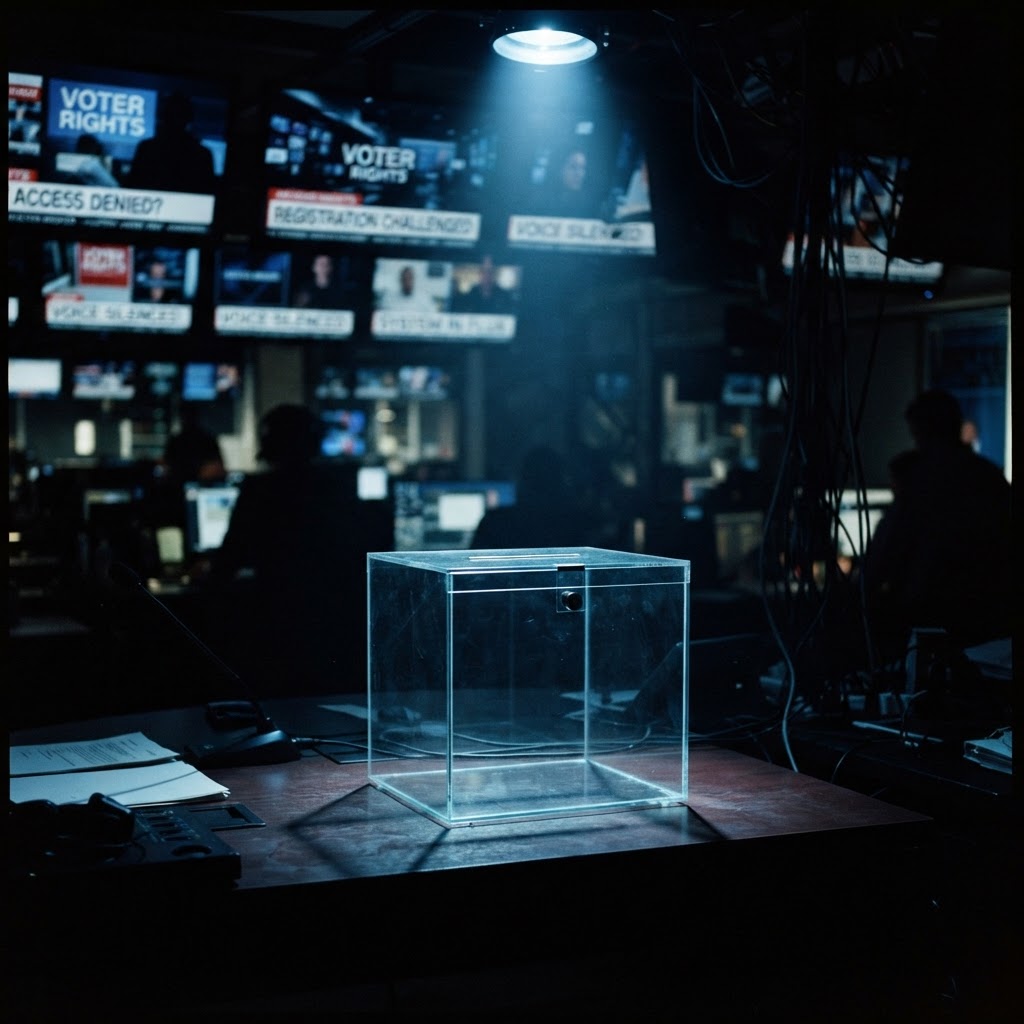
Voter rights news is often a distraction from the structural rot. From partisan gerrymandering to digital disinformation, the system is designed to keep you powerless. It is time to look past the noise.
Talking Points: The cycle of temporary media interest, the lack of substantive change, the feeling of political helplessness.
I remember waking up after an election feeling like I had finally cracked the code. I followed every piece of voter rights news, read the op-eds, and screamed at my television screen. It was all a performance. The media cycles through these issues, acting surprised, yet nothing actually changes.
We love to pretend our outrage constitutes action. It really does not. The machine keeps grinding on, regardless of our tweets.
Talking Points: Erosion of public trust, the psychological toll of persistent barriers, why apathy is the desired outcome.
Public trust erosion is not an accident. It is a feature of the system. When I talk to people who have given up on voting, I do not blame them. I see people who realized the cards were marked before they sat down to play.
Persistent barriers exhaust the average citizen. You want to vote, but the state makes it a chore. That is the goal. They want you home, not at the polls.
Talking Points: Felony disenfranchisement, the impact of the Supreme Court decision, the mechanics of voter roll purges.
In the early 2010s, the Supreme Court pulled the rug out from under the Voting Rights Act. They stripped the preclearance requirements, effectively inviting states to test the limits of their authority. It was a green light for chaos.
Then there are voter roll purges. These are often framed as administrative cleanups. In practice, they rely on flawed algorithms to strip eligible people from the lists.
Think about felony disenfranchisement laws. These laws permanently bar millions from participating. They hit Black and Latino communities the hardest. It is not an accident, either.
Talking Points: The branding of suppression as integrity, how language shapes the law, the partisan divide over accessibility.
Calling voter suppression tactics election integrity is a stroke of pure genius. It makes stripping rights sound like protecting the process. Words matter.
I have seen politicians smile while making it impossible for their opponents to reach a polling station. They call it security. I call it robbery.
Talking Points: Distorted maps, the 2019 data on seat shifts, why the outcome is decided before the first vote.
Partisan gerrymandering is the most effective way to ignore voters. You do not need to suppress the vote if you can just draw a line around the voters you dislike. It turns elections into a coronation.
Consider the numbers. In one instance, a party secured 72 percent of congressional seats with only 53 percent of the vote. That is not democracy. That is math used as a weapon.
Nearly 42 million Americans are effectively silenced by these artificial shifts. The map draws the winner. The people are just background noise.
Talking Points: Campaign finance influence, the cost of being heard, how money directs political outcomes.
Campaign finance is the engine beneath the hood of this mess. If your voice is not backed by a fat check, it is barely a whisper. Institutional accountability disappears when donors are the only constituents that matter.
I spent years watching bills die in committee because they touched the wrong wallet. If you want to know why nothing changes, just follow the cash.
Talking Points: AI and robocalls, the confusion of the digital space, why verification is nearly impossible.
We are now fighting ghosts. AI-generated voice mimicry in political robocalls is a terrifying development. You think you hear a candidate, but it is just code.
Disinformation in elections thrives in the chaos. By the time you verify a lie, the election is over. The damage is done.
Talking Points: Why focus remains narrow, the failure of the electoral college, regional focus over national health.
Electoral college reform is a fantasy because the system works for those in power. We treat swing states like holy ground and ignore the rest. It is a broken model.
Your vote counts more depending on your zip code. That is a failure of our constitutional protections. It makes a mockery of one person, one vote.
Talking Points: Local engagement, direct mutual aid, why national focus is often a distraction.
Forget the national news for a moment. What moves the needle is local action. When you organize your neighborhood, you build real power. That terrifies the political machinery more than any protest.
Demand better from your local board of elections. Make them uncomfortable. Expect less from Washington, and start demanding more from your city council.
We are caught in a cycle of manufactured crises. The system is designed to keep you exhausted and looking at the wrong things. Real change happens when you stop waiting for the state to fix itself. Start by questioning everything you hear from the podium. Stop falling for the bait. Are you ready to organize locally? Share your thoughts below.
No single law can fix a system built on layers of exclusion. It requires a total overhaul of the way we manage data, drawing lines, and access to the polls.
Both parties use these tools when they have the power to do so. It is an institutional problem that rewards whoever is in control of the map.
It forces you to question the authenticity of every audio or video you see. It creates a state of permanent skepticism that makes it hard to trust anyone.
Local policies have a direct impact on your daily life. They also represent the bedrock of the political machine that eventually fuels national power.
Yes, you should check your status with your local clerk regularly. Do not wait until election day to find out you were removed from the rolls.