





Join thousands of readers who get our Sunday Briefing: one email, five essential stories, zero fluff. Subscribe NOW!


Headless WP vs. Traditional CMS: Which Is Better for 2026?

Headless WordPress sounds like a luxury, but for most businesses, it is just a very expensive headache. Stop buying the hype and look at the real costs.


Share your love

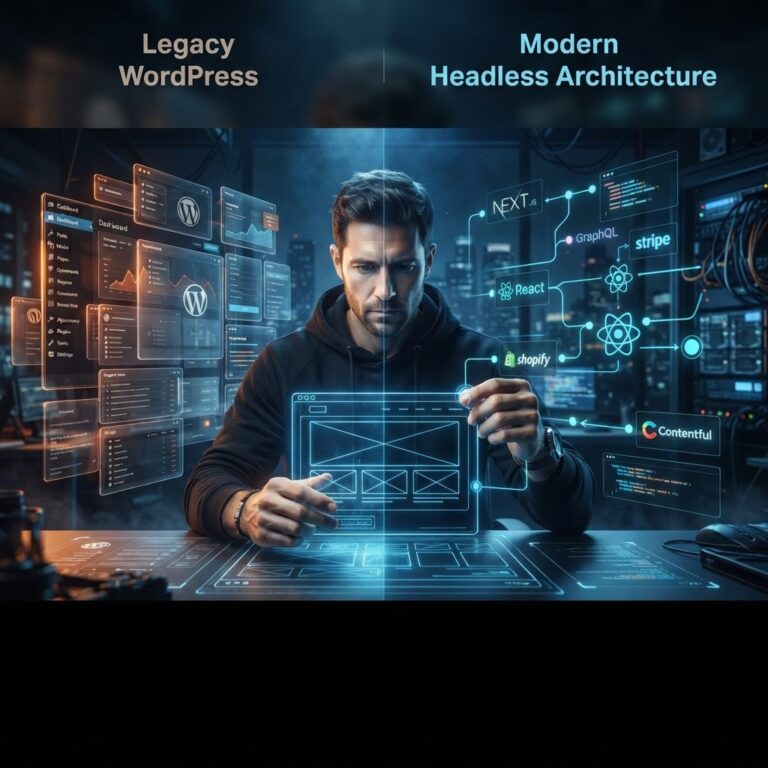
Headless WP vs. Traditional CMS: Stop Buying the Hype (2026 Update)## The Industry’s Favorite Shiny ObjectTalking Points: 1. The allure of modern architectural trends. 2. Why developers push for separation. 3. Ignoring the actual cost of complexity. Developers love a new toy. I see it every single week. A client comes to me convinced their site is slow because it is not “headless.” They read a blog post, assume the hype is gospel, and ignore the reality of their own operation. It is frustrating to watch smart people throw away functional systems for something that requires a small army to maintain. ## The Traditional CMS: Why We’re Still HereTalking Points: 1. The value of the integrated editor. 2. Why monolithic architecture wins for teams. 3. Lowering the barrier to entry. We have spent twenty years making WordPress work for normal humans. You write, you hit publish, and you are done. A traditional CMS platform keeps the content and the design linked together. That simplicity is not a bug. It is a feature that saves you thousands of dollars in annual maintenance. When you break that bond, you invite chaos into your workflow. ## Headless WordPress: The Complexity TaxTalking Points: 1. The reality of infrastructure costs. 2. The need for specialized frontend talent. 3. Why 52% of teams struggle with training. You think you want a headless setup until you see the bill. A 2026 survey showed that over half of teams need intense training just to handle the basics of a headless build. You are trading a simple dashboard for a pile of API endpoints. If you do not have a dedicated dev team, stop right here. It is not a path for the faint of heart. ## Performance Myths and Reality ChecksTalking Points: 1. Speed claims often mask bad optimization. 2. Server-side rendering vs. client-side overhead. 3. The danger of over-engineering simple sites. People tell me headless is faster. I tell them it depends on who built it. A bloated JavaScript framework can easily ruin your page load times. WordPress performance optimization in a traditional setup is often just a matter of cleaning up your database. You do not need a Jamstack architecture to load a blog in under two seconds. Be honest about your actual site needs. ## The Plugin Problem in a Decoupled WorldTalking Points: 1. Losing the power of the ecosystem. 2. Building custom solutions for simple tasks. 3. Managing security across two layers. I love plugins. I hate how they break. But in a traditional setup, fixing a broken plugin takes five minutes. In a decoupled CMS vs traditional CMS scenario, that plugin might stop talking to your API entirely. You end up writing custom code for features that used to be a one-click install. That is not progress. That is expensive busywork. ## Developer Velocity vs. Content Editor FrustrationTalking Points: 1. The struggle of previewing content. 2. Why developers value API-driven development. 3. Bridging the gap for non-technical users. My editors hate headless setups. They cannot see how a page looks until it is deployed to production. That is a massive friction point for anyone who needs to move fast. You get great developer velocity, but you kill the productivity of your marketing department. A tool that stops your team from working is a bad tool. ## Total Cost of Ownership: Do the MathTalking Points: 1. Hidden costs of cloud hosting. 2. Replacing standard tools with SaaS. 3. Long-term maintenance versus short-term gains. Count the hours. Include the cost of the extra servers, the build pipelines, and the specialized engineers. Then look at your current budget. Most businesses find that their total cost of ownership skyrockets with a headless implementation. You are not just paying for a CMS anymore. You are paying for a DevOps department to keep the lights on. ## When to Actually Consider Headless (And When to Run)Talking Points: 1. Scaling for omnichannel delivery. 2. High-traffic sites with custom needs. 3. Why simple sites should stay monolithic. If you are running an app that pulls content to a smartwatch, a smart fridge, and a web portal, go headless. If you are running a business blog or a standard company site, stay traditional. It is that simple. Don’t buy a Ferrari to go grocery shopping. You will just get a headache and a lighter wallet. ## The Future of WordPress: Is Hybrid the Middle Ground?Talking Points: 1. Benefits of progressive enhancement. 2. Keeping the editor experience intact. 3. Using APIs only when necessary. We see WordPress architecture trends 2026 moving toward a hybrid model. This gives you the best of both worlds. You keep the classic editor for your team but use APIs to fetch data for specific, high-performance page sections. It solves the performance issues without making your content workflow miserable. That is how we build real, sustainable websites today. ## Choose Pragmatism Over TrendsTalking Points: 1. Focus on business value over tech trends. 2. The cost of technical debt. 3. Call to action for peer discussion. Stop chasing tech trends just because they sound cool on a podcast. Every choice you make creates technical debt. You need to decide if that cost is worth the benefit. Does your current setup actually stop you from hitting your goals? If not, leave it alone. Let me know if you have been burned by the headless hype in the comments below. Let us talk about what really works for your bottom line.

Împărtășește-ți dragostea
TACEngine
TACEngine
Articole: 392

Lasă un răspuns

Join thousands of readers who get our Sunday Briefing: one email, five essential stories, zero fluff, subscribe now!