





Newsletter Subscribe
Join thousands of readers who get our Sunday Briefing: one email, five essential stories, zero fluff. Subscribe NOW!
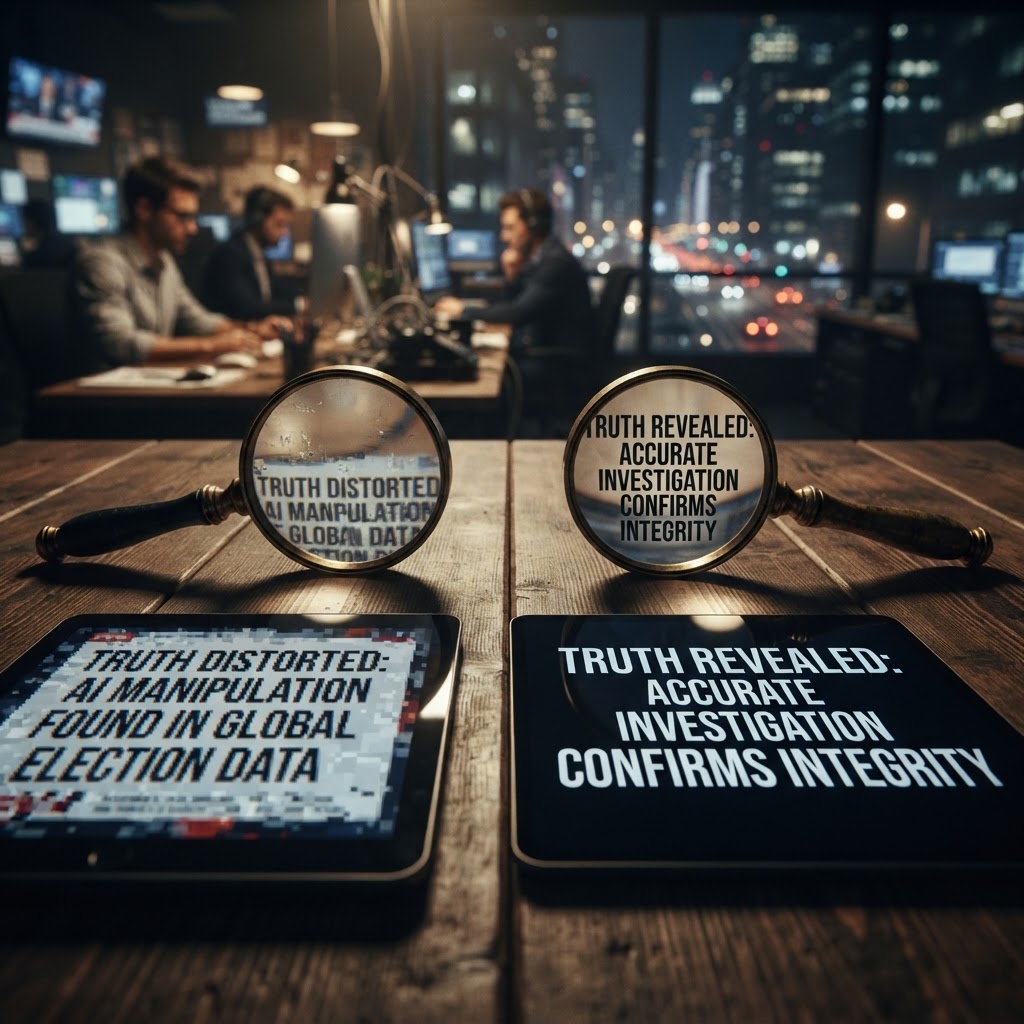
Political fact-checking is often presented as an objective public service, but a closer look reveals systemic bias, financial conflicts, and the failure of binary truth scales.
Talking Points:
* The rise of self-appointed truth arbiters
* The myth of the objective watchdog
* Why we must question authority
I remember sitting at my desk ten years ago, naively trusting that a “fact-checked” label meant the final word on a story. It felt safe. Now, I see these tags everywhere, usually plastered over political claims like a scarlet letter. But who gave these entities the keys to the kingdom of truth? They act as self-appointed arbiters, operating behind closed doors with little public oversight.
The industry sells us on a myth. They want us to believe they are neutral watchdogs guarding the gates of information. I stop believing in fairy tales a long time ago. Media bias in fact checking is not some hidden conspiracy; it is a structural reality. If you look at the source, you often find the same partisan narratives they claim to police. It is exhausting to watch, frankly.
Talking Points:
* How fact-checkers choose their targets
* The reality of limited resources
* Skewed data sets in modern reporting
Fact-checkers cannot possibly monitor every statement made by every political figure. They have to pick and choose. That single choice is where the bias creeps in. A 2025 study from the Association for the Advancement of Artificial Intelligence showed that false statements mentioning Democrats were 88% more likely to be checked than true ones. Meanwhile, Republican-leaning false claims were significantly less likely to be flagged.
Does this surprise anyone? Selection bias dictates the narrative before a single word of analysis is written. They define the playing field by what they choose to investigate. It is a rigged game. If they ignore the errors on one side while obsessing over the other, they are not journalists. They are political actors in disguise.
Talking Points:
* The inadequacy of truth scales
* Why binary labels limit intellectual depth
* The danger of oversimplification
I cringe whenever I see a “Pinocchio” count or a red “False” badge. The world does not fit into a binary box. Truth scales are just another way to strip away context. They turn complex political debates into a simple game of good guys and bad guys. It is insulting to the intelligence of the reader.
When we rely on these crude tools, we stop thinking for ourselves. We just look for the stamp of approval. Verification protocols should provide insight, not just a score. Instead, these systems treat us like children who cannot process anything more than a traffic light signal.
Talking Points:
* Why facts rarely change firm minds
* The psychological barrier of belief
* Research on cognitive dissonance
I once spent an hour trying to convince a cousin that his favorite politician lied. I had charts. I had links. He just shrugged. Research from the NIH confirms what I felt that day: facts rarely change minds when someone has a strong, pre-existing belief.
This is motivated reasoning in action. We protect our worldview like a prized possession. A fact-check from an organization we already distrust is just noise. It does not matter how high the editorial standards are if the recipient is not listening. The effectiveness of fact checkers is severely limited by the psychology of the listener.
Talking Points:
* The financial sustainability crisis
* Transparency issues in funding
* Conflicts of interest in journalism
Nearly 90% of organizations in this space name financial survival as their main headache. When you need cash to keep the lights on, who are you beholden to? I get nervous when I see opaque funding streams. It is a classic case of the piper calling the tune.
We need to demand better disclosure. If we are supposed to trust these people, we need to know who is footing the bill. A lack of transparency kills credibility. Period. You cannot preach honesty while hiding your own ledger.
Talking Points:
* Meta exiting the game
* The fallout of perceived bias
* The future of social media verification
Watching Meta abandon its third-party program in early 2025 felt like a major shift. They pulled the plug because the process was too controversial. When the people checking the facts become the story themselves, the system has clearly failed. They were doing more harm than good in the eyes of their own users.
It was a rare moment of clarity. Big tech realized that being the “truth police” is a losing battle. Maybe they figured out that nobody wants a billionaire’s algorithm deciding what is real. I hope it sticks.
Talking Points:
* The lack of universal standards
* The role of human ego in editing
* Why one size does not fit all
I have seen different outlets flag the exact same statement in completely opposite ways. One says it is false, the other says it is misleading, and a third ignores it. So, where is the consistency? There is none. Fact checking methodology is often just a fancy term for “whatever the editor feels like today.”
They pretend there is a scientific process. There is not. It is subjective, based on who happens to be in the chair. Without universal rules, the whole concept of a “verified fact” is just air. It is time to drop the pretense of absolute neutrality.
Talking Points:
* The trend of delegating discourse
* The loss of public debate
* Restoring personal accountability
We have outsourced our critical thinking to companies that do not care about us. We let them flag, warn, and hide information. This is a mistake. We need to do the hard work of verifying sources ourselves. If we stop, we give up our agency.
Information ecosystems suffer when we stop holding people accountable. Instead, we wait for someone else to tell us what to think. Stop outsourcing your mind. Start reading the actual primary sources instead of the summaries.
Talking Points:
* Practical tips for smart reading
* How to question the checkers
* Moving toward self-reliance
I still read fact-checks, but I read them as opinion pieces now. I look at who wrote it. I check the links. I ask if they missed the context of the quote. You should do the same. Never take the verdict at face value.
We need a culture that values inquiry over convenience. Stop looking for the “True” badge. Start looking for the original data. If we develop a healthy dose of skepticism, we win. Let us quit trusting the self-appointed kings of the internet.
We cannot wait for someone else to save us from political misinformation. It is up to us to refine our own truth scales and look past the partisan narratives. If you want a better information climate, you have to cultivate it in your own house. Start by questioning the sources you like the most. Does this article reflect your own experiences with political media? I want to know. Share your thoughts below and tell me how you handle the daily flood of claims.