







Newsletter Subscribe
Join thousands of readers who get our Sunday Briefing: one email, five essential stories, zero fluff. Subscribe NOW!

Is the system broken or is the theater just loud? We cut through the noise to examine the actual data behind election integrity, from cybersecurity myths to the reality of mail-in ballot security.
When I see people shouting about stolen elections, I look at the numbers. Specifically, the fact that voter fraud incident rates hover between 0.0003% and 0.0025%. That is not a crisis. That is a rounding error. Yet, we treat our ballot boxes like they are guarded by nothing more than hopes and dreams. It is time we look at election integrity facts without the partisan noise ringing in our ears.
Talking Points:
* The performative nature of election debates.
* Moving past partisan talking points.
* Defining integrity through data.
Most political arguments today are just theater. People love the drama of a rigged system because it gives them someone to blame. When I talk to folks, they seem obsessed with sensational claims rather than actual data. We ignore boring administrative reality for exciting conspiracy theories.
True election integrity facts are rarely glamorous. They involve checking signatures, updating databases, and testing machines. None of these things make for a good social media post. Yet, this mundane work is exactly what keeps the system running.
Talking Points:
* CISA election role and scope.
* Moving from local control to federal friction.
* Balancing oversight and autonomy.
Back in the day, the feds barely knew where your polling station was. Now, the CISA election role is center stage, which naturally brings heat. Everyone is paranoid about federal overreach vs. state protection. It is a messy dynamic.
We have this weird tug-of-war. States want to run their own show. The government wants to provide cybersecurity infrastructure. Neither side really trusts the other to do it right. We end up with a system that feels over-managed but still lacks clarity.
Talking Points:
* Routine maintenance of voter registration rolls.
* The reality of clearing ineligible records.
* Dispelling myths about mass purges.
Voter registration rolls are just big spreadsheets. They get messy. People move, they die, or they change their name. This is why we have routine maintenance of these lists. During the 2024 cycle, states removed 21 million records of people who weren’t eligible anymore.
That sounds like a huge purge, right? It is actually just basic data verification. If we stopped doing this, the system would break under its own weight. It is not voter suppression to keep a list accurate.
Talking Points:
* Chain of custody in mail-in voting.
* Drop box security and surveillance.
* Why fraud rates remain near zero.
I remember when absentee ballots were just for people who were traveling. Now, mail-in voting is a massive logistical operation. People scream about fraud, but the mail-in ballot fraud rate is 0.00006%. That is effectively zero.
We use chain of custody protocols that track every single paper sheet. We have signature verification and cameras on drop boxes. If someone tried to stuff a box, they would get caught on tape pretty quick. Stop acting like the post office is a crime syndicate.
Talking Points:
* Distinguishing real threats from domestic fear.
* The role of air-gapped voting systems.
* Protecting against digital intrusions.
Every election cycle, I hear people claim the Russians are hacking our machines. The truth is boring. There is zero evidence that any vote in a U.S. election was ever compromised by a breach of the machines. These systems are usually not even connected to the internet.
Cybersecurity experts are more worried about deepfakes than machine hacking. AI-generated misinformation is the real threat here. 85% of voters are already worried about AI-generated political content. That is a mental virus, not a code breach.
Talking Points:
* Who shapes the election narrative?
* The profit motive behind fear.
* How public confidence is eroded.
Fear sells. If you tell people their vote does not count, they stay glued to their screens. The misinformation industrial complex thrives on this cycle of outrage. It is a business model designed to erode institutional trust.
I have seen people lose sleep over total fabrications. They repeat lines they saw on a blog without checking a single government source. We are weaponizing our own confusion. It is exhausting to watch.
Talking Points:
* Why local management works best.
* The challenge of partisan oversight.
* Administrative protocols that protect the vote.
Elections are incredibly decentralized. Thousands of local jurisdictions manage their own counts. This is actually our greatest protection. You cannot hack a system that is not a single, unified target.
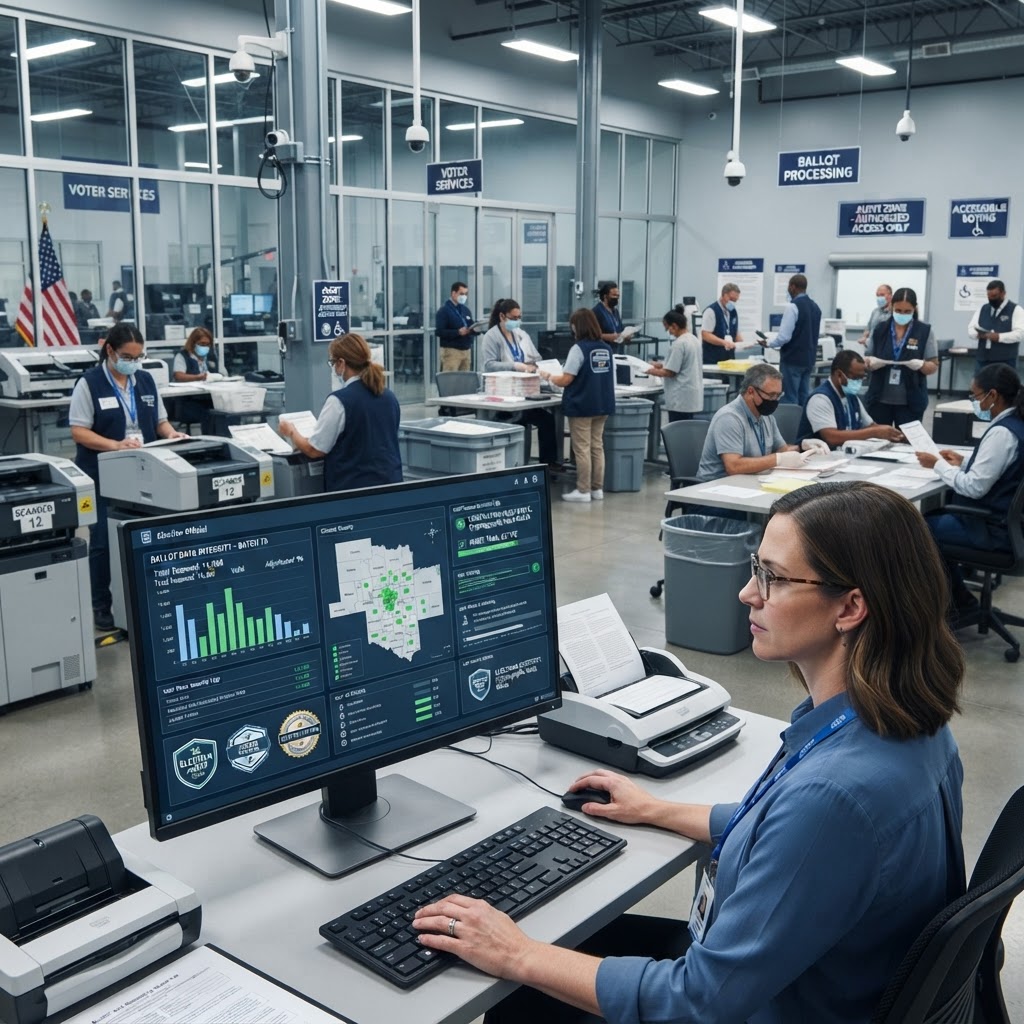
Local election clerks are the unsung heroes here. They deal with cranky voters, broken printers, and tiny budgets. They do not get paid enough to run elaborate rigging schemes. They just want to go home at 2 AM.
Talking Points:
* Are machines the problem?
* The switch to paper trails.
* Auditing the ballot tabulation process.
People love to blame the machines. It is easier to blame a “glitchy” computer than a human error. By 2026, 99% of voters will use a ballot with a paper trail. If the machine acts up, we can just count the paper.
This is why ballot tabulation audits matter. We compare the digital count to the physical paper. It is a simple check that settles most disputes. Technology is a tool, not a boogeyman.
Talking Points:
* When skepticism becomes a liability.
* The danger of permanent cynicism.
* Why demanding accountability is not enough.
When we stop trusting our neighbors, the whole project fails. We have replaced healthy skepticism with a toxic form of denial. This is a systemic liability. We are burning down the house to find a spider.
We need to stop pretending that every error is a crime. People make mistakes. Humans are fallible. We should demand better systems, not assume everyone is malicious.
We need to demand accountability without falling for the political theater. Accountability means looking at the audits and the security measures. It means ignoring the pundits who profit from your anxiety. Election integrity is not about winning; it is about showing up to do the hard work of democracy.
Go to your local election office website. Read their reports. They are public for a reason. If you see something that does not make sense, ask a question instead of starting a rumor. What has been your experience with local voting procedures? Drop a comment below and let us keep this conversation grounded in reality.
1. Question: Are electronic voting machines connected to the internet? Answer: No, the vast majority of voting machines are air-gapped, meaning they are never connected to the internet or any external network during the tabulation process.
2. Question: What is a voter-verifiable paper trail? Answer: This is a system where the voter marks a physical ballot, often by hand or through a machine that prints a paper record, which acts as the official record of the vote for audits.
3. Question: How do states remove ineligible voters? Answer: States use routine administrative processes to compare registration lists with death records, change-of-address databases, and other official sources to keep rolls current.
4. Question: Why is decentralized election management a good thing? Answer: By having thousands of local jurisdictions run their own elections, the system is protected from a single point of failure or a coordinated national attack.
5. Question: What is the biggest cybersecurity threat to elections right now? Answer: Experts agree that AI-driven disinformation and deepfakes are the most pressing threats, as they aim to erode public trust in the results before a single vote is cast.