




Newsletter Subscribe
Join thousands of readers who get our Sunday Briefing: one email, five essential stories, zero fluff. Subscribe NOW!
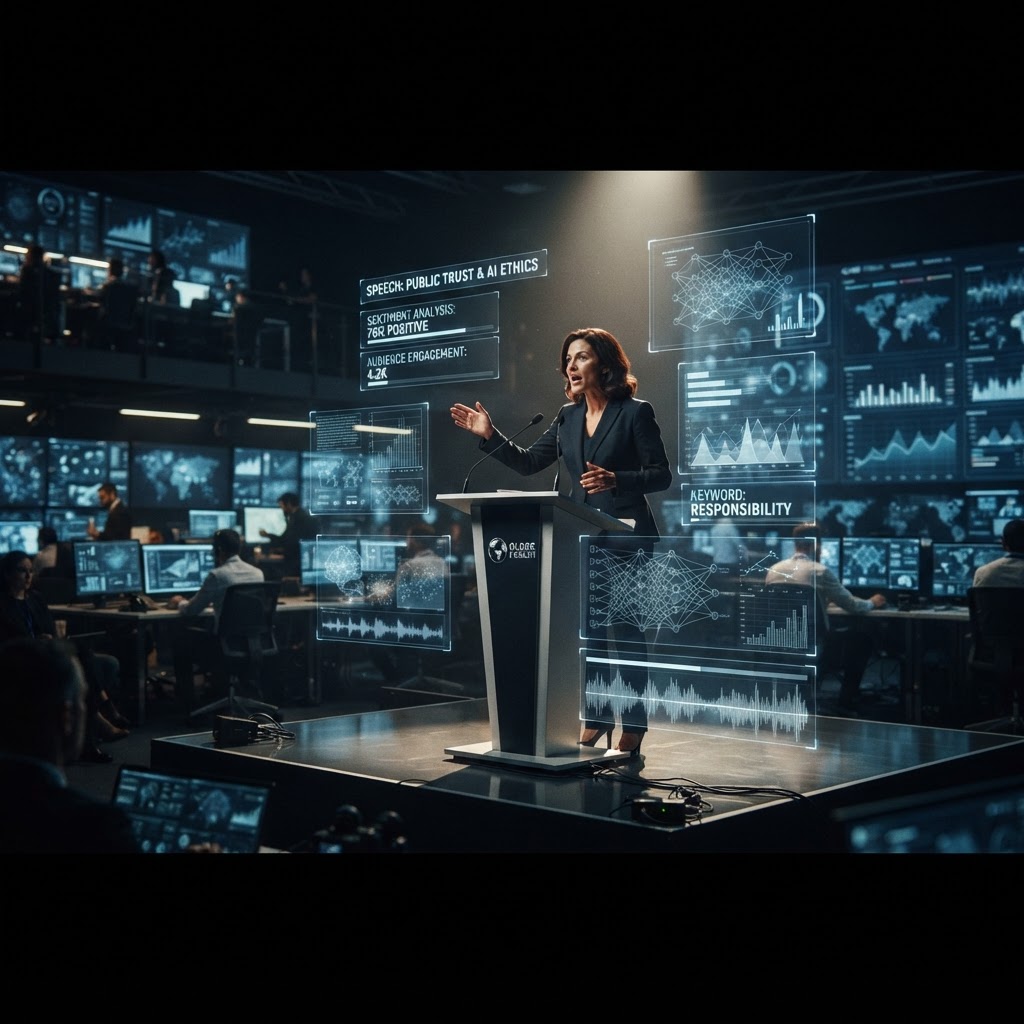
Real-time political speech analysis reveals that most 'spontaneous' moments are actually scripted performances. I break down how consultants, algorithms, and media amplify partisan rhetoric to manipulate public perception.
I once sat in a room watching a candidate rehearse a “spontaneous” joke for three hours. The timing was adjusted, the smirk was calibrated, and the pause was scripted to look like a mid-thought discovery. Real-time political speech analysis isn’t about capturing truth. It is about studying the machinery behind the mask.
Talking Points:
Most people think they are listening to a person. They are actually listening to a product. Every stutter is timed. Every accidental hand gesture is a practiced bit of political communication tactics designed to signal warmth. We are watching a play, not a policy discussion.
Talking Points:
I remember seeing a candidate walk into a diner, fake a surprise look, and shake hands. The camera crew was already there, lights set, waiting for the “natural” walk-in. It was a joke. Authentic moments are rare, if not extinct, in the high-stakes world of modern campaigning.
Talking Points:
Consultants now use automated speech analysis to track how words hit a crowd. If a phrase doesn’t get a reaction, it gets cut. They want a candidate who sounds like a neighbor, but acts like a machine. It is a cynical way to win votes.
Talking Points:
Political rhetoric strategies focus on tribal identity. You don’t need a platform if you have an enemy. By using specific code words, leaders tell their group they belong. It is about emotional safety, not governance.
Talking Points:
Look for the framing. If a politician asks a question, they are controlling the ground. They force you to think inside their box. Once you start spotting these moves, you can’t unsee them.
Talking Points:
Cable news loves a fight. If someone talks quietly about math, the channel loses viewers. They need noise. They demand the loudest, most extreme parts of the speech for their clips.
Talking Points:
Things changed around 1994. The language became more aggressive. Cooperation was treated as a surrender. That was the moment discourse turned into a weaponized game.
Talking Points:
We want to believe. We hate the idea that our heroes are actors. It hurts to admit we were sold a bill of goods. That psychological pain keeps the system running.
Talking Points:
Policy is boring. Outrage is exciting. When political messaging ignores results, we suffer. We end up with louder leaders and emptier bank accounts. It is a bad trade.
Talking Points:
Turn the volume down. Watch the eyes. Notice if they are looking for a reaction or trying to solve a problem. Once you learn to listen, you can finally see the game for what it is. Demand better, or expect more of the same.
1. Q: Is it possible to find truly unscripted political speech today? A: Rarely. Most interactions are managed for social media reach and emotional impact.
2. Q: Does audio-based analysis actually work? A: Yes, researchers found that vocal cues predict behavior far better than written transcripts alone.
3. Q: How does partisan language affect my own thinking? A: It creates a sense of tribal belonging that lowers your critical defenses against your own side.
4. Q: Why are campaign consultants so powerful? A: They control the data that tells candidates exactly which lies will be most effective for the target audience.
5. Q: What is the biggest red flag in a speech? A: When a speaker focuses entirely on how an opponent is a threat rather than explaining a clear plan for the future.