






Newsletter Subscribe
Join thousands of readers who get our Sunday Briefing: one email, five essential stories, zero fluff. Subscribe NOW!

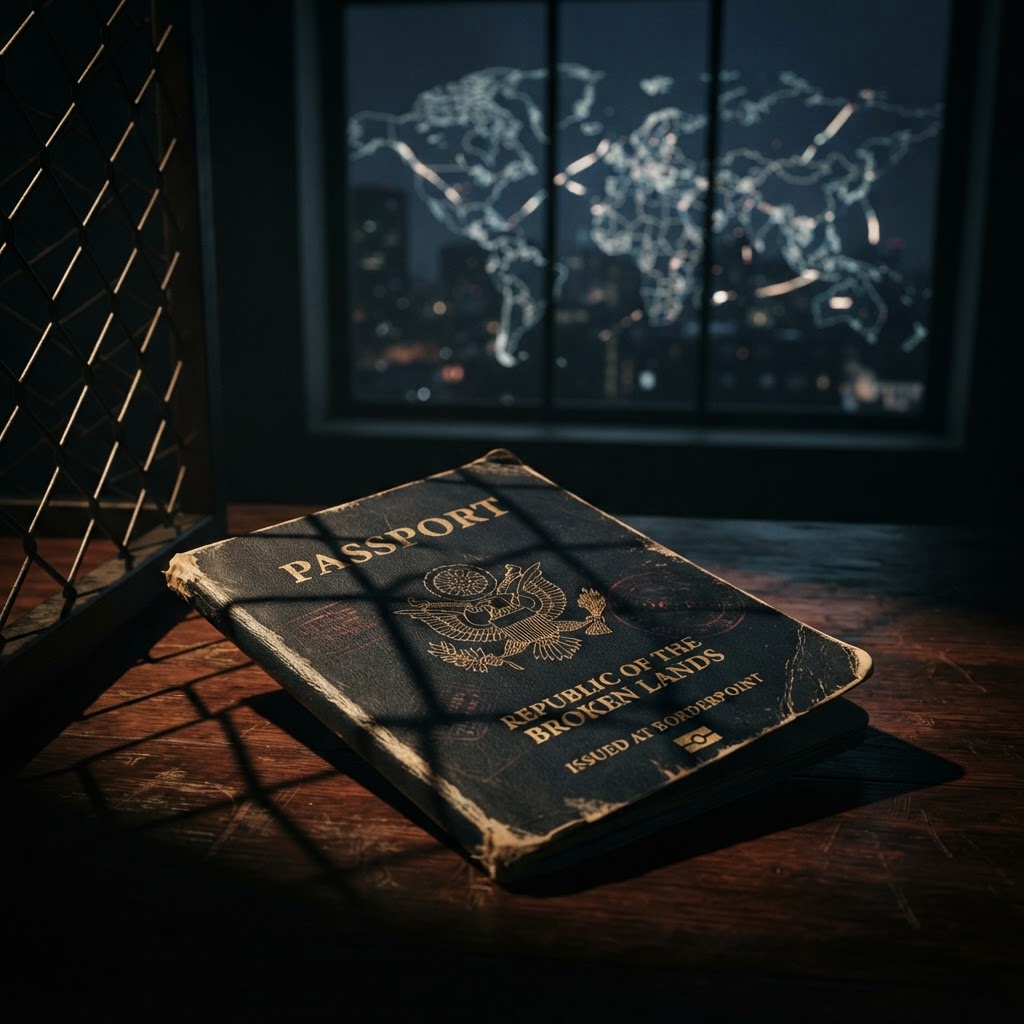
Travel is not a privilege; it is a human necessity that is being eroded by the weaponization of our passports through geopolitical restrictions.
I once sat in a sterile terminal, watching a departures board flicker red. My flight was canceled. Not because of weather or a strike, but because a pen-pusher five thousand miles away decided my destination was suddenly off-limits. The myth of a borderless world died that day. We think we own our movement, but we are just temporary guests of state-controlled policies.
Talking Points:
* The shift from diplomatic pressure to active movement restriction.
* Understanding the mechanical barriers created by financial blacklists.
* How aviation sanctions stop travel before it even starts.
Moving beyond simple bans, we face complex financial and aviation restrictions. It is not just about a stamped “no” in your passport anymore. Modern penalties block the back-end systems that keep planes in the air. When an aviation sector is disconnected from insurance markets, the planes stay grounded. Your ticket is a worthless piece of paper at that point.
International aviation sanctions restrict freedom of movement through direct mechanisms like airspace closures and air carrier blockades. These are not subtle nudges. They are sledgehammers applied to global connectivity. I have seen the impact of sanctions on international travel firsthand, and it is messy. It treats human movement like a trade commodity to be toggled on or off.
Talking Points:
* Why governments prioritize signaling over human outcomes.
* The reality of travel bans and foreign policy objectives.
* The disconnect between political goals and individual freedom.
Why is the ordinary person always the first casualty of geopolitical posturing? We are easy targets. Blocking a flight is a high-visibility, low-cost way to look tough. It signals resolve to the home audience while causing minimal disruption to the decision-makers on the other side. You are the pawn in a game you did not choose to play.
Freedom of movement is a fundamental human right. Yet, Article 12 of the International Covenant on Civil and Political Rights feels like a suggestion rather than a mandate. The irony is bitter. We preach a global society, then tighten the leash the moment things get tense. It is a cynical reality for anyone who values independence.
Talking Points:
* Airspace closures as a blunt instrument of control.
* How route restructuring increases the price of freedom.
* Why major airlines suffer more than niche providers.
When a country is isolated, the sky shrinks. Aviation sanctions spillover disrupts more than just a single airline. It forces massive route restructuring that ripples across the entire globe. You pay for this at the checkout. Fares skyrocket because the geoeconomic logic of the flight path has been shredded.
The United States has imposed unilateral aviation sanctions in 15 cases. That is a massive amount of concentrated power. The negative consequences of these actions spill over significantly into the private sector. If the planes cannot fly, the entire engine of exchange stops. It is a hard lesson in how brittle our connections truly are.
Talking Points:
* The slow death of local tourism industries.
* How economic sanctions and tourism clash violently.
* The loss of consumer confidence in targeted markets.
Take away the tourists, and you hollow out a local economy. Economic sanctions and tourism act like oil and water. When a destination becomes a “sanctioned zone,” the supply chain disruption is immediate. Hotels empty out. Small businesses that rely on international visitors watch their livelihood vanish.
The destination image takes decades to build and only a week of sanctions to incinerate. Trust is a fragile thing. Once you label a country as a pariah, consumers stop looking. They do not want the hassle or the risk. The private sector picks up the tab for these diplomatic disputes every single time.
Talking Points:
* How diplomatic leverage targets the perception of safety.
* The role of travel advisories in shaping public opinion.
* Why political labeling kills curiosity.
Travel advisories are often the first weapon fired. They are framed as safety alerts, but let us be honest. They are instruments of political pressure. They signal that a place is not just dangerous, but morally tainted. It scares away the travelers who would otherwise bridge the gap between cultures.
This is how travel as a political tool works. It prevents the cross-border mobility that actually breeds understanding. Instead, we settle for fear. We stop going. We start viewing the “other” through the lens of a news ticker. It is a total victory for the bureaucrats who want to keep us in our respective lanes.
Talking Points:
* When your personal devices become regulated export items.
* The reach of international law into your suitcase.
* Why modern transit feels like a security clearance.
Ever feel like your tech is a liability at a border crossing? You should. Export controls now follow you everywhere. The laptop you use for work might be subject to international law based on where you are flying. It is a surreal extension of power.
This is the price of living in a permission-based system. Your personal data is not yours when it is being monitored under the guise of compliance. It changes the way you pack. It changes the way you think about taking work on the road. We are walking through minefields of regulation without even knowing the map.
Talking Points:
* The ongoing debate over whether sanctions actually work.
* Why human exchange is the first thing sacrificed.
* The gap between policy goals and ground-level reality.
Do these measures actually hit their targets? The evidence is shaky at best. We love to talk about “smart” or targeted sanctions, but the humanitarian consequences are impossible to ignore. They rarely change the minds of the people in power. They just make life harder for the people who lack the power to change anything.
The Journal of Travel Research holds an impact factor of 7.0, and they have published plenty on this exact problem. The academic consensus is thin, but the practical reality is thick with failure. We keep using the same tired tools, expecting a different result. It is the definition of insanity applied to global statecraft.
Talking Points:
* The shift toward a fragmented global system.
* How international mobility constraints are becoming the norm.
* The danger of normalizing permission-based travel.
We are moving toward a fragmented, gated world. The dream of wandering where we please is fading. International mobility constraints are being normalized, piece by piece. We accept it because we are tired of fighting the bureaucracy of the border.
Will we eventually need a digital license to visit anywhere? I fear the answer is yes. We are becoming accustomed to asking for permission to exist in other places. That is not freedom. That is just being on a very long leash.
Travel is not a luxury. It is a fundamental necessity for maintaining our sanity and our humanity. When we allow governments to turn the globe into a series of forbidden zones, we lose our perspective. We start believing the propaganda instead of seeing the people.
Stop waiting for the world to open up. Stay informed about the policies that limit your movement and call them out when they make no sense. Tell me, have you had a trip derailed by these ridiculous policies? Share your stories below so we can keep the conversation honest.