






Newsletter Subscribe
Join thousands of readers who get our Sunday Briefing: one email, five essential stories, zero fluff. Subscribe NOW!

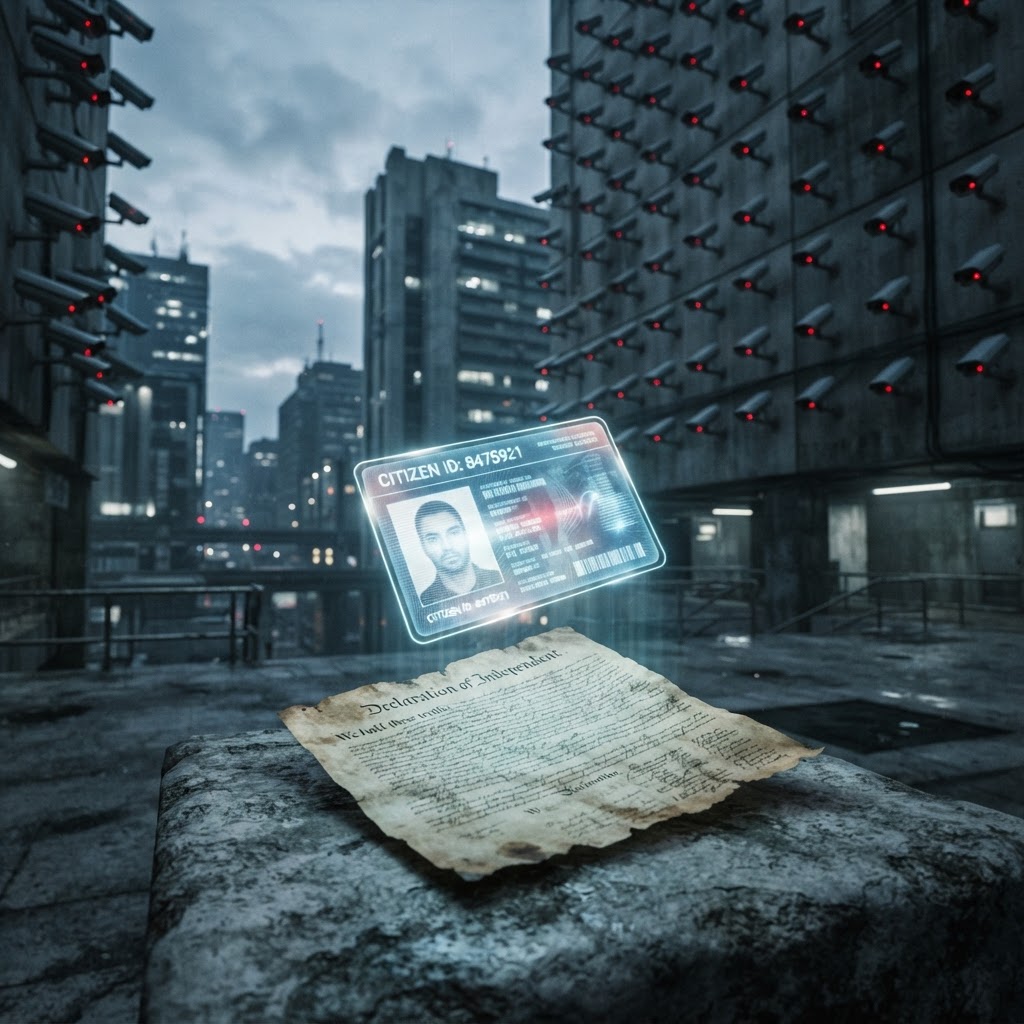
The REAL ID Act masquerades as national security, but it is effectively a federalized tool for domestic surveillance. Discover how this bureaucracy creates a digital tether that threatens individual autonomy.
Talking Points:
Imagine standing at an airport security checkpoint. You hand over your license, and the agent glances at a screen that tells them exactly who you are, where you live, and what your history looks like. This isn’t just about boarding a plane. This is about the slow, steady creep of government oversight into every corner of our movement. The REAL ID Act of 2005 arrived under the guise of national security, but it functions as a permanent tether. We are watching the administrative state expansion in real time. Freedom of movement is being traded for a plastic card that verifies your existence to federal authorities.
Talking Points:
Years ago, a driver’s license was just a permit to operate a vehicle. Today, that same piece of plastic serves as the bedrock of a federalized identification system. Politicians sold this as a fix for 9/11-era security vulnerabilities. They promised it would stop bad actors from entering sensitive zones. It didn’t take long for the scope to widen. We moved from voluntary state guidelines to a mandatory requirement for federal facility access. This is how the ratchet turns. Each small adjustment makes the next step seem logical, until we find ourselves living under a digital panopticon.
Talking Points:
Many state governors once stood their ground against these mandates. They knew that federalized identification system requirements were an overreach into local jurisdiction. They cited the Tenth Amendment with pride. But money talks, and the threat of travel disruption acts as a blunt instrument. State leaders eventually folded under the weight of administrative pressure. The result is a hollowed-out version of federalism where state power is a suggestion rather than a legal check. It is a sad realization for those who value local control.
Talking Points:
We used to believe in the right to travel without a government logbook. That concept is dying. By linking our identities to a centralized infrastructure, the state creates an internal passport system. It does not matter if you have nothing to hide. The issue is that the government now has the tools to watch where you go. Once the infrastructure exists, the desire to use it for monitoring becomes irresistible. Our movements are no longer private acts; they are data points.
Talking Points:
They want your face scan. They want your fingerprints. Biometric data collection is the next logical step in this surveillance infrastructure. These centralized identity databases are prime targets for bad actors. Even if the government acts with perfect intent, which is a big assumption, the security risks are massive. Your biological markers cannot be changed if they are stolen from a breached server. This is a level of vulnerability we never should have accepted.
Talking Points:
Nobody passed a law demanding every single American carry a REAL ID in their wallet. They did something smarter. They made it impossible to function in modern society without one. If you cannot board a plane or enter a federal building, you are effectively a second-class citizen. This is how they manufacture compliance. They use the threat of inconvenience to force us into their system. It is a clever, if predatory, approach to public policy.
Talking Points:
Proponents claim this system keeps us all safer. They ignore the 15 million citizens who lack a driver’s license. For the unhoused or the elderly, gathering the necessary documentation for a REAL ID is a nightmare. It requires time, money, and transportation that many just do not have. We are creating a country where your ability to participate is tied to your ability to pass a bureaucratic test. That is not freedom.
Talking Points:
We have been conditioned to trade our autonomy for a smoother airport line. If the line moves faster, we stop asking questions. This is the danger of trading liberty for convenience. We accept surveillance because it makes our personal lives feel slightly less difficult. The political consequences of this mindset are massive. A population that asks for less privacy eventually loses the right to demand it.
Talking Points:
The plastic card is just the start. The future involves digital IDs on your smartphone. These apps can be updated instantly, revoked without notice, or linked to other digital records. We are drifting toward a social scoring model where access to society depends on your compliance. If your digital score dips, your travel might be restricted. It sounds like fiction, but the infrastructure is being built right now.
Talking Points:
We must see the REAL ID for what it is. It is a political instrument designed to extend the reach of the administrative state. Acknowledging this reality is the first step toward reclaiming our agency. Do not accept every claim about safety at face value. Demand proof. Question why a specific policy is needed. Real liberty requires a critical mind. It requires the courage to say no to the tightening of the leash. Talk to your neighbors about these issues and keep pushing for transparency. We cannot afford to stay silent while our autonomy is slowly eroded by the bureaucracy.