







Newsletter Subscribe
Join thousands of readers who get our Sunday Briefing: one email, five essential stories, zero fluff. Subscribe NOW!

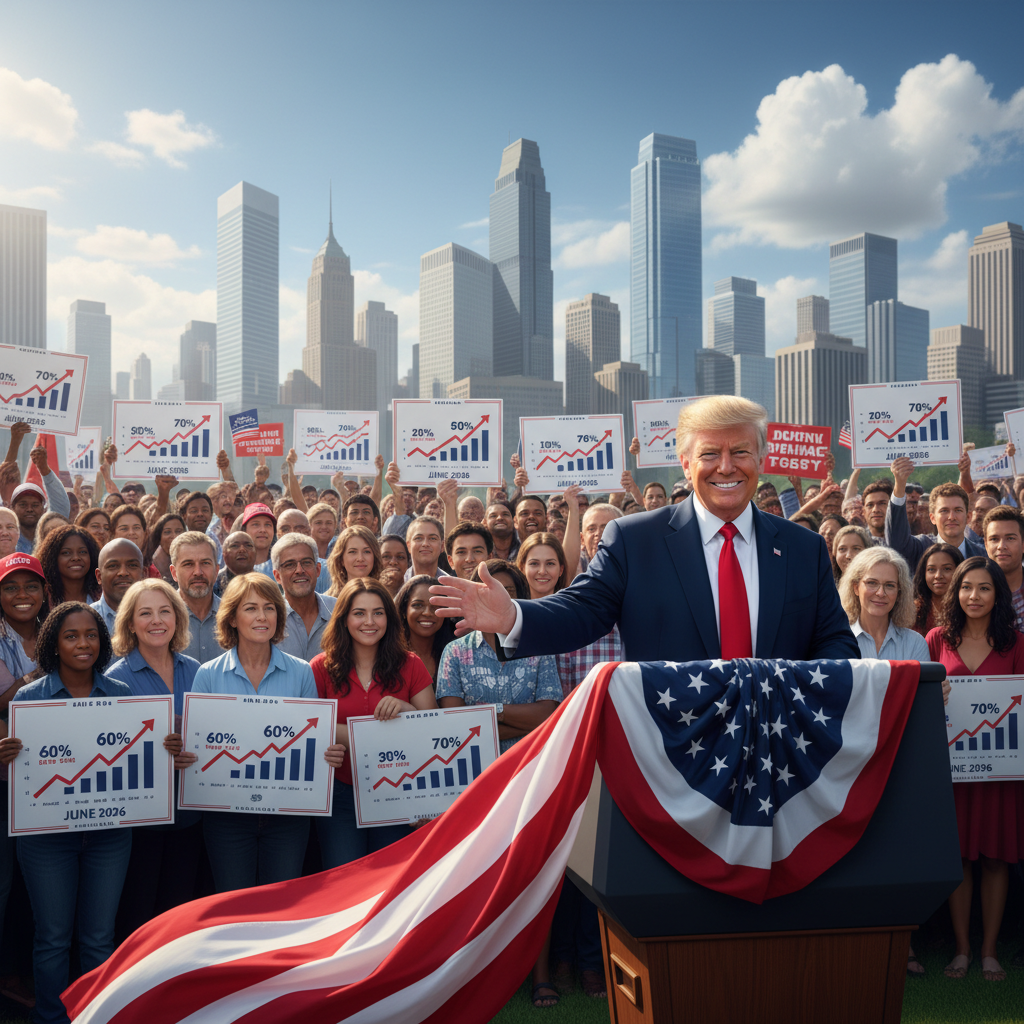
As of June 2026, President Trump's approval rating stands at a precarious 37%. This figure encapsulates public sentiment, influenced by economic performance, military action, and substantial media narratives. This article critically examines the factors contributing to this decline and its implications for the GOP.
As of June 2026, a significant reality looms over American politics: just 37% of the population approves of President Donald Trump. Let that sink in for a moment. A mere third of our country’s citizens back the leader in a time riddled with controversy. This isn’t just a number tossed around by talking heads on cable news; it’s a critical reflection of the nation’s mood—a pulse of public sentiment that demands a thorough examination.
Talking Points:
In this article, I’m peeling back the layers of Trump’s approval rating and unearthing what they reveal about the state of American political consciousness. The stakes are high, as these figures not only speak to Trump’s legacy but also foreshadow the potential turbulence facing the GOP in the near future.
When we talk about approval ratings, what are we really measuring? I think of them like temp checks on societal anxiety. Approval ratings encapsulate trust, effectiveness, and ultimately, whether the individual in power can lead a nation effectively.
Talking Points:
So often, we overlook the messy interplay of factors that shape public opinion. From economic performance to military actions, everything affects how people rate their leaders. And let’s not kid ourselves—when economic concerns rise, approval ratings tend to plummet.
Glimpse at the data. Trump’s approval rating at this low point isn’t merely a fluke. It’s a downward spiral fueled by a cocktail of missteps and prevailing national issues. We can’t pin this decline solely on one factor, but rather a combination that’s left many Americans feeling uneasy about their leadership.
Talking Points:
If we examine this situation critically, we see that trust in governance is grazing an all-time low. A Fox News poll recorded that only 25% of Americans express any trust in the federal government. That speaks volumes. It’s clear that something isn’t right, folks.
Let’s talk dollars and cents. The economy serves as the bedrock against which any administration is measured. If the economy tanks, so does public opinion. As of June 2026, 73% of Americans rate the economy negatively. That sentiment isn’t just an abstract feeling—it translates directly into approval ratings.
Talking Points:
I’ve seen the effects firsthand; in conversations over dinner tables across America, the grumbling about job markets and inflation reverberate. It’s not just a political issue; it’s personal. More than 44% of voters reported falling behind financially. When people feel this squeeze, their support for the president crumbles.
And then there’s the pressing matter of international relations. Trump’s handling of the military action against Iran has drawn considerable scrutiny, and rightly so. According to a Pew Research Center survey from April 2026, 62% of Americans disapprove of his approach, with 59% believing the U.S. erred in using military force.
Talking Points:
It’s not just about straight-laced opinions; the dissatisfaction comes from a place of wanting a steady hand on our foreign relations. Military conflict is not merely a headline but a matter that strikes at the heart of what it means to feel safe and secure.
So, beyond the battlefield, what’s Trump’s economic narrative doing? Public perception is often shaped by how well citizens feel their leaders handle their money. And right now, that narrative isn’t pretty. The discontent surfaces even in casual conversation among friends.
Talking Points:
The anxiety over financial stability has morphed into a despondent mood amongst constituents. Trump’s promise of a booming economy has fizzled for many, leading to increasing frustration aimed squarely at his administration.
Now, let’s face it; the media plays a significant role in how approval ratings are perceived. Headlines can compel change in public sentiment overnight, and that might explain some of this tumultuous approval rating landscape.
Talking Points:
These won’t be the days of unchecked loyalty towards any political figure. The 24-hour news cycle keeps citizens engaged, but it also amplifies dissent. Claims of fake news or biased reporting aside, the media landscape undeniably shapes how people perceive their leaders’ effectiveness.
Time for a little reflection. Let’s take our spotlight off one individual and shine it on the broader context of presidential approval ratings throughout history. Comparing Trump’s ratings to those of past leaders can provide clarity.
Talking Points:
Trump’s figures fit snugly within a context of upheaval. Contrasting his situation with other historical presidents, it reveals a pattern: high expectations often lead to harsh judgments when reality falls short.
With the midterm elections looming just over the horizon, these approval ratings carry weight like few others. They impact more than just Trump; they affect the entire Republican Party and how they may strategize their campaigns moving forward.
Talking Points:
The upcoming midterms will be a litmus test for the party’s strength and unity. With divisive perspectives in their ranks, the looming cloud over Trump’s approval could influence how candidates position themselves for critical success—or staggering failure.
So here we are, standing at an intersection of uncertainty and political strife. Trump’s 37% approval rating is emblematic of a deeper disconnect between leadership and the populace. It beckons questions of not just how he leads but also how future leaders might learn from this tumultuous time.
This won’t be the end of the conversation. It’s crucial to digest not only the approval ratings but also the sentiments that inform them, prompting us to engage actively with our political landscape on every level.
Are you feeling the weight of these approval numbers too? Leave a comment! Your experiences help shape our understanding of this complex landscape.
1. What factors influence presidential approval ratings?
Presidential approval ratings can be influenced by economic performance, international conflicts, domestic policies, and media coverage.
2. How do approval ratings affect elections?
Approval ratings often serve as an indicator of the current administration’s effectiveness, impacting voter sentiment and consequently influencing election outcomes.
3. Can approval ratings fluctuate quickly?
Yes, approval ratings can shift rapidly, often in response to breaking news, significant policy changes, or scandals.
4. How do Trump’s ratings compare to previous presidents?
Trump’s ratings are notably low compared to many past presidents at similar points in their terms, highlighting challenges faced by his administration.
5. Is public sentiment always accurate in reflecting reality?
While public sentiment can provide insight into voter concerns, it may not always align with factual evidence, requiring critical examination of issues at hand.