






Newsletter Subscribe
Join thousands of readers who get our Sunday Briefing: one email, five essential stories, zero fluff. Subscribe NOW!

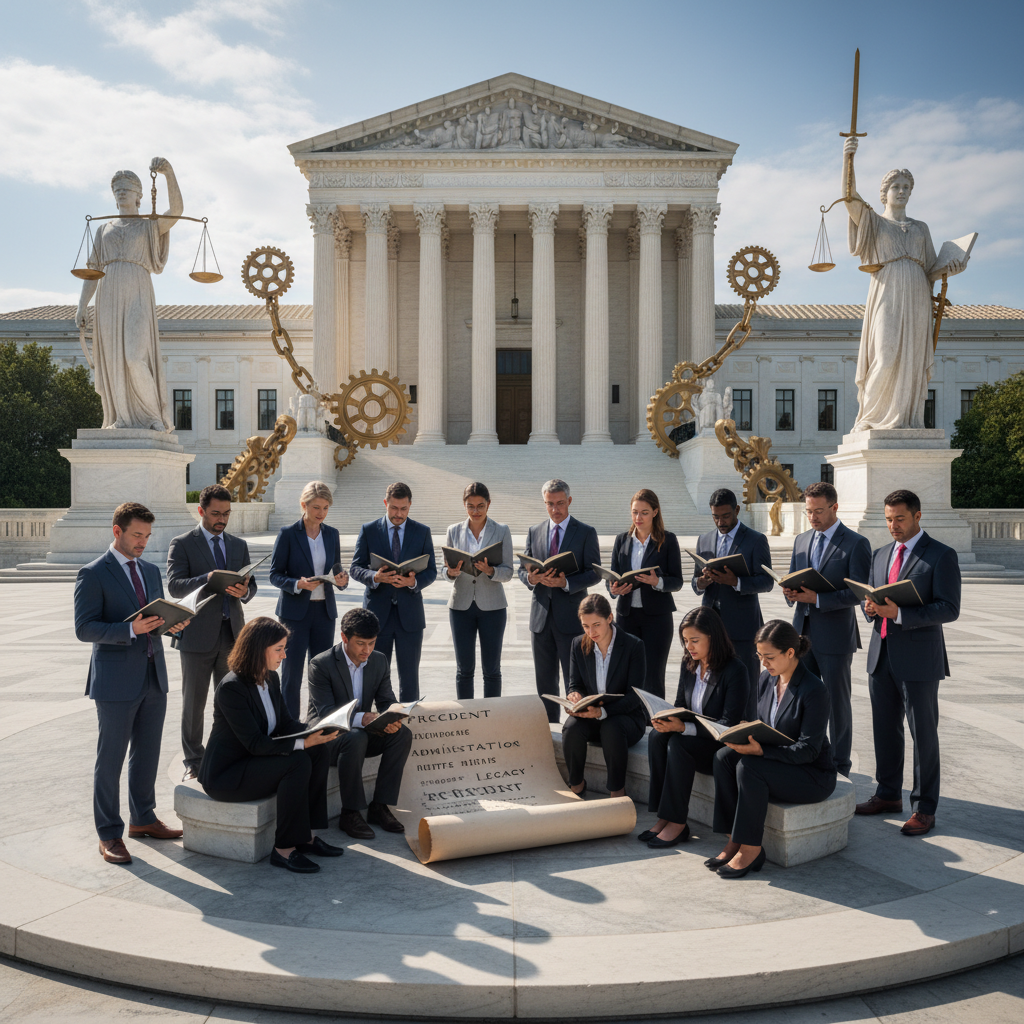
An in-depth examination of Trump's Supreme Court reveals a seismic shift in U.S. legal structure, highlighting the implications of conservative appointments and controversial rulings on civil rights, executive power, and public trust in the judiciary.
When browsing through news stories from recent years, it’s hard to miss the contention surrounding the Supreme Court. One moment, it seems like a solemn bastion of justice; the next, we’re mired in debates over executive overreach and civil rights. Trust in our judiciary is shaky, and part of that turmoil stems from the trio of appointments made by Donald Trump. These appointments tilted the balance of the Court significantly in favor of a conservative majority, leaving an indelible mark on our legal landscape. What does that mean for the average person? Well, it’s worth delving into.
Talking Points:
In his first term, Trump appointed Neil Gorsuch in 2017, Brett Kavanaugh in 2018, and Amy Coney Barrett in 2020. With these judicial selections, we saw not just a shift in numbers, but a seismic ideological shift. The 6-3 conservative majority reshaped the Court’s dynamics, altering how cases are interpreted and decided. Think about it—justices influence everything from healthcare to voting rights, and this new majority is far less restrained by previous liberal precedents. It’s a brave new world for the judiciary, one that some citizens cheer while others lament.
Talking Points:
Now, add in the shadow docket, a term that might raise some eyebrows. This mechanism allows the Supreme Court to issue rulings without full briefings or oral arguments—essentially, swift decisions made with little scrutiny. During Trump’s tenure, this stealthy approach has been used to rubber-stamp policies like mass deportations and the discriminatory ban on transgender military service members. How’s that for a lack of transparency? The silence surrounding these decisions raises critical questions about judicial independence and the role of the Court as the checks and balances intended by the Founding Fathers.
Talking Points:
When it comes to civil rights, the Trump Supreme Court sure churned out a grueling lineup of decisions. There’s no denying the Court’s stance on issues like voting rights and workers’ protections, which many felt rolled back decades of progress. For instance, the decision limiting affirmative action and cases affecting LGBTQ+ rights sparked outrage. It’s hard to ignore that marginalized groups often seem to bear the brunt of these legal developments. What happened to the idea of justice for all?
Talking Points:
A significant legacy of this Court has been its expansion of presidential powers, seemingly unbound by the traditional checks and balances. Take the 2024 ruling that granted Trump substantial immunity from criminal prosecution for actions taken while in office. That’s a big red flag! Such precedents establish a legal environment where future presidents might feel emboldened to overreach, handling power in ways that many believe could endanger democracy itself. Where’s the accountability?
Talking Points:
This brings us to a critical observation: the erosion of judicial independence. The more politicized our courts become, the harder it is for citizens to trust their decisions. A healthy judiciary relies on its perceived impartiality, but when administration changes influence the bench so dramatically, it raises alarms about how future justices will interpret the Constitution. The increased polarization is troubling, making many wonder if we can ever return to a more balanced judiciary.
Talking Points:
In a surprising turn, the Court introduced the Major Questions Doctrine, which allows justices to limit the authority of federal regulators on significant national issues. Oversight requires a delicate balancing act, but the implications here are profound. It effectively means that significant changes in public policy need Congressional approval or, at the very least, must be deliberate—not left to regulatory interpretation. The ramifications are vast, leaving essential social issues vulnerable to legislative gridlock.
Talking Points:
One of the less discussed yet pivotal shifts has been the decline of nationwide injunctions. The Supreme Court ruled to limit the ability of federal judges to impose countrywide restrictions on executive actions, as evidenced by its 2025 ruling allowing Trump’s controversial executive order on citizenship to take hold. This means that if states oppose federal policies, they may be powerless to mount a unified legal challenge. When nationwide injunctions thin out, it opens the door for piecemeal implementation of policies, often leading to confusion and conflict on the ground.
Talking Points:
The Court’s decisions are reshaping the battleground for legislative authority. It’s a real case of ‘hold my beer’ for Congress when trying to implement new policies. For instance, judicial interventions have effectively altered how lawmakers can forecast their legislation, as they now have to account for potential Supreme Court pushback on executive actions. The case of healthcare management illustrates this perfectly—what was once federal jurisdiction is now significantly clouded by judicial interpretations. How do we legislate effectively when the goalposts keep shifting?
Talking Points:
So, what about public perception? Well, trust in the Court has been battered amid controversial decisions and political accusations. Polls show a starker divide based on political affiliation, with many questioning whether the judiciary can function fairly. The lack of transparency regarding the Court’s inner workings and decision-making processes only fuels the flames of this skepticism. As if they’re a black box, only releasing information when it aligns with their agenda, it leaves the public feeling alienated. Can we fix that breach?
The legacy of Trump’s appointments isn’t going anywhere anytime soon. Their echoes will resonate throughout the legal landscape for years to come, impacting social policies, individual rights, and the scope of presidential powers. As citizens, we must grapple with this reality head-on. Engaging in discourse and advocating for judicial reform is critical. Questioning and challenging decisions that affect our rights is our civic duty!
It’s your turn—what are your views on the shifting dynamics of our judiciary? Let’s hear your thoughts in the comments!
Q1: How significant are Trump’s judicial appointments for the future?
A: Trump’s appointments created a conservative majority that could influence various legal rulings, impacting everything from healthcare to civil rights for years to come.
Q2: What is the ‘shadow docket’?
A: The shadow docket refers to a method where the Supreme Court makes swift decisions without full oral arguments or briefings, often on controversial issues.
Q3: How does the Court’s new approach to nationwide injunctions affect states?
A: The new limits on nationwide injunctions limit states’ ability to unify against federal policies, leading to varied implementations and confusion in legal matters.
Q4: Why has public trust in the Supreme Court declined?
A: Trust has declined due to perceived politicization of the Court, controversial rulings, and a lack of transparency, leading many to question its impartiality.
Q5: What are the implications of the Major Questions Doctrine?
A: This doctrine may limit how federal agencies can implement significant regulations without explicit congressional authorization, impacting various areas of public policy.