






Newsletter Subscribe
Join thousands of readers who get our Sunday Briefing: one email, five essential stories, zero fluff. Subscribe NOW!
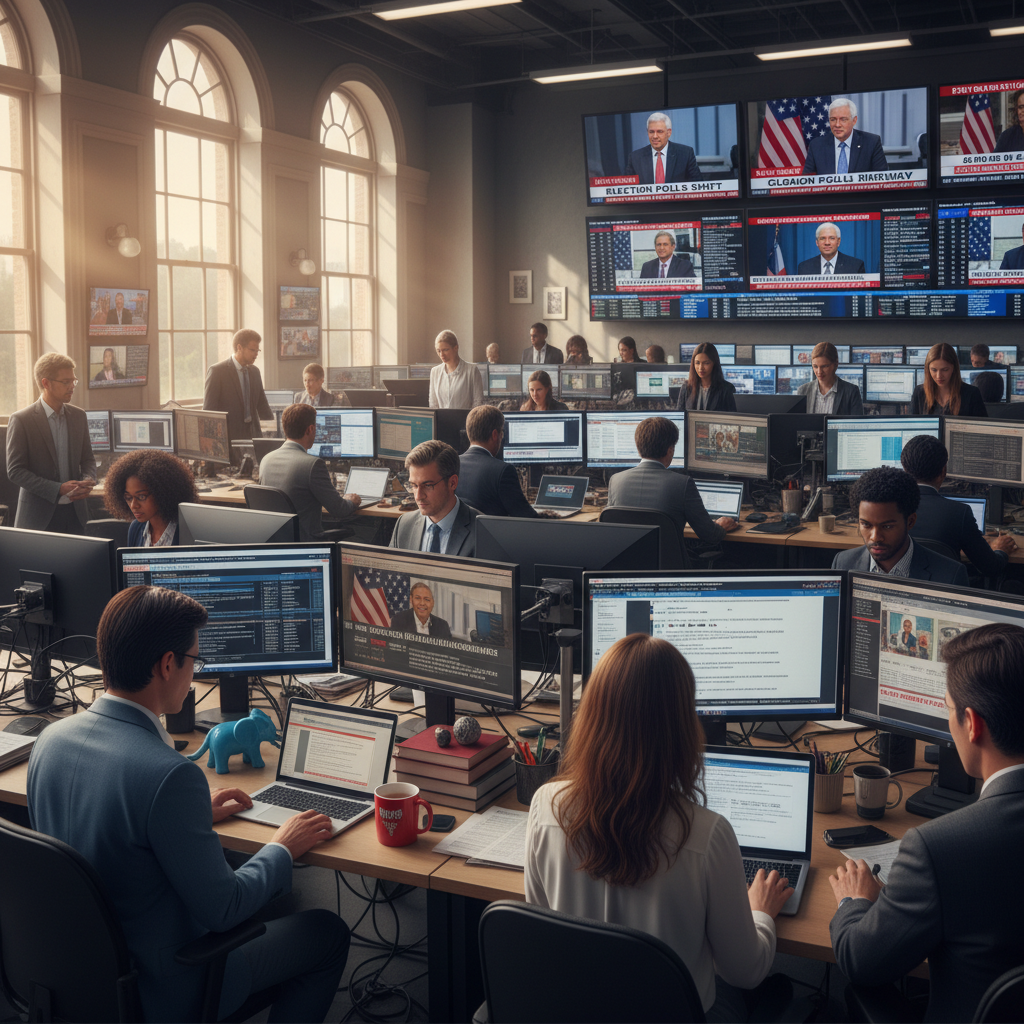
As of October 2025, only 28% of Americans trust mass media, down from 68% in 1972! What happened? Political trust has eroded, and media bias influences our perceptions of political narratives. In this critical examination of the political news landscape, we unravel the mechanisms of media manipulation and explore the role of social media in shaping our divided discourse. Join me in reclaiming objectivity and making informed choices in political news consumption.
Let’s kick things off with a bombshell: as of October 2025, only 28% of Americans express a strong trust in mass media. That’s a staggering drop from 68% in 1972! You might think, how did we go from trusting the news to questioning every headline? It’s not just about fake news; it’s deeper. It’s about who tells the story and, often, what story is being told.
In today’s climate, political news isn’t just a source of information; it’s a battleground for public perception, and I’ll show you how and why it matters. What can we trust anymore? Let’s dig in!
Talking Points:
Here’s the thing: trust in political news is hanging by a thread. I remember when I could pick up a paper and feel confident that the stories within were factual and unbiased. Fast forward to 2025. A shocking 28% of Americans trust the mass media, and you can bet that doesn’t bode well for our democracy.
What happened? Over the years, various factors have chipped away at this confidence. From partisan news outlets touting their biases as facts to sensationalist reporting, it seems the quest for clicks has overshadowed journalistic integrity. The diminishing standards in political reporting are not just a nuisance; they carry real consequences. As trust erodes, so does our ability to engage constructively in political discourse.
Talking Points:
Now, let’s talk about bias—because it’s not just a buzzword; it’s a reality. We’re seeing media outlets cranking up their biases as they cater to their audiences. It’s wild. You turn on one station and get a slanted view of reality, while another feeds you a completely different narrative.
Between 2016 and 2021, the trust of Republicans in national news plummeted from 70% to 35%, meanwhile, Democrats saw a less drastic decline from 85% to 78%. All of this fractures our understanding and engagement with the political landscape. When you can’t trust the news to represent facts objectively, it follows the narratives you want to believe, further fueling political polarization.
Talking Points:
Let’s pull back the curtain a little. Media manipulation isn’t just a conspiracy theory; it’s real. Ever notice how some stories appear to be designed for maximum outrage? That’s not accidental. From the selection of quotes to the images used, editorial choices dictate what you see—and how you feel about it.
Analysts often point out the rise in nonobjective quotatives in U.S. political news. A study showed this increased by about 0.6 percentage points between 2013 and 2020. This tells me that we’re witnessing a growing disregard for balanced reporting. With media primed to aggravate rather than inform, trusting any single source can feel like gambling.
Talking Points:
Fake news—what a term, right? But let’s not sugarcoat it. It’s a pervasive issue that has dramatically transformed how we receive political news. Stories falsely labeled as legitimate news seep into public consciousness, twisting opinions and disrupting democratic processes.
Social media platforms exacerbate this problem. In fact, a 2025 study revealed that only 27% of Americans trust information from social media sites. The split is stark: 34% of Democrats versus 19% of Republicans trust these platforms. With fueling anger and misinformation, fake news has become a tool for exploitation, leading to confusion and increased division amongst communities.
Talking Points:
Speaking of division, let’s delve into political polarization. Media practices play a pivotal role in this. When the news becomes a weapon—used to embolden one side and discredit another—the environment grows toxic. It’s like watching a reality show play out in Congress!
As more people retreat to their ideological corners, political discourse deteriorates. Gone are the days when civil debates were possible. Now, it’s all about who can shout the loudest rather than what facts align with reality.
Talking Points:
Let’s get real—social media isn’t just a platform; it’s the platform for political news and discussion today. But what happens when everyone only hears what they already agree with? You guessed it—a phenomenon known as the echo chamber effect. This dynamic reinforces previously held beliefs rather than challenging them.
Algorithms on these platforms can trap us, serving up content that aligns with our preferences instead of exposing us to diverse perspectives. It’s not just inconvenient; it’s dangerous for democracy. Without a willingness to confront opposing viewpoints, misunderstandings multiply, and political conversations stall.
Talking Points:
Let’s examine some concrete cases. Think about high-profile media failures like the erroneous reporting during election cycles—it’s scandalous! Just one misreported fact can swing public sentiment. Look back at the repeated failures of major outlets to check their sources properly.
These accidents don’t just affect public trust; they can shift election outcomes or fuel political strife that lingers. The pressing question then becomes: how can we hold media accountable for their missteps?
Talking Points:
Let me throw out an idea: media literacy should be a fundamental skill we teach everyone. If consumers of news can’t tell fact from fiction, we’re doomed to stay lost in a sea of misinformation.
We need tools and frameworks that allow us to critically evaluate what we read. Websites that check facts, resources that track media bias—these should become our best friends. Once armed with the right skills, readers may begin to reclaim their understanding of the political sphere.
Talking Points:
So, how do we navigate this minefield? Start by diversifying your news sources. Find a mix of liberal, conservative, and independent outlets and pay attention to what each presents. It’s like dating—don’t commit too soon, get to know them first!
Next, get familiar with those reliable fact-checking resources. They’ll be your lifeline when headlines sound too outrageous. And most importantly, stay engaged. Comment on articles, question narratives, and hold media accountable. You’d be surprised what happens when you demand higher standards!
In this seemingly nonsensical media environment, reclaiming trust and objectivity isn’t just a personal goal; it’s a communal necessity. We owe it to ourselves and each other to seek out truth over sensationalism. Reporting can be ethical, and news can be informative—if we, as the audience, demand it.
Now, you’re equipped with the tools to sift through the noise. Challenge narratives, check sources, and do your part to foster healthier political dialogue. The real change starts with you!
Got tips or stories about your own media battles? Don’t be shy! Share them in the comments below!
Q1: What can I do to improve my media literacy?
A1: Start by familiarizing yourself with reliable fact-checking websites and exploring a variety of news sources with differing viewpoints. Develop an instinct to question headlines that provoke immediate emotional reactions.
Q2: How can I spot fake news?
A2: Look for sources that lack credible authorship, check for supporting evidence, and analyze the length of the reporting. If it seems sensationalist, question its validity.
Q3: Why should I trust independent news sources?
A3: Independent news sources may offer less biased content and focus on issues often overlooked by mainstream media, providing a broader view of the political landscape.
Q4: How does political polarization impact regular citizens?
A4: It can lead to increased tension in community relationships and hinder productive discussions, ultimately diminishing civic engagement and complicating local political processes.
Q5: What role do algorithms play in the news we see on social media?
A5: Algorithms often reinforce current beliefs by promoting content similar to what you previously engaged with, which limits exposure to diverse perspectives and can exacerbate polarization.