







Newsletter Subscribe
Join thousands of readers who get our Sunday Briefing: one email, five essential stories, zero fluff. Subscribe NOW!

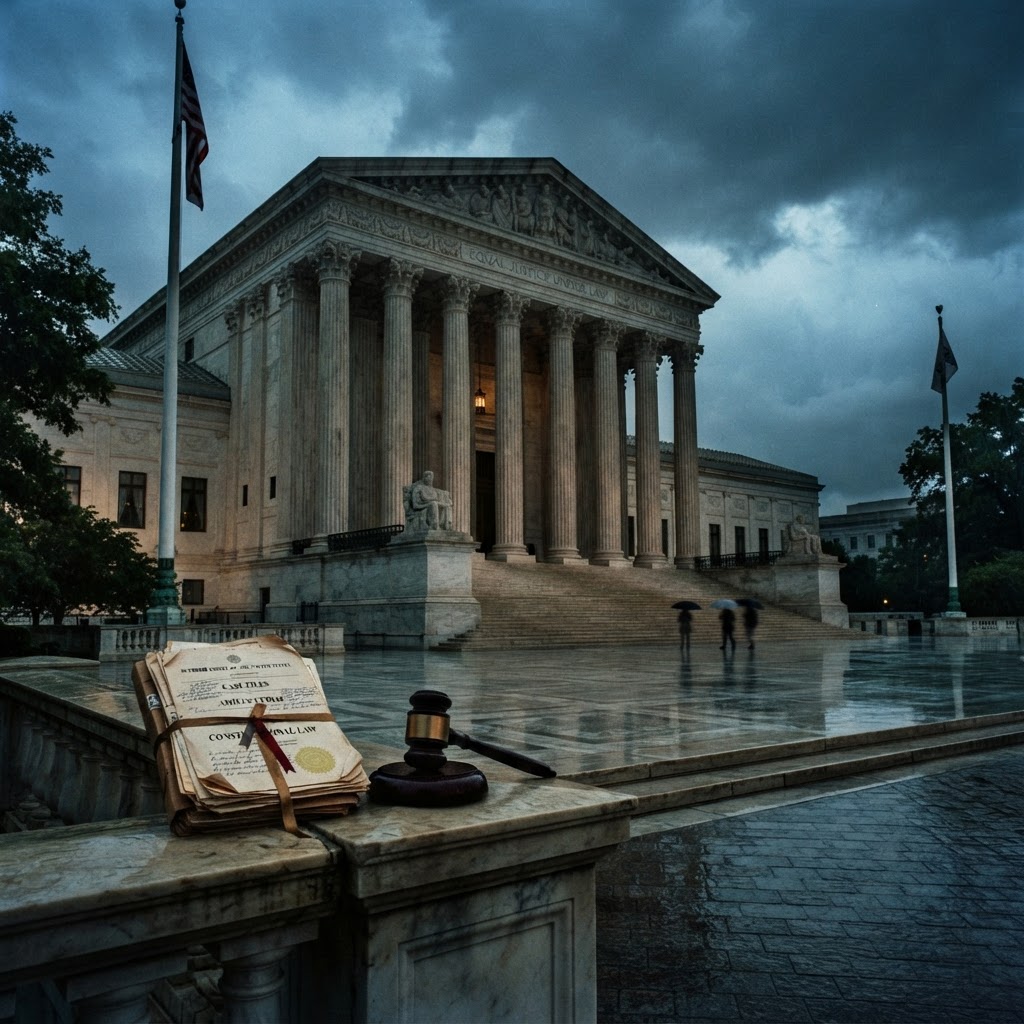
The Supreme Court's decision in Trump v. Slaughter has effectively dismantled the administrative guardrails that protected independent agencies for 90 years. We explore what this means for the future of the federal government.
Ninety years of established order just hit the dirt. When the Supreme Court decided Trump v. Slaughter on June 29, 2026, the shockwaves weren’t just theoretical; they were structural. I spent decades watching how these legal guardrails kept the executive branch from turning into a steamroller, but that era ended in a single 6-3 vote. Watching the highest court dismantle administrative law makes me wonder what actually remains of the checks and balances we were all taught in grade school. The reality is far grittier than the textbooks.
Talking Points:
In early 2025, the air in D.C. shifted when the President showed two FTC commissioners the door. Rebecca Slaughter and Alvaro Bedoya were gone, plain and simple. No claim of neglect, no proof of malfeasance, just the blunt force of the Oval Office. The FTC Act of 1914 gave these folks seven-year terms to protect them from such political weather, yet that statutory shield failed them completely. It was a bold move that signaled a total disregard for the status quo. I remember thinking then that someone was going to get sued, and I was right.
Talking Points:
For nearly a century, Humphrey’s Executor v. United States served as the anchor for our federal bureaucracy. It said the President couldn’t just fire agency heads for disagreeing on policy. The Court effectively put that precedent on the chopping block in 2026. Chief Justice John Roberts wrote for the majority, arguing that if an agency wields executive power, its leaders serve at the whim of the President. My jaw dropped reading the opinion. They didn’t just tweak the law; they gutted the very foundation that kept independent agencies truly independent.
Talking Points:
This decision marks a triumph for the unitary executive theory. The logic is simple: the President is the boss, and the boss should have total control over anyone doing his bidding. It sounds efficient on paper, but it ignores the messy reality of federal bureaucracy. If every agency head is constantly looking over their shoulder for a pink slip, are they doing their job or just playing politics? I’ve seen this kind of consolidation before, and it rarely leads to better outcomes for the public.
Talking Points:
We talk about the separation of powers like it’s a delicate clockwork mechanism. Well, someone just ripped out half the gears. By confirming that anyone exercising executive power is subject to at-will removal, the Court essentially handed the keys to the kingdom to the White House. This wasn’t some minor technical adjustment. This was a massive power grab legitimized by the black robes. It forces us to ask how much power we actually want concentrated in one desk.
Talking Points:
Justice Sotomayor wasn’t having any of it. Her dissent, joined by Justices Kagan and Jackson, warned that we are entering a period of institutional chaos. If you can fire someone for any reason, you invite a revolving door of political loyalists rather than competent civil servants. It’s a terrifying prospect. I recall working with agencies that functioned well because they were insulated from partisan bickering; that insulation is gone now.
Talking Points:
Look at the NLRB or the EEOC and tell me they won’t feel the heat. When the people at the top are essentially temporary workers subject to the President’s mood, their decision-making becomes risk-averse or overly aggressive. It’s the worst of both worlds. I expect to see a lot of talented people leave government service, tired of being pawns in an executive game of musical chairs. The regulatory machine is changing, and it isn’t getting any more stable.
Talking Points:
People keep calling this move “efficiency,” but I call it what it is: a power play. True efficiency comes from expertise, not from surrounding yourself with people who won’t question your methods. If we want government to work for the people, we need experts who can speak truth to power without fearing for their livelihood. This new standard treats public service like a loyalty test. That is the quickest path to failure.
Talking Points:
The lawyers are going to have a field day with the fallout from this. What about the Fed? What about other independent boards? The Court left a tiny door open for uniquely structured institutions, but that’s a fragile shield. I imagine we’ll see lawsuits popping up for the next decade trying to define where the President’s power actually ends. Until then, everything is on the table.
Talking Points:
We are firmly in the era of the Imperial Presidency now. The guardrails are down, the precedent is discarded, and the power is concentrated. It’s a strange feeling, watching the foundations shift under your feet. We have to decide if this is the system we want. If you value independent oversight, you need to be paying attention. Talk to your neighbors, write to your reps, and don’t assume the institutions will save themselves. They won’t.
This decision isn’t just about a few fired commissioners; it’s about the soul of how our government operates. We’ve watched the dismantling of administrative law and the rise of a system that favors total control over stability. You have to ask yourself what happens when the next administration decides that your favorite agency needs a purge. It’s time to start thinking about what kind of government you actually want. Share your thoughts below—are we better off with an all-powerful executive, or did we just lose something precious?