





Newsletter Subscribe
Join thousands of readers who get our Sunday Briefing: one email, five essential stories, zero fluff. Subscribe NOW!

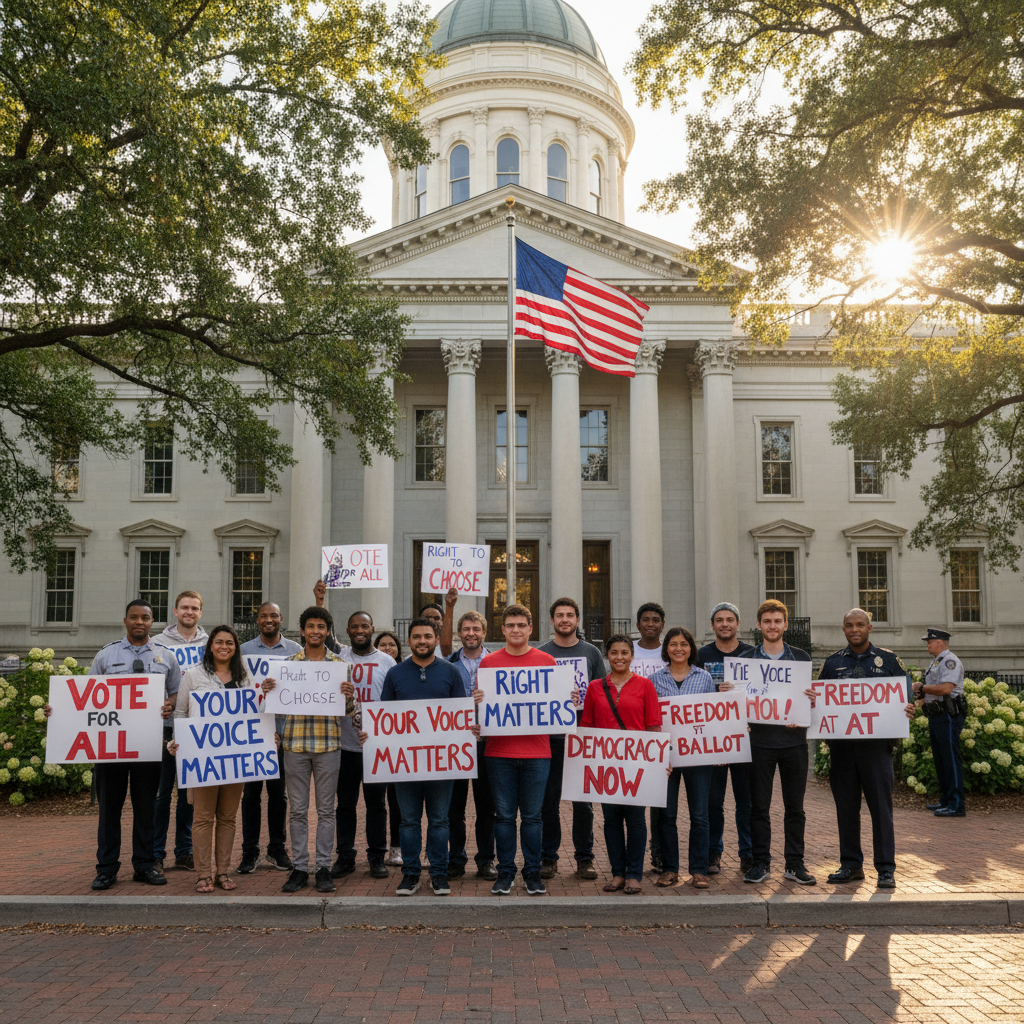
A bold examination of voting rights legislation in America, dissecting not only historical milestones but also the ongoing suppression tactics that threaten democracy today.
You think everyone in this country can easily exercise their right to vote? Think again! It’s 2023, but the struggle for voting rights still haunts us. The very fabric of democracy seems torn by the threads of disenfranchisement and political maneuvering. As someone who’s watched the political landscape shift over the years, I can’t help but feel both frustrated and compelled to dig deeper into the realities of voting rights legislation in America.
Talking Points:
The United States has long been at odds with its own ideals. If you think about it, the fight for voting rights isn’t just a recent phenomenon; it dates back to the country’s very foundation. From property requirements and literacy tests to blatant intimidation at the polls, disenfranchisement has always found a way to rear its ugly head.
In the post-Civil War era, various constitutional amendments aimed to rectify exclusionary practices. Yet, Southern states devised new ways to suppress minority voting. It’s fascinating—and horrifying—to see how the same scripts have played out over the decades. Each step toward legislation has been a hard-fought battle against a backdrop of systemic racism and injustice.
Talking Points:
Enter the Voting Rights Act of 1965, one of the crowning achievements of the civil rights movement. Signed into law by Lyndon B. Johnson, it was a response to intense activism and brutality faced by activists. The Act prohibited racial discrimination in voting and set the stage for unprecedented levels of voter registration among African Americans.
But here’s the kicker: was this just a Band-Aid on a gaping wound? I sometimes wonder if it was more a temporary fix than a comprehensive solution. The Act undoubtedly changed the game, but it couldn’t eradicate the deep-rooted issues that still plague our democracy.
Talking Points:
Fast forward to 2013. The Supreme Court struck down crucial provisions of the Voting Rights Act in Shelby County v. Holder, and the floodgates were opened. States suddenly felt emboldened to pass voter ID laws and implement changes that many consider voter suppression.
We’ve seen Congress fail to act adequately to restore the protections that were lost. It’s enough to make you question whether lawmakers genuinely care about voting rights or if it’s all just a façade to appease the vocal minority who resent any form of oversight.
Talking Points:
Let’s talk about voter ID laws. Advocates claim these measures are about election integrity. Yet, what they might be really about is making it harder for certain people to vote. As I reflect on the hoops people have to jump through today—showing IDs, proving residency, navigating confusing registration processes—I can’t help but feel we’re eerily repeating history.
It’s absurd! When you look at studies showing that voter fraud is virtually nonexistent, it raises the question: why are we complicating the voting process? What ‘integrity’ are we protecting when we make it so damn difficult for people to cast their ballots?
Talking Points:
If you think these laws only affect individual voters, think again! The implications cut deeper. Minority communities, already marginalized, suffer disproportionately from these barriers. It’s disheartening to see how these suppressive tactics directly impact representation in government.
With fewer voices at the table, policy decisions continue to ignore large segments of the population. This isn’t just about voting; it’s about leaving entire communities unrepresented, thus jeopardizing the integrity of our democracy overall.
Talking Points:
And then we have today’s legislative theater. Bills like the John Lewis Voting Rights Advancement Act are introduced with great fanfare but often fizzle out in legislative limbo. Are these efforts sincere attempts to reform our voting system or just political posturing for the next election cycle?
Watching lawmakers dance around the issue makes me skeptical. The urgency of the moment seems all too convenient—power plays for the upcoming midterms or just plain ignorance of the seriousness of the problem? You have to wonder what the actual intentions are.
Talking Points:
While we’re caught up in the pitfalls of legislative gridlock, we can’t ignore how technology has reshaped our voting landscape. Online voter registration tools and social media campaigns offer new ways for people to engage. But not everyone has equal access.
Social media can be a double-edged sword. It can galvanize movements and expose injustices quickly. However, we also see misinformation spreading like wildfire, which complicates the landscape even more. Technology isn’t inherently good or bad; it just reflects us—our hopes and our failings.
Talking Points:
If you step back and look globally, it becomes clear that America’s voting rights issues are far from unique. Countries around the world have grappled with similar struggles and have at times made more significant strides toward inclusivity.
I often find it enlightening to compare our situation to that of other nations battling similar challenges. From Norway’s emphasis on universal voting access to South Africa’s post-apartheid reforms, there’s a range of successes and failures to learn from. It begs the question: are we open to learning, or are we stuck in our ways?
Talking Points:
As we reflect on the political climate, let’s not forget that the fight for voting rights is never truly over. There are still too many barriers to participation, too many voices silenced. We need to advocate not just for our rights but for the rights of everyone who walks into that voting booth.
It’s time for a collective response—a grassroots movement that puts pressure on leaders at every level. Change will require nothing short of a cultural revolution around how we view democracy—and that starts with every single one of us!
The Voting Rights Act of 1965 is a landmark piece of legislation aimed at eliminating racial discrimination in voting, particularly in the Southern United States. It prohibits voting practices that discriminate based on race or color.
Various Supreme Court rulings, particularly the Shelby County v. Holder decision in 2013, have weakened protections afforded by the Voting Rights Act, allowing states to implement stricter voting laws that may suppress minority voters.
Examples include voter ID laws, changes to voter registration processes, cuts to early voting hours, and the closure of polling places in minority neighborhoods—all designed to challenge accessibility to the ballot box.
Individuals can get involved by supporting advocacy groups, educating themselves on voting legislation, participating in local elections, and contacting their representatives to push for voting rights reforms.
While many countries share struggles with voting rights, some have made more substantial commitments to inclusivity and access, revealing that systemic change is possible with the right political will and public engagement.