








Newsletter Subscribe
Join thousands of readers who get our Sunday Briefing: one email, five essential stories, zero fluff. Subscribe NOW!

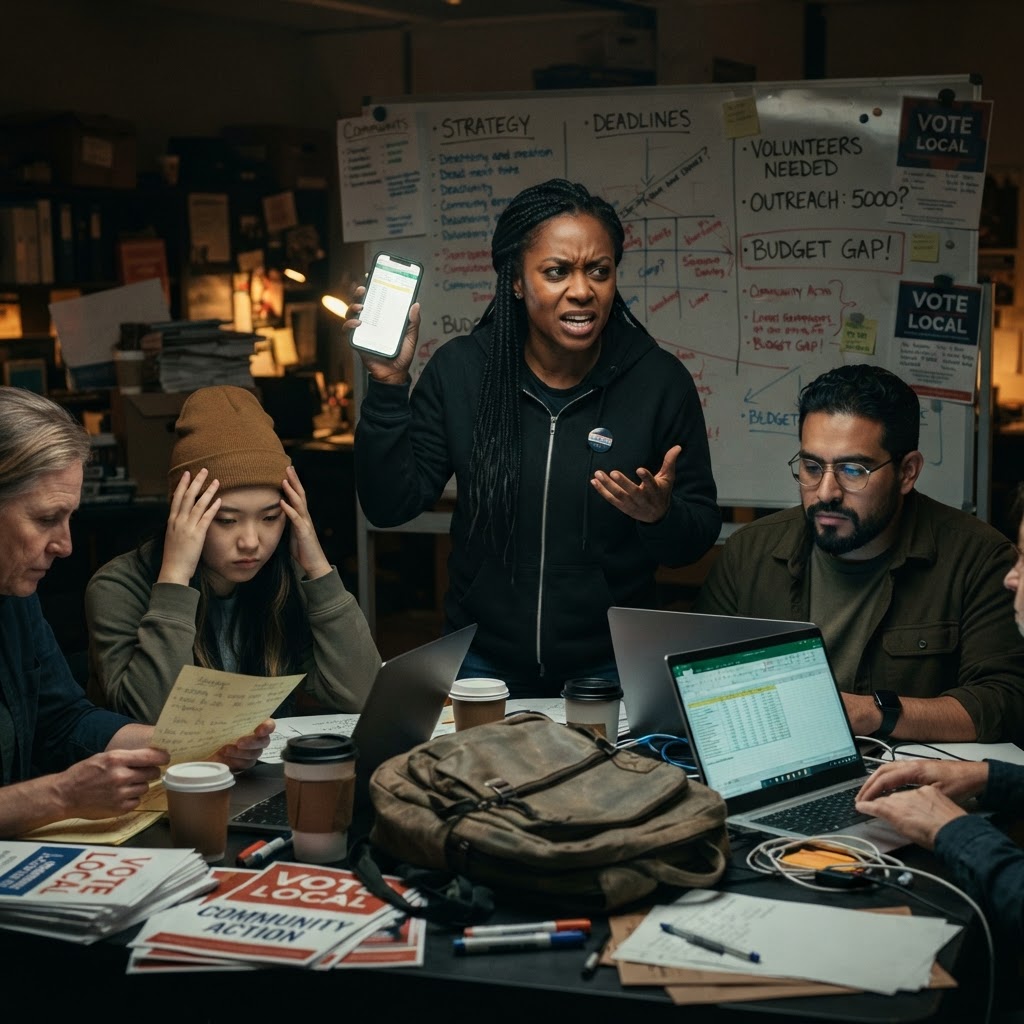
Most activism is just performative noise. If you want to change policy, you need to abandon the 'leaderless' myth and start building actual power.
Talking Points:
* The gap between digital metrics and policy shifts
* Why emotional venting masquerades as strategy
* The danger of confusing movement with momentum
I spent three years working with a group that had 50,000 followers online but couldn’t get five people to show up for a city council meeting. We felt big. We felt loud. We were accomplishing absolutely nothing. Real structural social change does not happen in a comment section.
Most folks confuse noise with influence. They think a viral post is a victory. It is just a blip on a server. Collective action requires showing up when it is inconvenient, not just when it feels good to share a graphic. Stop pretending your anger is a substitute for organization.
Talking Points:
* Digital activism as an entry point versus a dead end
* The psychology of the ‘like’ button
* Moving beyond vanity metrics to real outcomes
Data shows that 33 percent of U.S. social network users engage in political activity online. That is a massive pool of potential, but most of it sits there stagnant. Posting is a form of political agency, sure, but it is the bottom rung of the ladder.
If you stop at the screen, you are failing. I watched a campaign hit its funding goal in an hour, yet they folded months later. Why? Because a donation is a transaction, not a relationship. You cannot build sustainable political power on loose change and likes.
Talking Points:
* Why ‘structureless’ groups hide power hierarchies
* The myth of pure democracy in protest circles
* Holding informal elites accountable
Jo Freeman said it best decades ago, yet we keep making the same mistake. When you claim to have no leaders, you simply create a vacuum where the loudest or most charismatic person rules without accountability. This is the danger of performative activism.
“Leaderless” groups are rarely democratic. They are messy, exclusionary, and prone to internal decay. If you do not have a clear structure, you have no way to measure growth. Stop pretending you are flat. Build a formal process instead.
Talking Points:
* Defining clear, reachable goals
* Moving from reactive to proactive campaigning
* Assessing your theory of change
Rebellion feels good. It is the raw fire of being fed up. But revolution is a slog of planning and logistics. You need a theory of change, not just a list of grievances. Rebellion yells at the sky; revolution changes the laws.
I once spent months picketing a private corporation that had no say in the policy we were fighting. I learned the hard way that righteous fury is not a strategy. You have to know exactly who can pull the lever you need pushed.
Talking Points:
* Identifying specific decision makers
* Assessing the power you hold over them
* Using pressure to force concessions
If you cannot name the person who can give you what you want, you are not organizing. You are venting. Power mapping helps you find the targets. You need to know who funds them, who votes for them, and what they actually fear.
Stop screaming at everyone at once. That just creates background noise. Find the one person with the power to sign the paper. Focus your efforts there until they have no choice but to listen.
Talking Points:
* The benefits of intentional leadership design
* Distributing authority to avoid burnout
* Creating systems for long-term accountability
Leaderful groups work because they recognize that people need guidance and clear roles. It is not about one person having all the glory. It is about creating a structure where anyone can lead when the time is right.
Effective social movement strategies rely on people knowing their jobs. Without clear roles, you end up with three people doing all the work and the rest waiting for orders. That is how groups collapse. Stop trying to be leaderless and start trying to be responsible.
Talking Points:
* Why conflict is necessary for progress
* Building bridges without sacrificing values
* The difference between a coalition and a club
Conflict makes us uncomfortable. We want everyone to like us. But if you are doing something meaningful, someone will hate you for it. If you are not upsetting the status quo, you are just maintaining it.
True community base building means finding allies in places you do not like. You do not need to agree on everything. You just need to agree on the target. Stop looking for friends and start looking for partners in the fight.
Talking Points:
* Talking to people who do not share your jargon
* Meeting folks where they are physically
* Building trust through consistency
Your twitter timeline is not the real world. If you speak in buzzwords, you will never move a single person outside your bubble. Use plain language. Talk about rent, food, and safety, not abstract theory.
Go to the places where people actually live. If you only show up at protests, you are a tourist. Show up at the laundromat. Show up at the school board meeting. Listen more than you lecture.
Talking Points:
* Moving beyond turnout numbers
* Tracking internal growth and retention
* Defining success by tangible policy wins
Crowd size is a vanity metric. It looks great in a photo, but it does not mean your movement is growing. I have seen massive crowds lead to zero change. Do not brag about who showed up to march. Talk about who stayed to organize.
Are you retaining people? Are they taking on more responsibility? That is how you measure power. If your crowd size drops but your active core grows, you are actually winning.
Talking Points:
* Sustainability versus short-term urgency
* The importance of rest for long-term health
* Rotating roles to prevent task saturation
Burnout is a feature of bad design, not a badge of honor. When you build progressive grassroots organizing tips into your daily life, you learn to pace yourself. It is a marathon, not a sprint. If you burn out, the movement just keeps going without you.
Stop trying to do everything yourself. You are not a hero. You are a part of a machine. If you are not building others to take your place, you are a bottleneck.
It is time to get serious. We have spent enough time playing house in our little protest circles. Real change demands hard choices, clear hierarchies, and the willingness to do boring work that never gets a mention on the news.
Stop waiting for someone else to fix it. Map your power, identify your targets, and build your base. It is time to get to work. Let me know in the comments what your biggest struggle has been in your own organizing efforts.