



Newsletter Subscribe
Join thousands of readers who get our Sunday Briefing: one email, five essential stories, zero fluff. Subscribe NOW!
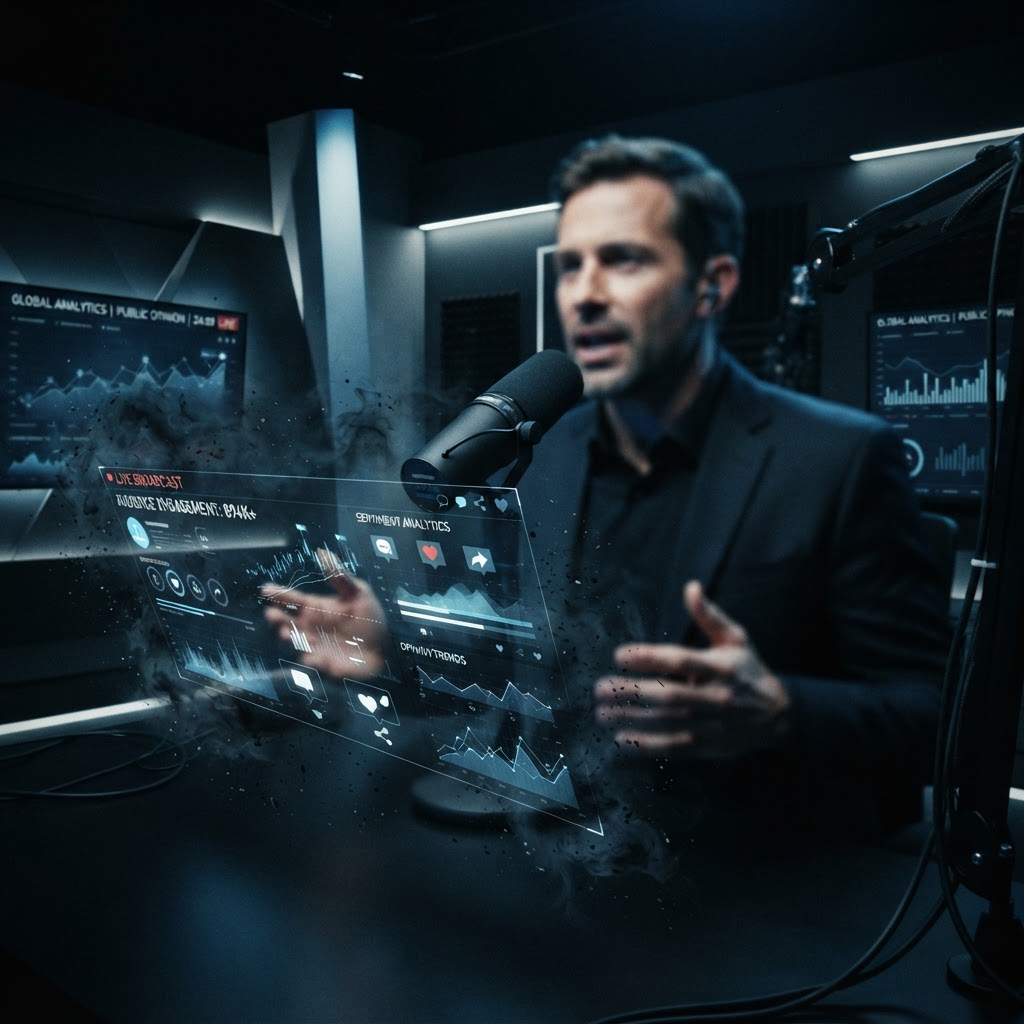
Political influencers are often just paid pitchmen masking agendas as authentic opinions. Learn why the system is rigged and how to spot the grift.
Talking Points:
* The shift from traditional media to creator-driven news.
* Why your trust in a screen is a calculated risk.
* Recognizing the performance of political authenticity.
Nearly a fifth of Americans now get their news from online content creators. That number scares me. I remember when news meant a journalist with a press badge, not a guy in a hoodie filming in his basement with a ring light. We are trading objective reporting for curated personalities who know exactly what buttons to push. It is a massive change in how we perceive reality.
I used to watch these pundits myself. I thought I was getting the raw truth, away from the corporate suits. Then I saw a spreadsheet. I realized that my favorite firebrand was just reading a script sold by a lobbying group. The facade of the modern political commentator is often nothing more than a billboard. You are the product, and your outrage is the revenue stream.
Talking Points:
* Defining the void where regulation should be.
* How viewers assume neutrality where none exists.
* The psychological cost of hidden agendas.
We have a serious transparency gap. When you watch a standard ad, you know it is an ad. But when a creator weaves a talking point into a casual rant, the line vanishes. This is where the real political influencer transparency problem hits us hard. You feel like you are listening to a friend. You are actually listening to a paid pitchman.
My wake-up call came when I noticed the same “spontaneous” opinion popping up on ten different channels at once. It was not a coincidence. It was a coordinated strike. We are drowning in social media propaganda that masquerades as genuine concern. The influencers know this works. They are betting on your laziness to check the source.
Talking Points:
* The massive influx of PAC spending on creators.
* How political consultants treat influencers as ad space.
* Why “native advertising” is the new dark money.
Political groups and PACs dumped tens of millions into creator-driven messaging during the 2024 election cycle. This is not grassroots activism. This is corporate-style media buying rebranded as “authentic voices.” They hire consultants who specialize in finding influencers with high engagement rates, regardless of their actual knowledge.
It is the commodification of your attention. They do not care about your views. They care about your clicks and shares. When you see a creator transition from talking about video games to suddenly promoting a specific political bill, check their sponsors. You will usually find a trail of dark money leading back to a PAC. Follow the cash.
Talking Points:
* Why creators mirror your personal frustrations.
* The danger of scripted political talking points.
* How to spot the “fake struggle” act.
Authenticity is a currency. Pundits use it to buy your loyalty. They talk about their personal life and then pivot to a partisan talking point that hits your insecurities perfectly. It feels intimate. It is actually highly calculated. They are selling you a version of yourself that is angry, justified, and ready to fight.
I once trusted a creator who claimed to be a “neutral observer.” I watched as they slowly became a mouthpiece for a specific political faction. The transition was smooth. They used the same tone, the same room, and the same “I am just asking questions” routine. It was a lie. They were always a paid actor.
Talking Points:
* The loophole of political versus commercial speech.
* Why the PAID Act remains a dream.
* State-level patchworks create confusion.
We love to blame the government, but the regulatory vacuum is the real villain. The FTC regulates products, not politics. If someone pays an influencer to sell a toaster, they must disclose it. If they pay them to sell a candidate, they can often hide it entirely. This governance vacuum leaves us all in the dark.
Legislation like the PAID Act tries to fix this, but it moves slower than an influencer’s upload schedule. Even when laws exist, they are often patchy. California might have rules that Texas does not. The lack of federal oversight means influencers can play the jurisdictional game to avoid transparency. Don’t hold your breath for help from the top.
Talking Points:
* The pipeline from consultant to influencer content.
* Why political operatives need influencers more than media.
* The decline of independent digital discourse.
Political operatives treat creators like they treat cable news anchors. They feed them “exclusive” scoops to keep them on-message. The creator gets the clout of being the first to break a story. The operative gets a megaphone for their agenda. It is a classic back-scratching deal that leaves the public out of the loop.
This makes independent journalism nearly impossible to find. If you aren’t part of the network, you don’t get the traffic. This creates a closed loop of information where everyone agrees on the script. It is lazy, it is effective, and it is killing our ability to think for ourselves. Stop feeding the parasite.
Talking Points:
* How engagement-optimizing algorithms favor extremism.
* Why the feed is not a neutral space.
* The feedback loop of partisan content.
Algorithms don’t care about the truth. They care about keeping you logged in. They prioritize content that makes you angry because anger keeps you clicking. This creates a perfect environment for hidden political agendas. You aren’t getting the news; you are getting a tailored dose of hostility.
I stopped trusting my feed a long time ago. I realized that if a video made my blood boil, the algorithm had picked it out just for me. It is a form of surveillance capitalism that is very good at nudging your political beliefs. You aren’t choosing what to watch; you are being guided by code. Break the chain.
Talking Points:
* The emotional weight of one-sided trust.
* Why we defend creators like family members.
* The impact on actual political decision-making.
We build deep bonds with people we have never met. This parasocial trap is a powerful tool for persuasion. When your “friend” tells you a candidate is great, you listen. You don’t verify. You trust them because they make you feel understood. It is a betrayal of the audience to exploit that bond for a payout.
I have seen people lose friendships because they defended a creator who turned out to be a grifter. That is the cost of this game. You aren’t just losing your time or your money. You are losing your capacity for rational debate. Stay suspicious of anyone who wants your emotional investment in exchange for their opinion.
Talking Points:
* The pattern of influencer exposure.
* Why creators rarely suffer real consequences.
* How the audience reacts to transparency failures.
When a creator gets caught, they usually apologize. It is a ritual. They cry, they claim they “didn’t know” the source of the funding, and then they keep the money. The audience often forgives them because they want to believe. It is a cycle of deception that keeps running because there is no real punishment.
Civil penalties for FTC violations can reach fifty thousand dollars per instance. But political speech stays in the gray zone. They rarely face financial ruin. Instead, they just pivot to a new niche or a new platform. The only way to stop it is to stop watching. Stop the traffic, stop the grift.
Talking Points:
* Practical tips for verifying political sources.
* The role of media literacy in self-defense.
* Why you need to diversify your intake.
Be the detective in your own life. When you hear a strong claim, pause. Go to the primary source. Don’t look at what the influencer says the law is; go read the law yourself. It is boring work, but it is the only way to avoid the propaganda trap.
I look at the “about” page. I look for who funds the non-profits backing the creator. I check for cross-platform coordination. If the same talking points are everywhere, stay away. Your goal is to be a person who thinks, not a person who clicks. Keep your standards high.
Talking Points:
* The future of our digital discourse.
* Taking back control of your own opinions.
* Moving past the influencer hype cycle.
We live in a world where the noise is designed to drown out the signal. The influencer grift is just one part of a larger problem. We have to be the ones to demand better, or nobody else will. Stop buying the polished narrative they sell you every single day.
Question every source. Read outside your bubble. If you feel an emotional pull, pull back. You are capable of forming your own opinions without help from a sponsored talking head. Have you caught an influencer pushing a secret agenda lately? Share your experiences in the comments.
1. Question: Is all paid political content on social media illegal?
Answer: No, currently there is no federal law that mandates disclosure for paid political influencer content, creating a significant loophole for creators and their sponsors.
2. Question: Why do social media algorithms push partisan content so hard?
Answer: Algorithms optimize for engagement, and partisan, emotionally charged content is highly effective at generating clicks, comments, and shares, which keeps users on the platform longer.
3. Question: Can parasocial relationships actually influence my voting behavior?
Answer: Yes, research indicates that the strong emotional bonds formed with online creators are direct predictors of political attitude changes and support, as viewers tend to trust familiar voices over objective data.
4. Question: How can I tell if a creator is being paid to share a political view?
Answer: Look for repetitive, scripted phrases across multiple channels, check the creator’s sponsor list, and search for the creator’s name alongside the political PACs or groups they might be affiliated with.
5. Question: Do any states have laws about influencer political disclosures?
Answer: Yes, some states like California and Texas have enacted specific regulations requiring disclaimers on paid political advertising, though these laws vary significantly in scope and enforcement.