







Newsletter Subscribe
Join thousands of readers who get our Sunday Briefing: one email, five essential stories, zero fluff. Subscribe NOW!

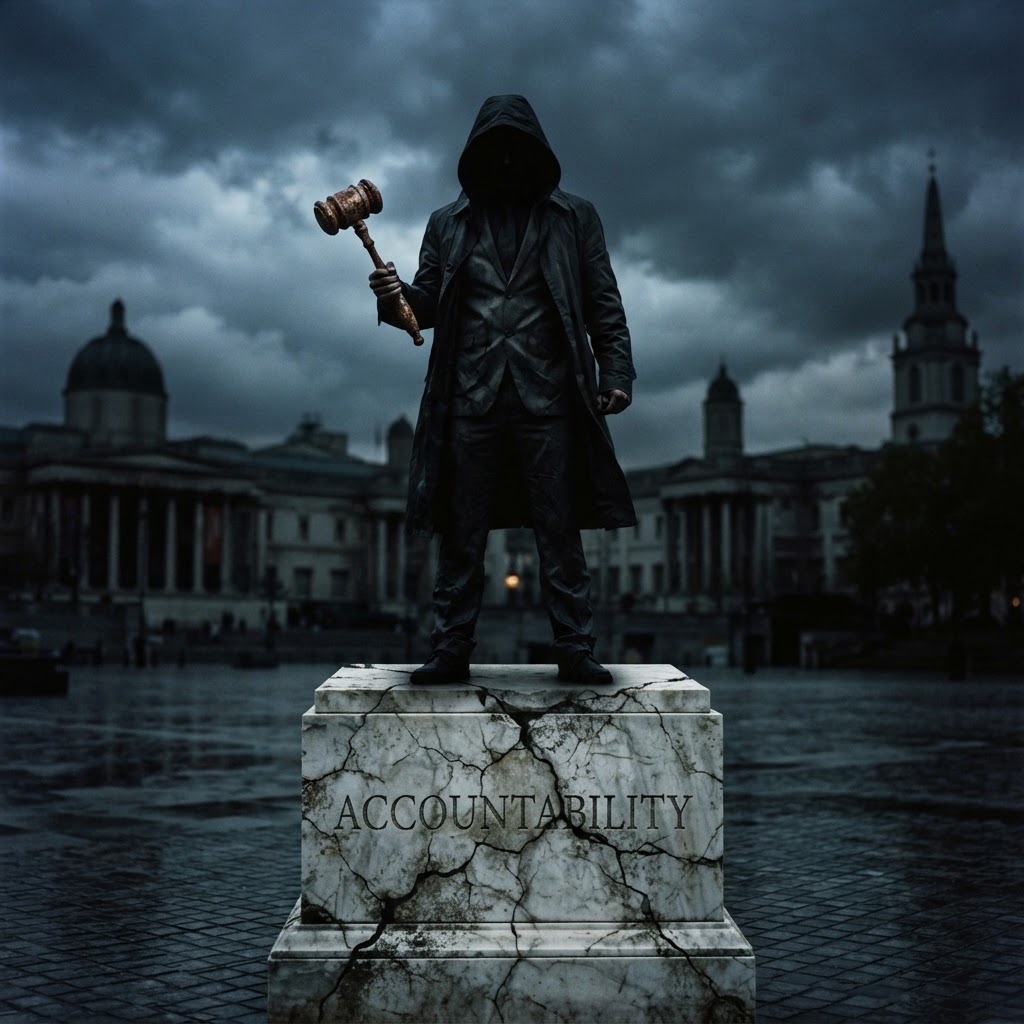
The facade of accountability in politics isn't just disappointing; it's a serious threat to democracy itself. With only 3% of ethics investigations leading to action, it's clear that politicians often operate with impunity. Time to expose the illusion!
You know what’s infuriating? Realizing that only 3% of ethics investigations in the U.S. Senate over a decade resulted in any violation finding. Three percent! That’s like throwing a surprise party and forgetting to invite the guest of honor. I mean, if allegations of misconduct go unpunished like this, can we honestly say there’s accountability in politics? Let’s face it—every time I hear a politician promise to “hold themselves accountable,” a part of me cringes. After twenty years of watching these games, I can tell you right now: it’s all smoke and mirrors.
In a political climate where accountability is just a buzzword, the illusion of integrity reigns supreme. Why do we tolerate this? Why do we prize narratives over action? It’s high time we dissect these layers of deception!
Talking Points:
First, let’s talk about the so-called watchdogs. Ethics commissions and oversight boards are often nothing more than fig leaves, designed to shield the public from the ugly truth. You’ll find that these bodies frequently lack independence and the authority to enforce real consequences, operating more like self-policing groups than actual enforcers of accountability.
Second, we must confront that ethical standards are often performative. You may have noticed that every time a scandal bubbles up, the same routine unfolds: press conferences, promises of “investigations,” and ultimately? Nada. With only one in thirty cases resulting in actual penalties, it’s clear that procedures promote a culture where ethical lapses are a mere footnote in a politician’s resume.
And then there’s the immunity angle. When laws and guidelines are intentionally vague, they create a loophole for misconduct—making it easy for officials to prioritize their interests over the public good. So, are we really shocked that the status quo persists?
Talking Points:
Ever tried to navigate your way through one of these ethics boards? Let me tell you, it’s painful. A lot of these commissions lack the very thing they’re supposed to promote: transparency. When their operations are shrouded in mystery, how can the public trust them?
Moreover, many of these boards exist to keep appearances, not enforce accountability. For every shiny report claiming to improve integrity, I can assure you there’s a multitude of cases swept under the rug. Take this into account: public trust does not flourish in obscurity—it wilts.
And all that mismanagement we see? Just think about how it chips away at the public’s confidence. If citizens believe that complaints are met with indifference or cover-ups, the whole system collapses into a cycle of skepticism.
Talking Points:
Once we peel back the layers, we uncover an insidious reality: systemic immunity. Legal frameworks often allow officials to escape accountability, providing a cloak for malfeasance. It’s like a game of Monopoly, but the rules are rigged—you can land on “Go” even if you’ve committed crimes!
Despite whistleblower protections being on paper, the culture around them usually shames and silences those who might speak up. Why take the leap when the safety net is full of holes? The risk often outweighs the reward.
Let’s not ignore the fact that when consequences for politicians are merely slaps on the wrist—they’re practically invited to keep pushing the envelope. If legal repercussions are negligible, why change behaviors that lead to corruption?
Talking Points:
Ah, the classic revolving door! It’s almost comic if it weren’t so tragic. The way that public officials slide back and forth between government and lobbying firms creates conflicts of interest we can’t afford to ignore. You’ve got policymakers prioritizing private gain over public good, simply because their next payday might be waiting in the lobbyist’s office.
What’s even more troubling is how lobbying distorts what should be the core political agenda. When legislation is written by special interests rather than an objective governmental pursuit, the public’s needs take a back seat. Anyone else feel a tad uneasy about this?
Consequently, when transparency is undermined by these relationships, the public is left questioning: who’s really in charge? It’s not the voters. It’s the lobbyists wielding influence from the sidelines.
Talking Points:
Follow the money, indeed! The sheer amount of dark money flowing into our political system is alarming. More than $4 billion was spent in the last election cycle alone! This isn’t just about buying influence; it’s about controlling outcomes. With unlimited contributions largely hidden from public view, wealthy donors operate in the shadows, crafting a narrative that suits their agendas.
Essentially, when funding dictates who gets elected, we set ourselves up for a future where policy reflects the interests of just a few rather than the needs of the many. It’s bonkers, right?
If we’re being honest, the current state of campaign finance laws would be laughable if the stakes weren’t so high. Looming loopholes allow spending to evade transparency requirements, which leads me to a burning question: how do we expect real reform in a system so fundamentally skewed?
Talking Points:
So, here’s the kicker: can we trust the very system that appoints judges to oversee accountability? When political appointees control the judiciary, you bet the scales of justice tilt. Judicial independence should be a cornerstone of accountability, yet we see how easily it can be compromised.
Judges without the integrity to make tough calls on political corruption can further erode public trust. Imagine a judge favoring their friends? It’s not just possible; it’s probable! How are we supposed to believe in a fair shake when the folks meant to uphold the law might be just as compromised as the defendants?
In a sense, the judiciary becomes an arm of the system, further entrenching corruption. Who will police those in power when the entire structure is interlocked like a dysfunctional family?
Talking Points:
We can’t have a discussion about accountability without touching on public apathy. Too many folks sit around, feeling disillusioned as if their votes don’t matter. Let’s be real: this detachment is a godsend for the corrupt! If people disengage, those in power can operate without scrutiny.
When the public remains ignorant of the political process, we slip further down a slippery slope. Educating ourselves about local government and participating in civic dialogues can make a world of difference. Your voice matters, don’t let anyone tell you otherwise!
And let’s not forget how media and education play pivotal roles in curbing apathy. Combating misinformation and promoting civic engagement should be top priorities for effective societal change. We need to light the fire of curiosity and instigate conversations that matter.
Talking Points:
Political theater is everywhere. If we could bottle the disingenuous actions of leaders, we’d make a fortune. What the public needs are real solutions, not grandstanding. The ability to differentiate between genuine accountability and mere performance is crucial.
Grassroots movements prove that when the people unite, they can demand change effectively. Real accountability doesn’t come from high-level officials deciding to “do better”; it comes from collective pressure on institutions. We can’t just sit back and let others dictate the narrative!
Effective media coverage is instrumental as well. Investigative journalism remains our strongest shield against corruption. When reporters expose systemic issues, they empower the public and build momentum toward meaningful change.
Talking Points:
Independent media plays a critical role in a functioning democracy. When journalists hold governments accountable, they provide the public a window into the complexities of power. Unfortunately, press freedom is under siege across the globe. I find this particularly troubling, as the health of a nation largely hinges on its ability to scrutinize without fear.
Transparency blooms when the media can operate unchecked, leading to greater public trust. When people feel informed, they begin to engage critically with politics—and that’s a game-changer!
Without robust support for independent journalism, we risk returning to a state where the public remains oblivious to critical issues, allowing corruption to thrive unchecked. We’ve got to push back against those who want to silence critical voices!
Talking Points:
Radical transparency—it might sound extreme, but what if we just laid everything out in the open? Imagine if citizens had instant access to funded projects, government salaries, and lobbying activities. In many ways, this approach could birth a new era of accountability!
Real-world examples abound where transparency has led to a marked decline in corruption levels. A notable case is Estonia, which employs digital governance and transparency to minimize corrupt practices. How empowering would it be for citizens to engage with their government in a transparent manner?
At the end of the day, trust in our institutions is vital for active civic engagement. Without it? We’re just resigned to a cycle of cynicism and apathy. It’s a tall order, but the higher the bar we set for transparency, the harder it becomes for corrupt practices to survive.
So, where does that leave us? It’s clear that the systems designed to hold our leaders accountable are not even close to being effective. If we keep expecting corrupt leaders to regulate themselves, we’re in for a rude awakening. The facade of accountability serves only to reinforce existing power structures, enabling politicians to dance around true accountability while the public lingers in a pit of mistrust.
It’s time to challenge the narrative, push for systemic reform, and demand better. Every one of us can take part in creating a more accountable political landscape. Feel like sharing your thoughts? What’s worked for you, or what have you noticed in your own communities? I’d love to hear it!
Q1: What are the primary causes of political corruption?
A1: Political corruption often stems from conflicts of interest, lack of transparency, and inadequate accountability systems that enable unethical behavior without any real consequences.
Q2: How can citizens help ensure politicians are held accountable?
A2: Citizens can stay informed, vote in local and national elections, participate in civic engagement initiatives, and support independent media that holds public officials accountable.
Q3: What role does lobbying play in political corruption?
A3: Lobbying can create conflicts of interest and distort legislative priorities, often prioritizing special interests over the needs of the public and undermining accountability.
Q4: How effective are ethics commissions?
A4: Ethics commissions often lack enforcement authority and independence, resulting in low effectiveness at holding politicians accountable for misconduct.
Q5: What can be done to combat dark money in politics?
A5: Enacting stricter campaign finance laws, increasing transparency requirements for donations, and publicly disclosing campaign finance data can mitigate the influence of dark money in politics.