








Newsletter Subscribe
Join thousands of readers who get our Sunday Briefing: one email, five essential stories, zero fluff. Subscribe NOW!

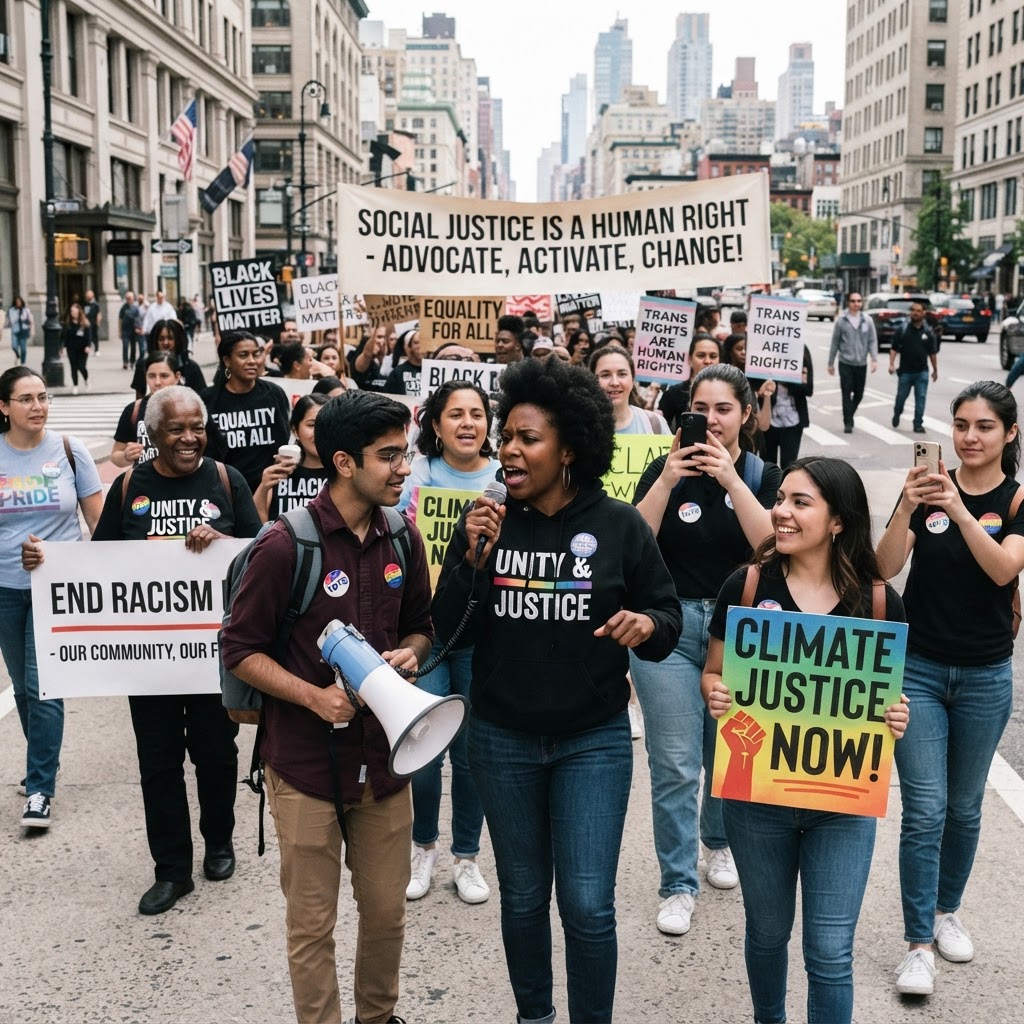
Activism often misses the mark by focusing on performative actions instead of addressing systemic causes. Here's a candid guide to embracing real social justice advocacy.
Talking Points:
You know that feeling when you see a hashtag trending and you roll your eyes? Yeah, me too. I once thought retweeting a meme would change the world—spoiler alert: it didn’t. Social justice advocacy often gets lost in the noise, wearing the mask of action while really just treading water. Now, it’s easy to blame the system—that’s expected, after all. But let’s take a closer look at the often-overlooked truth: the majority of advocacy efforts frequently miss the mark, barely scratching the surface of systemic issues.
Advocacy should dig deeper than social media outrage or a well-placed sticker on your laptop. The importance of digging into the intricacies of systemic change cannot be overstated. Activism isn’t just a badge you wear; it requires sweat, grit, and a healthy dose of self-criticism.
Talking Points:
Let’s get one thing straight: there is no such thing as a perfect activist. The social justice sphere is rife with self-appointed “experts” who claim to know how it should be done. Take it from someone who’s taken their fair share of missteps. I’ve tried to be the face of every cause, thinking that if I’m not on the front lines, I’m failing. But here’s the kicker: everyone has a role to play—and it’s not about being flawless or even visible all the time.
Embrace your quirks; don’t shy away from them. Own the fact that at some point, you’ll stumble. I once put together a community event with all the right intentions only to realize I hadn’t actually consulted the community itself. Talk about an eye-opener! Learning from these vulnerabilities can catalyze discussions that lead to real understanding.
Talking Points:
You know those symptoms we glibly address? Poverty, police brutality, environmental degradation—they’re just the tip of a very large iceberg of systemic issues. Advocacy needs to shift focus from the symptoms to the underlying causes that fuel these issues.
Consider the time a friend asked me to join a protest against police violence. I agreed, but what really hit me later was how easy it was to join in the outrage without addressing the very systems that train those officers to act violently. Activism needs to dig deeper into policies, cultural norms, and institutions—those things that are often left untouched. It’s uncomfortable but real change isn’t born from staying safe in the shallow end.
Talking Points:
Oh, the performative activism trap. We’ve all seen it—the Instagram posts brimming with hashtags, the selfies at protests that amount to little more than social capital. While it’s nice to be seen “supporting a cause,” real advocacy requires substance, not optics.
I remember feeling a rush when I posted a protest photo that got some traction. But that feeling quickly faded as I realized I hadn’t done much of anything to enact real change. Awareness is crucial, but without substantive action, it risks creating an echo chamber: loud without impact. Let’s aim to match our actions with our stated values. Each step taken should resonate with our genuine commitment to dismantling inherent inequalities rather than simply collecting likes.
Talking Points:
Alright, let’s face it: not everyone is cut out for street-level protests. Maybe your strength lies in corporate boardrooms, policy advocacy, or even grassroots organizing. Finding your battleground is not just strategic; it’s necessary for impactful advocacy. I learned this the hard way after discovering I was far more effective in organizing community workshops than rallying in the streets.
The key? Know where your strengths lie and tailor your efforts accordingly. The world needs diverse strategies—some will challenge companies, while others will mobilize families to participate in local governance. Every strategy counts in this fight for social justice.
Talking Points:
We all know that uncomfortable conversations can be painful, but they can also be incredibly transformative. Have you ever experienced that cringe-worthy silence when someone raises a tough issue at dinner? Yeah, me too. But those dialogues are often the ones we need most. They shine a spotlight on our internal biases and societal norms in ways that tweets can’t.
Learn to navigate these tricky waters. Instead of dismissing opposing viewpoints or retreating to defensiveness, engage in the fray. I’ve found that the most mundane conversations can spark the biggest insights. When was the last time you confronted the status quo at the family Thanksgiving dinner?
Talking Points:
Now, here’s a controversial thought: you don’t have to agree on everything to be effective. Internal dissent often breeds strength, allowing diverse perspectives to flourish. I’ve often witnessed coalitions fracture due to disagreements, yet every time I remind myself that productive conflict can lead to richer dialogue and better solutions, I breathe a little easier.
The movements we’re a part of don’t thrive on uniformity; they thrive on healthy discussions that encourage dissent. Setting up structures for these dialogues can fortify alliances even in tough times. Think of internal conflict as a necessary check, smoothing out the path to collective liberation.
Talking Points:
Knowledge is power, and it often comes at a price. The truth is that effective social justice advocacy requires not just passion but also access to information and resources. Many activists find themselves at a disadvantage due to a lack of access to educational opportunities.
From personal experience, I know how daunting it can feel to sift through literature on institutional reform without the right support. It can become an echo chamber where only a few voices are heard. Focus on providing accessible resources for everyone in your community, and remember: self-education isn’t just a barrier; it’s a tool for empowerment. Make sure that every member of your coalition confidently wields it.
Talking Points:
Ever felt like the weight of the world rests on your shoulders? Yep, that’s called activism burnout, and it’s more common than you think. I’ve been there, diving headfirst into activism only to crash and burn after exhausting my energy on every single issue. Sustainability matters—a marathon not a sprint, right?
Balancing commitment with self-care can seem impossible, but it’s necessary for long-term efficacy. Create emotional check-ins—allow yourself to step back when needed. Enough with the “if I’m not acting, I’m failing” mentality! Taking breaks isn’t weakness; it’s strategy.
Talking Points:
Hashtags, likes, retweets—they often serve as the superficial measures of success. It can be tempting to latch onto those numbers feeling like trophies. But let’s get real; impact isn’t quantified by social media metrics. When was the last time a hashtag changed policy? If we want sustainable change, we need to focus on long-term impacts that reach beyond the hashtags and within the communities directly affected.
Think about how success can manifest in more profound ways, like policy changes, community engagement or shifts in narratives. These are often messier but infinitely more rewarding.
Social justice advocacy is often mistaken for something that can be packaged neatly, complete with branding and glossy images. In reality, it demands persistence, self-education, and a willingness to grapple with your own biases.
Let’s commit to this work for the long run, beyond the optics. Share your experiences, your missteps, and let’s learn from one another! Reach out in the comments—let’s keep this critical conversation dancing.
Grassroots mobilization is about listening to community needs and responding to them. Start by facilitating community gatherings to understand the issues firsthand.
Set personal boundaries, prioritize self-care, and take breaks when necessary. It’s vital to recognize that sustainability is key to effective activism.
Addressing systemic root causes creates lasting impact and prevents the issues from returning in different forms. Short-term fixes won’t dismantle the structures that maintain oppression.
Healthy dissent can lead to richer dialogue, allowing diverse perspectives to emerge. Providing a structure for open discussion strengthens unity.
Look for local workshops, online courses, and community forums to engage in critical discussions and empower yourself with the knowledge necessary for effective advocacy.