






Newsletter Subscribe
Join thousands of readers who get our Sunday Briefing: one email, five essential stories, zero fluff. Subscribe NOW!

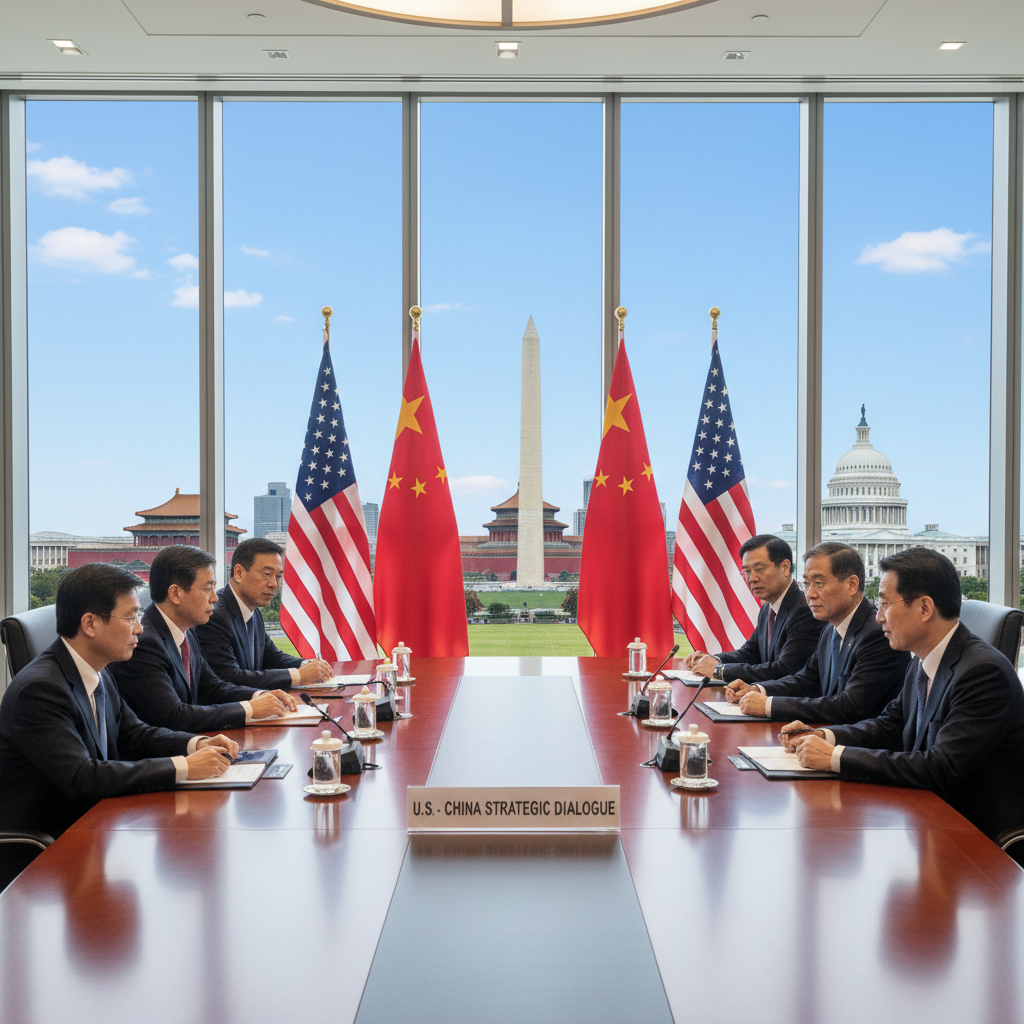
In 2026, China's ambitions loom large over US-China relations, with President Xi declaring a 'historic' year ahead. But beneath this optimism, the reality is more complex. A critical examination reveals interwoven tensions and opportunities that shape global dynamics. Dive into this candid breakdown of a pivotal year in diplomacy, trade, and international relations.
In May 2026, Chinese President Xi Jinping confidently declared that this year would mark a “historic, landmark year” for China-US relations. A bold claim, indeed! As I sit here reflecting on the dynamic interactions between these two juggernauts, I can’t help but feel a pang of skepticism. Relations between the two have always been a mix of cooperation and contention, and throwing around terms like “historic” can feel grandiose without acknowledging the reality on the ground.
Talking Points:
China and the United States have danced around each other since the late 20th century, each step forward often met with a falter backward. From Nixon’s visit in 1972 to today, history has painted a picture of shifting alliances and increasing suspicion. The expansion of economic ties has been promising, yet geopolitical tensions rise with each passing year. Consider how the implications of events like the Tiananmen Square protests and the US-China Trade War in 2018 still resonate today. They serve as stark reminders that while we may desire harmony, history has taught us that moments of discord often lurk under the surface.
Talking Points:
You can’t talk about China-US relations without addressing economic interdependence. On one hand, mutual reliance on trade has lifted millions out of poverty and fueled tremendous growth. On the other, it has turned into a complex web of vulnerabilities. We often forget that this entanglement can lead to dire consequences. A rapid downturn in one economy can send shockwaves through the other, and suddenly, what feels like partnership can morph into leverage. Just look at the recent trade disputes — tariffs skyrocketing and dialogues faltering, the unseen costs of competition are more than just financial; they are rooted in national security and the stability of global markets.
Talking Points:
Trade wars are not merely about numbers on a spreadsheet; they affect everyday lives. I remember the pain at gas stations nationwide as prices crept higher due to tariffs on imports. Both sides blustered, strutting about victory and prowess, but the average consumer faced the brunt of these economic decisions. The tension surrounding intellectual property theft accusations has created an atmosphere of mistrust. So what’s the takeaway here? While pursuing national interests is vital, the toll on ordinary people and small businesses can’t be overlooked.
Talking Points:
The technological race has surged ahead of economic measures, morphing into a battlefield for influence and dominance. China and the US are in a frenzy to out-innovate each other, often blurring the lines between competition and intimidation. I’ve followed the fervor over 5G networks—where the stakes are not just economic but existential. It raises vital questions: Are we promoting innovation, or are we creating an environment of fear? The push for market control can turn into digital imperialism, and the tech rivalry makes me wonder how many times we will choose short-term gains over long-term security?
Talking Points:
With national defense budgets proliferating, military posturing has become the unfortunate norm in China-US relations. Troops flexing muscles in the South China Sea, and military exercises showcasing firepower. It’s hard to ignore the notion that while both sides purport deterrence, tension simmers below the surface. Every military maneuver viewed through the lens of aggression rather than protection further inflates global instability. No one wants a hot war, and yet the ebb and flow of foreign policy can easily lead us down this precarious path.
Talking Points:
Diplomacy is the soft underbelly of international relations, rooted either in genuine goodwill or strategic maneuvering. Observing Xi Jinping’s recent calls for the US to be partners rather than rivals brings to mind a classic dance. Can they genuinely tango, or will it turn into a slap on the toes? The diplomatic chess match appears shaky at best. While both leaders express goodwill, I remain skeptical. The question lingering in my mind is whether these engagements will result in tangible benefits or merely serve to polish a façade that hides deeper issues.
Talking Points:
Recent surveys point to a noteworthy shift—American perceptions of China edging more favorable. Nearly doubling since 2023? It’s a significant stat! Yet I can’t help but wonder, is this a genuine change or just a blip on the radar? Social and mainstream media play a colossal role in shaping these sentiments, sometimes bending truths to fit narratives. The future of China-US relations hinges not just on policies but on how people view each other across the oceans. If perceptions can evolve, perhaps they can spark a movement towards genuine understanding.
Talking Points:
Taiwan is an issue that can ignite tensions faster than a spark can light gasoline. The stakes are incredibly high. The recent statements from US officials regarding support for Taiwan exacerbate an already tense situation. I shudder at the thought of a military confrontation; it feels both unnecessary and reckless. It’s not just about Taiwan; it’s about global power dynamics. A continued escalation could foster a situation where miscalculation leads to dire outcomes—not an easy thought to digest.
Talking Points:
China and the US’s relationship doesn’t exist in a vacuum. The rift sends tremors through global markets, affecting economies from Brazil to Germany. Countries observing this rivalry closely may feel pressure to choose sides, impacting international alliances and creating a more fractured world. I often think of how interdependence is a double-edged sword; a fallout can cause economic ramifications that no one truly sees until it’s too late. When powers clash, smaller nations often feel the weight of the fallout—each decision carries consequences.
China-US relations in 2026, labeled as “historic” by many, still requires a dose of realism. The interplay of economic and military factors entwined with public sentiment creates a complicated picture. As we move forward, it’s essential to reflect candidly on past grievances while striving for a path that edges toward collaboration rather than condescension. Let’s grapple with the realities of our situation, confront our biases, and work together toward a future where cooperation prevails—because after all, we’re all in this mess together. I encourage you to share your thoughts, reflections, and experiences in the comments. Let’s exchange ideas!
The recent Pew Research Center survey shows a nearly doubling of positive views since 2023, possibly stemming from greater awareness of China’s cultural contributions and economic interdependence.
The tech competition leads to increased innovation, but also results in higher prices and limited options in products, influencing consumer choices directly.
Military displays can create distrust, escalating tensions further and risking serious confrontations that could destabilize the region and the global economy.
Taiwan represents not only a territorial dispute but also highlights broader issues of sovereignty and international support, making it a focal point for US-China diplomacy.
Public opinion can exert pressure on policymakers to advocate for diplomatic solutions and collaboration instead of conflict, encouraging greater engagement and understanding between the nations.