







Newsletter Subscribe
Join thousands of readers who get our Sunday Briefing: one email, five essential stories, zero fluff. Subscribe NOW!

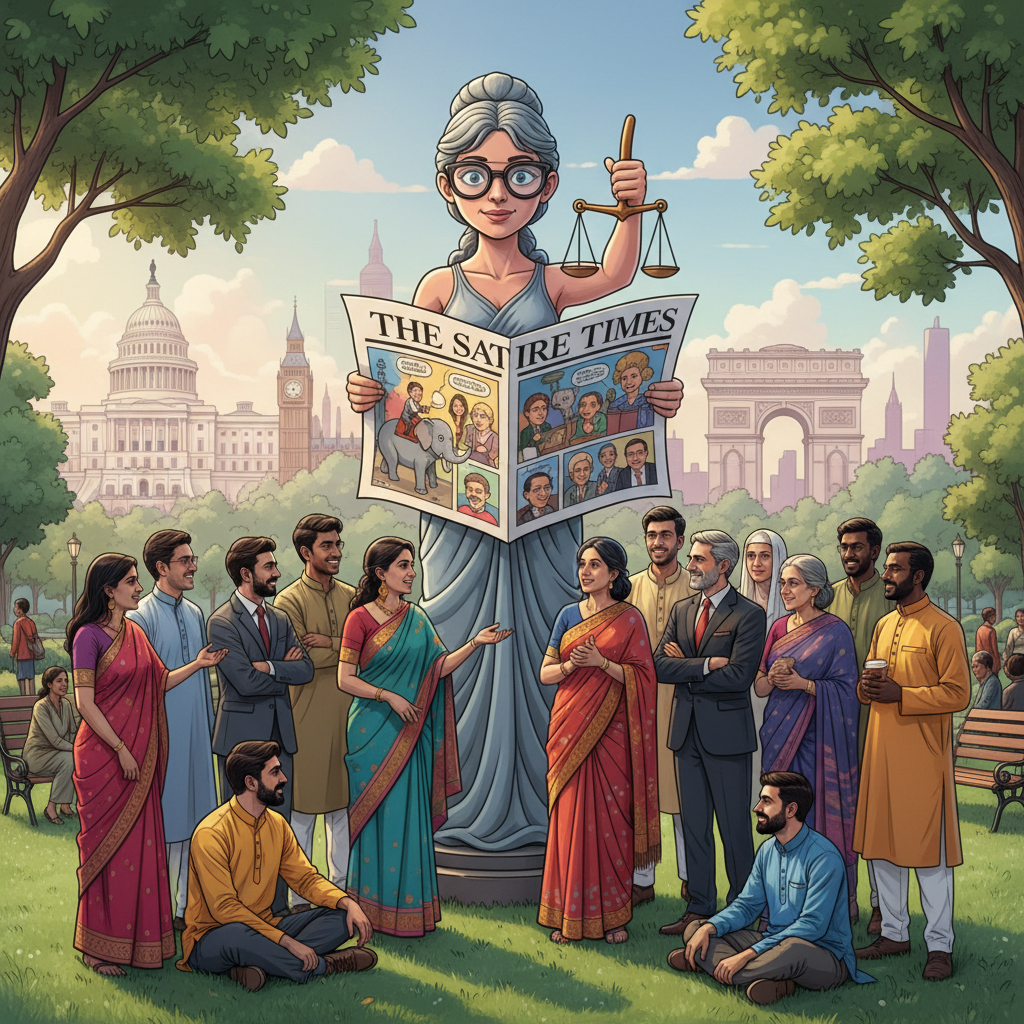
Political satire, a mix of humor and critique, plays a crucial role in reflecting societal issues and holding power accountable. From ancient Greece to modern memes, it stimulates discussions on politics, influencing public perception and inviting engagement. Yet, as its formats evolve, so do the ethical dilemmas it presents. This article delves into the significance, history, and future of political satire.
Picture this: a late-night comedy show mercilessly roasting a political figure whose policies have driven the nation to disarray. Or consider a political cartoon that’s so piercing it makes you chuckle even while it stirs up vague feelings of disbelief. Political satire does more than entertain; it exposes flaws within our political structures and holds powerful figures accountable. The influence of this complex medium stretches back to ancient Greece, and today, it permeates our screens, newspapers, and social media feeds, inviting us to reflect critically on our society.
Talking Points:
Political satire, at its core, is humor infused with critique—it employs irony, exaggeration, and ridicule to mock political figures and institutions. It serves as a mirror, reflecting societal issues by slicing through the often murky waters of information that flood our news feeds. In an era where misinformation can run rampant, political satire can shine a light on the absurdities and contradictions in the world of politics.
Let’s not forget that political satire invites us to interrogate authority figures and engage in a kind of political commentary that would make Aristophanes proud. Isn’t it fascinating that what began in ancient theaters has morphed into today’s viral memes and satirical news programs? The creative weaponization of humor remains a potent form of protest, allowing us to laugh, question, and ultimately demand better from those in power.
Talking Points:
Political satire traces its roots back to ancient Greece, where playwright Aristophanes courageously critiqued political leaders and societal values through captivating comedic narratives. Fast forward to the 19th century, political cartoons began dominating the landscape. Artists like Thomas Nast used caricatures to shape and influence public opinion, capturing the collective frustration of citizens toward issues like corruption and injustice.
With the advent of mass media, such as radio and television, satire exploded. Programs like “Saturday Night Live” and “The Daily Show” consolidated satire’s relevance, addressing contemporary issues with sharp wit. The transition from print to digital further transformed satirical formats, enabling the rapid spread of political commentary through social media, where a clever meme can have the impact of a full-blown editorial.
Talking Points:
Techniques in political satire can be as varied as the subjects it addresses. At its heart, much of political satire relies on parody—imitating styles and messages to highlight absurdities. Think about late-night sketches that take a politician’s speech and turn it on its head, playing into the bizarre nature of real news. Then there’s hyperbole—blowing things out of proportion to reveal the ridiculous nature of policies or statements that have little grounding in reality.
Wielding irony and sarcasm is also crucial; they allow satire to convey complex truths without explicit language. This linguistic dance makes satire effective in engaging audiences and encouraging them to think critically. After all, a sharp quip can get us thinking just as much as an academic paper, if not more!
Talking Points:
The vast landscape of political satire offers endless examples. Consider The Onion, a well-known satirical news outlet that employs absurdity to critique current events. Similarly, shows like Last Week Tonight with John Oliver engage viewers with rigorous investigations wrapped in humor, exposing the ridiculousness of political decisions while educating the audience on critical issues. Can you recall the last time one of John Oliver’s rants made you feel both informed and entertained?
Political cartoons, meanwhile, remain a beloved medium. Their striking imagery and poignant commentary tackle societal issues with remarkable efficiency. Think of those here-affecting cartoons that can encapsulate an entire political debate in a single frame. They endlessly provoke thought and dialogue, reinforcing the power of visual storytelling.
Talking Points:
Political satire undeniably shapes how we perceive politicians and current events. Studies have shown that satirical news can sway public opinion, often driving political discussions through humor and caricature. Whether you love or loathe a specific figure, satirical portrayals often embellish or distort these perceptions, prompting viewers to reconsider their beliefs.
Moreover, satire is a gateway for younger audiences to engage with political discourse. When humor enters the mix, it lowers barriers to entry, inviting those previously uninterested in politics to join the conversation. This is critical for fostering a society that values informed dialogue over blind allegiance.
Talking Points:
Throughout history, political satire has catalyzed social change. Think of the power of protests that identified issues in society, where satire served as a rallying cry for unity and reform. From Swift’s A Modest Proposal, which critiqued British oppression, to modern internet memes that illustrate social injustices, the impact is profound.
One cannot ignore the role of social media in amplifying this effect. Viral satirical campaigns have inspired real-world activism, instigating protests and discussions. When satire enters the online sphere, its potential for mobilization surges, marking it as an invaluable tool in the fight for social equity and justice.
Talking Points:
Despite its positive aspects, political satire is not without criticism. At times, it risks veering into misinformation, blurring the lines between reality and exaggeration. For instance, deceptively framed jokes can lead audiences to misunderstand critical issues—corrupting the very purpose of meaningful critique.
We must also consider the delicate balance between humor and sensitivity. With so many varied social contexts, there’s a risk of alienating those who may feel unfairly targeted by satire. Particularly when satire intersects with socio-political identities, care must be taken to respect diverse experiences while fostering healthy discourse. It’s a slippery slope indeed.
Talking Points:
In a world increasingly dominated by digital media, the future of political satire seems bright yet unpredictable. Technology continues to reshape how satire is created and consumed, offering opportunities for innovative formats and engagement. I often find myself scrolling through social media, wildly entertained by the latest political meme that distills complex issues into visually striking posts.
New voices are emerging, too—individuals from diverse backgrounds and perspectives are crafting satire that resonates authentically with communities often left out of mainstream discourse. This democratization of satire is vital; as we move forward, fresh narratives hold the power to invite even further reflection and change.
Talking Points:
Political satire is an essential aspect of our societal fabric, acting as a catalyst for dialogue and reflection. Its ability to expose flaws in political systems while entertaining is a lesson from history that remains relevant today. In our fast-paced age, where every tweet can spark conversations and debates, we must engage with satire and recognize its potency to question authority and demand change.
So, I invite you to join the conversation. Engage with satirical content, reflect on its implications, and share your experiences of satire’s impact in your own political discourse in the comments below!
Q1: What is political satire?
A: Political satire is a comedic form of criticism that uses humor, irony, and exaggeration to mock or comment on political figures and institutions.
Q2: How has political satire changed over time?
A: Political satire has evolved from ancient plays to printed cartoons and modern-day digital content, adapting to changing media landscapes and societal norms.
Q3: What techniques are commonly used in political satire?
A: Common techniques include parody, exaggeration, irony, and sarcasm, all aimed at illustrating the absurdity of political issues.
Q4: What impact does political satire have on public opinion?
A: Political satire can influence how audiences perceive politicians and issues, often shaping discussions and prompting critical thinking among viewers.
Q5: Are there ethical concerns surrounding political satire?
A: Yes, concerns include the risk of misinformation, potential alienation of vulnerable groups, and the fine balance between humor and sensitivity in addressing important topics.