








Newsletter Subscribe
Join thousands of readers who get our Sunday Briefing: one email, five essential stories, zero fluff. Subscribe NOW!

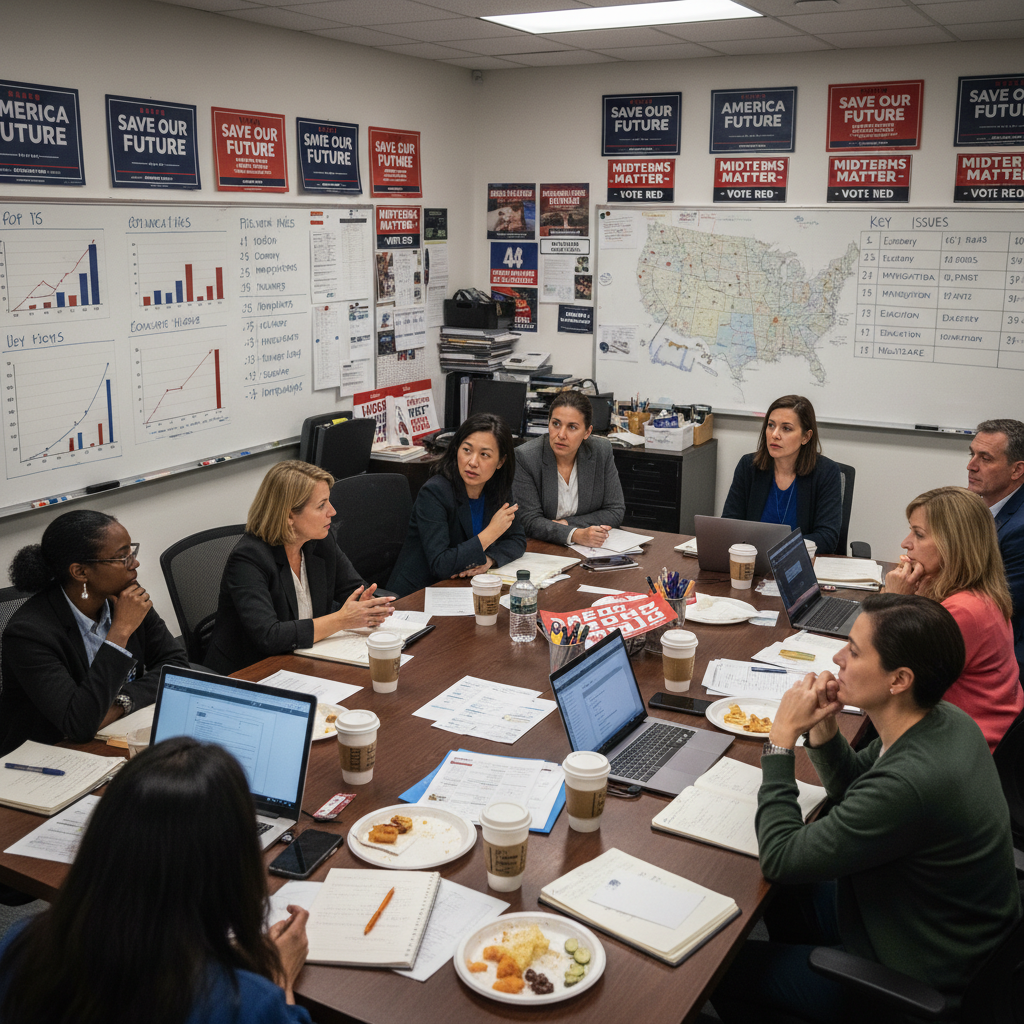
As the GOP gears up for the 2026 midterm elections, they must navigate a precarious political landscape shaped by declining approval ratings, contentious economic policies, and the ever-constant influence of Trump. This article unpacks the pressing issues that will define the Republican campaign strategies as they seek to garner voter support amidst daunting challenges. From immigration enforcement to internal party dynamics, the path ahead is fraught with both opportunities and pitfalls, demanding a critical examination of where the party is headed.
A mere two years out from the 2026 midterm elections, the Republican Party is caught in a web of uncertainty. Approval ratings for the Trump administration have plunged, and you can practically feel the anxiety in the air—44% disapproval blooming into 57% in just a few months. To call this a crisis for the GOP seems like an understatement! What’s the strategy here? How do they plan to win over a disillusioned electorate? It’s crucial now more than ever to examine the key issues that will shape the Republican campaigns in 2026 and to understand their implications for voters across the nation.
Talking Points:
Trump’s approval numbers are a ticking time bomb. With recent data showing his approval hovering around a dismal 40%, there’s a palpable sense of desperation among Republican strategists. It’s not just that he’s unpopular; candidates are starting to ask themselves whether tying their campaigns to his legacy is a double-edged sword. Republican candidates will have to balance appealing to Trump’s base while simultaneously attracting moderates, who are increasingly critical of the direction the party is taking.
Regionally, the landscape shifts dramatically. In rural areas, Trump’s influence remains strong. However, urban districts are increasingly leaning Democratic, a trend that Republicans can’t ignore. The question lingers: Can they reshape their message in a way that resonates with these varying demographics without alienating their core supporters?
Talking Points:
The economy—the perennial hot-button issue. Nearly 48% of voters now cite the economy as the dominant concern. Yet, under the Trump’s administration, economic policies reveal a mixed bag. A huge proportion of the public, around 30%, disapproves of his approach to inflation, and with only 37% approval on overall economic management, the Republican narrative on economic competence is crumbling.
Healthcare emerges as another critical issue, with only 29% of the public approving of Trump’s management of that domain. Given that 38% of voters recognize healthcare as a top concern, it’s clear that the GOP’s economic record will face harsh critique in this election cycle. Candidates need to focus on clear, actionable economic strategies that resonate with the everyday voter; vague rhetoric won’t cut it this time.
Talking Points:
Immigration—another hot potato for the GOP. As the party grapples with public opinion, they must consider how crucial this issue is to their base, while also attracting swing voters who might prioritize reform over strict enforcement. Campaign ads have bombarded viewers with messages highlighting Trump’s border security policies, driving the point home that immigration remains a key issue for many voters.
Yet, as we look forward, it’s important to ask: Are Republicans sticking too closely to past narratives? The public mood regarding immigration is nuanced, often favoring a balanced approach. The challenge lies in articulating a message that doesn’t entirely align with hardline views while still addressing legitimate concerns about border security. If they miss this, they risk losing key voter segments.
Talking Points:
Redistricting can feel like the albatross around the GOP’s neck. While it offers advantages, the optics aren’t favorable. As more voters express skepticism about electoral integrity due to partisan gerrymandering, the Republican Party must acknowledge that public trust matters. Promoting fair electoral practices could potentially help win over those undecided or disillusioned voters.
As the party prepares for the 2026 midterm elections, its approach to redistricting should shift from a narrow focus on immediate gains to broader considerations of electoral integrity. The implications here cut deep—the more they can show themselves as champions of fair play, the better their chances at the polls.
Talking Points:
Trump’s shadow looms large over the GOP, creating a complex dynamic that candidates navigate daily. With 130,000 mentions of Trump in campaign ads leading up to the elections, it’s evident that the party is divided: how does one embrace Trump’s controversial legacy while trying to still appeal to moderate conservatives?
Candidates face enormous pressure to lay claim to Trump’s support while disassociating themselves from controversies that might push swing voters away. The GOP’s challenge is to harness Trump’s cult of personality—his energizing of the base—while cultivating an image of unity and broader appeal, which seems increasingly challenging.
Talking Points:
Voter sentiment doesn’t sit still. Polling data shows that Republicans can no longer assume allegiance from voters as they once did. The entire political landscape is transformative, with shifting loyalties making voter outreach more complex. Republican strategists ought to keep a finger on the pulse regarding what issues matter to voters today; what was once essential may not hold water in 2026.
To tap into this unpredictable voter, candidates must actively listen and respond to evolving concerns rather than relying solely on past strategies that may be well-received only in echo chambers. In short, empathy isn’t just a buzzword; it’s a crucial avenue to electoral success.
Talking Points:
Let’s talk money. The Republican Party has historically been a strong powerhouse in fundraising, and as the 2026 midterm elections approach, this edge will take center stage. However, more than just gathering funds is needed to make a mark. Allocating resources effectively will be crucial.
Grassroots movements may not garner the colossal amounts that big donors do, but they can cultivate a loyal base if mobilized correctly. Candidates need to lean into both traditional and innovative fundraising strategies to create a multifaceted approach that speaks to varied voter bases. It’s a balancing act, but the rewards could be massive come election day.
Talking Points:
So, what’s next? With all of this data swirling around, it begs the question: what does it mean for the future? Based on trends, the Republican Party must brace for fluctuations in electoral outcomes influenced by shifting marijuana perceptions, economic dissatisfaction, and hardline immigration stances. The party’s ability to adapt its narrative to incorporate wider voter sentiments will be central to its success.
Regionally, expect sharper divides; in predominantly rural areas, expect a sustained GOP advantage, while urban voter engagement will likely tip towards Democratic candidates. The effectiveness of voter mobilization strategies will weigh heavily on these outcomes; every single vote counts when the stakes are so high.
The road to the midterm elections is fraught with challenges, but for those willing to confront them head-on, the potential for success remains. The Republican Party can’t simply put the same spin on tired narratives and expect a different outcome. Instead, they must foster genuine dialogues about economic policies, immigration, and electoral integrity. It’s about engaging with voters and recognizing the diverse concerns present; their voices matter!
It’s time for Republicans to take a hard look in the mirror. What’s working? What’s not? Change is difficult, but it’s often the price of progress—with no room for denial here. I invite you to share your own insights and experiences as we gear up for these significant elections in the comments below. Let’s keep this conversation going!
The Republican Party is likely to prioritize economic management, immigration enforcement, and electoral integrity. Each of these areas is critical to appealing to their base while also attracting undecided voters.
With Trump’s approval ratings declining, candidates face a dilemma: how to align with his policies to energize the base while distancing themselves from his controversies that could alienate moderate voters.
Voter sentiment is pivotal; it shifts and evolves. Understanding these dynamics helps candidates tailor their messages to connect with the electorate’s immediate concerns and engage undecided voters effectively.
Fundraising is paramount for campaign success. The GOP must capitalize on both traditional large donors and grassroots contributions to sustain a competitive edge in targeted races.
Success in urban areas will demand nuanced strategies that resonate with local issues. Republicans must move beyond rigid traditional narratives to forge connections with diverse voter bases.