







Newsletter Subscribe
Join thousands of readers who get our Sunday Briefing: one email, five essential stories, zero fluff. Subscribe NOW!

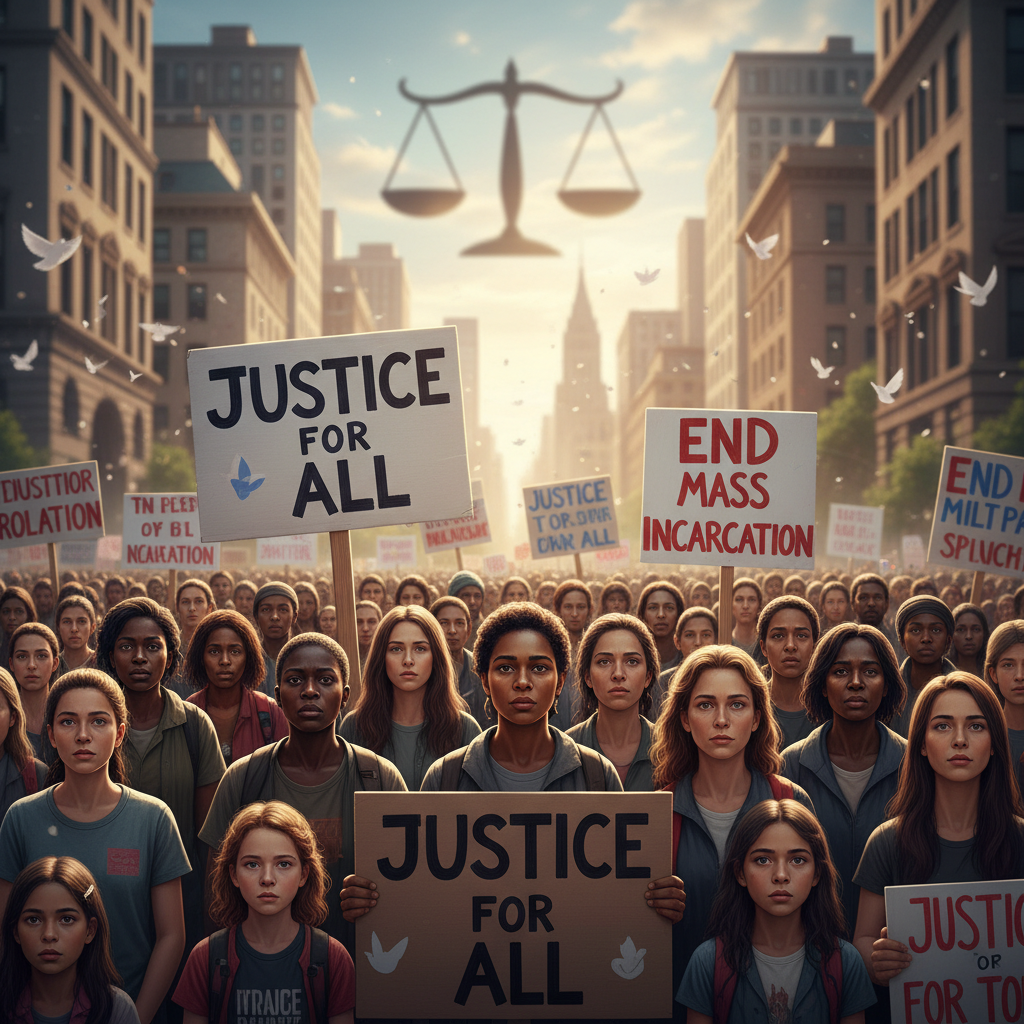
Criminal justice reform is critical in addressing systemic injustices, with solutions like restorative justice and accountability being essential for real change.
Talking Points:
Isn’t it fascinating—and deeply troubling—that Black Americans account for almost 37% of the prison population despite comprising only about 13% of the U.S. population? It seems almost surreal to think about the sheer weight of those numbers. These statistics illustrate more than just a crisis; they expose a systemic failure that has been years in the making. If we should take anything from this, it’s a wake-up call to the apparent illusion of progress within the realm of criminal justice reform. Maybe I’ve been naive, or perhaps many of us have, believing that reforms enacted in recent years could genuinely change the status quo.
This isn’t just about changing laws or policies; it is about addressing a problem that runs deep. Mass incarceration doesn’t just impact individuals; it fractures communities. Families are torn apart, future generations are left with the remnants of trauma, and yet, the echo of “reform” resonates louder than ever.
Talking Points:
Let’s break this down. The U.S. holds the record for the highest incarceration rate in the world. Think about that for a second. We’ve got a system that thrives on locking people up, often for non-violent offenses. Overcriminalization is a term that gets tossed around, but let’s unpack it. At its core, it suggests that our laws impose harsh penalties for minor infractions, leading to a surge of individuals cycling through our jails and prisons.
Imagine you’re just trying to make ends meet, and one misstep—maybe a minor drug offense—lands you behind bars. Suddenly, your entire life is derailed. Employment opportunities vanish, family ties fray, and the cycle of recidivism kicks in. This isn’t an isolated story; it’s a chilling pattern that shows just how entrenched we are in this cycle of punishment rather than rehabilitation.
Talking Points:
Now, let’s get painfully real. Black men, who constitute about 13% of the general male population, make up around 35% of those behind bars. Those numbers? They tell a story of injustice that we can’t overlook. The persistent racial disparities in arrests and sentences highlight biases that have been built into the very fibers of our justice system.
Have you ever considered how this affects communities? When a disproportionate number of Black men are incarcerated, it doesn’t just affect them; it ravages entire communities. Kids grow up without fathers, mothers face overwhelming odds, and an endless cycle perpetuates poverty and disenfranchisement. This isn’t just a statistic; it’s a reality that demands our attention.
Talking Points:
And don’t even get me started on sentencing laws. It’s a facade, designed to create a sense of justice while disguising a nightmare of inequity. Black individuals often receive sentences nearly 20% longer than their white counterparts for similar offenses. How are we still accepting this at face value?
Mandatory minimums, which were designed with the intention of creating uniformity, have instead contributed to massive disparities. It’s a structure that favorably skews toward the privileged, while systematically punishing the disadvantaged. This illusion that justice is blind? It couldn’t be further from the truth.
Talking Points:
Here we are, in the so-called age of reform. But let’s be honest: how much has truly changed? Are we witnessing genuine transformation, or are we just polishing the surface? Sure, there have been some initiatives aimed at prison reform, but many seem like mere band-aids on a festering wound.
As someone who has followed this space for years, I’ve seen firsthand how true rehabilitation programs often lack funding and resources. The focus should be on preparing individuals for reintegration into society—but that involves a radical shift away from punishment as the primary response to crime. Without substantial reform, we’re just perpetuating the status quo, which serves no one.
Talking Points:
Let’s face it: we can’t talk about criminal justice reform without diving into the murky waters of police accountability. The notion that bad actors can escape consequences due to qualified immunity is downright frustrating. It’s like giving a free pass—an endorsement of misconduct—that reinforces the very injustices we seek to eliminate.
Public outcry, fueled by viral videos and protests, has sparked some conversations about accountability. But let’s not kid ourselves. Transforming a deeply ingrained culture of impunity within police departments is like trying to turn a battleship around. It requires both systemic overhaul and unwavering community involvement to hold law enforcement responsible for their actions.
Talking Points:
Ah, the bail system—let’s talk about this glittering jewel of injustice! In theory, it sounds reasonable: pay a set amount to secure your release before trial. But in reality, cash bail disproportionately ensnares the poor, forcing them into cycles of incarceration simply because they can’t afford to pay.
Many individuals who remain in jail while awaiting trial may have been innocent. They might lose jobs, miss family events, or lose everything simply because of a financial barrier. As we look towards alternatives like community-based release programs, it’s crucial to dismantle this wealth-based injustice.
Talking Points:
Ever heard of restorative justice? This concept flips the script on traditional punitive measures. Instead of focusing solely on the offense itself, it centers around the harm done and the needs of victims and communities. It’s a radical departure from the way we’ve approached crime and punishment.
Restorative justice fosters dialogue and understanding, allowing offenders a chance to reflect and make amends—while empowering victims through their voices in the healing process. It’s not some utopian dream; we’ve seen it work. But widespread adoption requires us to challenge the prevailing narratives around punishment.
Talking Points:
Qualified immunity stands as a protective wall for law enforcement. In many instances, officers evade accountability for actions that infringe on citizens’ rights. It’s not just a legal concept; it permits a culture of abuse that can’t be ignored.
Take the time to consider real-world examples—where officers evade punishment for brutality or misconduct simply because the law wasn’t “clearly established.” This undermines public trust in the very institutions meant to protect us. If we want real change, we need to dismantle this shield of immunity; it’s a crucial step toward accountability.
Talking Points:
Let’s cut to the chase: the prison-industrial complex is a beast that needs a serious reckoning. When profits are involved, individual lives become bargaining chips. The business of incarceration thrives on high rates of recidivism, essentially turning communities into revenue generators for private corporations.
This isn’t just about numbers; it’s about lives destroyed. Families suffer economically and emotionally, all while corporate interests profit from the misery of others. If we want to create meaningful change, we need to confront this beast head-on.
Talking Points:
Discriminatory practices are woven into the very fabric of the justice system. From racial profiling to predatory ticketing, we see deliberate targeting of marginalized communities. These injustices perpetuate fear and mistrust in law enforcement, ultimately making our communities less safe.
We’re left with a choice: continue down this destructive path that reinforces racial biases or fight for a justice system that values all lives equally. The latter demands courage, commitment, and an unwavering belief that change is possible.
Talking Points:
This entire narrative points to one grave truth: the criminal justice system requires a fundamental overhaul. Systemic injustices threaten the very ideals of fairness and equality upon which our society purportedly stands. As advocates for reform, we must persistently call for structural changes that address the root causes of these injustices.
It starts with awareness. Engaging with our communities, advocating for policies that promote equity, and confronting biases head-on can empower meaningful change. Without this, we’re just spinning our wheels without getting anywhere.
Talking Points:
At the end of the day, challenging the status quo is everyone’s responsibility, and it starts with individual action. We can’t afford to sit in silence any longer. Addressing the multifaceted issues embedded in our justice system requires persistent advocacy, informed discussion, and active participation in the fight for reform.
So, what can you do? Engage with your community, educate yourself and others, and push for reforms. We have an opportunity—no, an obligation—to shape a future where justice isn’t a privilege reserved for the few. Let’s roll up our sleeves and get to work!
1. What are the main goals of criminal justice reform?
Criminal justice reform aims to address issues like mass incarceration, racial disparities, and systemic injustices, ultimately seeking a fairer and more equitable system for all.
2. How does the bail system affect low-income individuals?
The cash bail system disproportionately impacts low-income individuals, often keeping them incarcerated simply due to their inability to pay, leading to a cycle of poverty and disadvantage.
3. What is qualified immunity, and why is it controversial?
Qualified immunity protects law enforcement officials from lawsuits unless they have violated “clearly established” rights, which has led to frustration over the lack of accountability for police misconduct.
4. What role does overcriminalization play in mass incarceration?
Overcriminalization refers to the excessive imposition of criminal penalties for minor offenses, further contributing to high incarceration rates and exacerbating issues of systemic injustice.
5. How can restorative justice serve as an alternative to punitive measures?
Restorative justice focuses on repairing harm caused by criminal behavior through dialogue between victims, offenders, and the community, promoting healing instead of solely punishment.