







Newsletter Subscribe
Join thousands of readers who get our Sunday Briefing: one email, five essential stories, zero fluff. Subscribe NOW!

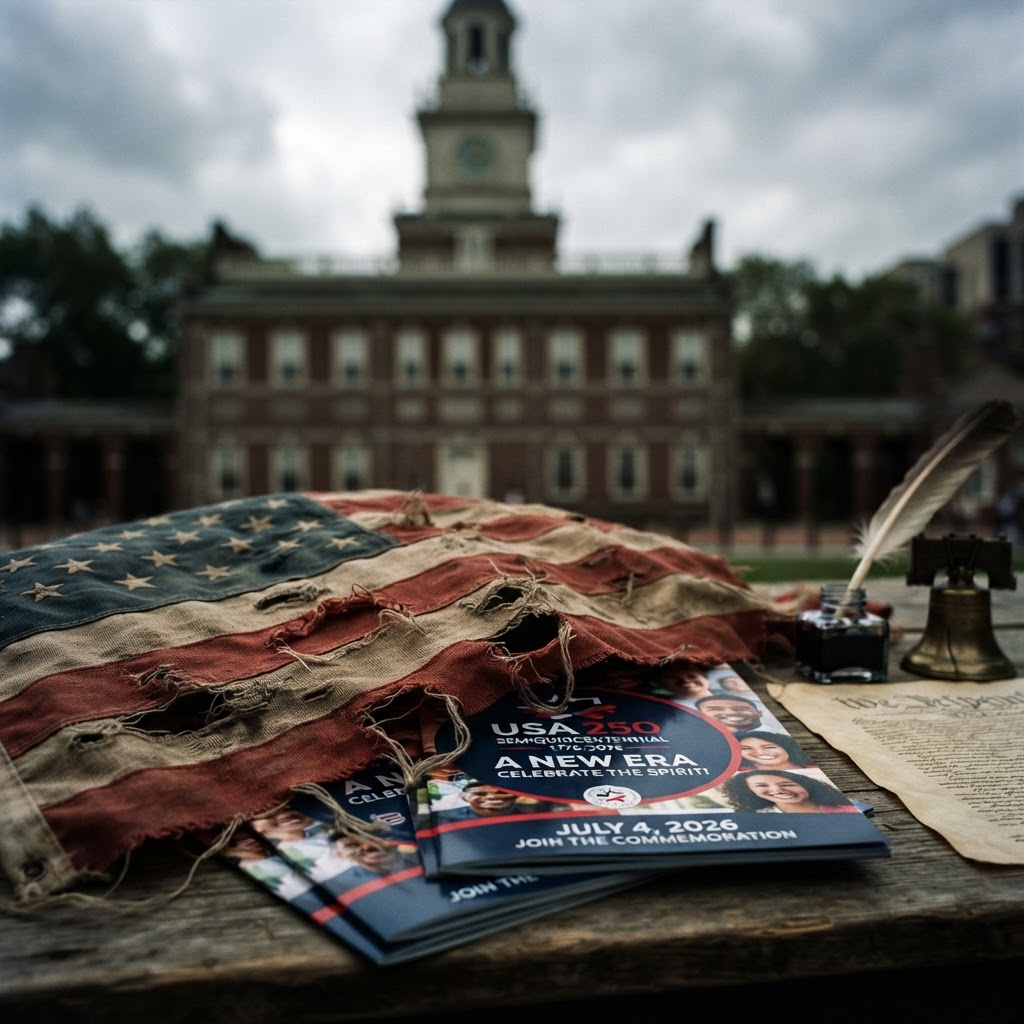
The upcoming U.S. Semiquincentennial poses serious questions about our national identity and the commercialization of history. Are we truly celebrating our past, or have we fallen into a marketing exercise?
You know, I was pondering how a nation so obsessed with its own exceptionalism could fumble something as monumental as its 250th birthday. Think about it for a moment. The U.S. Semiquincentennial, or America 250, is around the corner, and what do we get? Not a stirring national unification, but a marketing campaign that seems slapped together between corporate board meetings and fancy gala fundraisers.
It’s almost tragic how this event has morphed into something that feels more like a public spectacle than a genuine celebration of history.
Talking Points:
As the planning for the Semiquincentennial heats up, the stakes get higher. We’re not merely gearing up for fireworks and parades; we’re watching a calculated attempt to weave our national identity into a shiny, varnished package. The U.S. Semiquincentennial Commission was set up back in 2016 with all the charisma of a bipartisan committee. And now we see it struggling against corporate sponsorships, wanting to control not just events but the very narrative of what it means to be American.
You see this playing out with initiatives like Freedom 250—a blatant attempt by the previous administration to stake its claim over the 250th anniversary. Of course, this raises a fundamental question: is all this fuss really about honoring American history, or is it just a corporate branding exercise? The truth? It’s hard to find clarity in the smoke and mirrors.
Talking Points:
Let’s strip away the patriotic bunting for a moment. The idea of independence is neatly packaged, but whose independence are we celebrating? The founding fathers, draped in the glories of freedom, overlook the realities of systemic inequality that persisted—and still persists—in America.
The Semiquincentennial unfolds as a tale of triumph marred by glaring omissions: the voices of native people, enslaved individuals, and countless others brushed aside in the annals of a sanitized national myth. Choosing to celebrate an ideal without addressing the realities so many of our citizens faced is not unity—it’s whitewashing.
Talking Points:
Ever noticed how much everything costs these days? The Semiquincentennial is no different. The America 250 commission, composed of citizens and scholars, has faced a staggering funding shortfall while the Freedom 250 initiative, backed by millions of taxpayer dollars, draws much of the limelight—and where there’s money, there’s influence.
Corporate sponsors are already lining up for their chance to brandish their logos during the celebrations. They aren’t just funding events; they’re investing in narratives. When you unpack the significance, it becomes clear that money doesn’t only talk; it dictates. No wonder many performers have been hesitant to engage with politically tinged initiatives like the Great American State Fair. Honestly, who wants their art co-opted in a vehicle for jingoism?
Talking Points:
Could it be that the narrative we craft around our heroes is just that—a romantic myth? This year, we’ll undoubtedly hear countless retellings of the American Revolution, but does anyone stop to consider how many stories were left behind in the process? Emphasizing the ‘great man’ theory of history—where a few heroic figures rewrite the entire tale—is inadequate and misleading. It’s disconcerting that this perspective still dominates our celebrations, sounding alarm bells for historical revisionism.
Talking Points:
Let’s face it—today’s culture wars are alive and well, and they have found fertile ground in the Semiquincentennial. The interplay of politics and national identity isn’t new, but it’s never been so palpable.
Amidst all the pageantry, a battlefield of narratives arises, each vying for attention. With official sponsorship often leaning a certain way, it’s become increasingly challenging for people to engage meaningfully with the history and values we supposedly celebrate. This isn’t just a birthday party; it’s a flashpoint for contrasting interpretations of what America truly stands for, leveraging the 250th anniversary as a backdrop for partisan contention.
Talking Points:
You can’t help but feel a bit frustrated when you see official celebrations cherry-picking moments of history while conveniently glossing over dissent and discomfort. What about the voices of those who dared to challenge the status quo?
In an attempt to sculpt a unified national identity, the eradication of dissent feels almost quintessentially American. Yet, it’s exactly those dissenting voices that often hold the key to broader understanding and genuine national growth. As official narratives sanitize our history, we miss an opportunity to engage in true dialogue, thereby limiting the depth of our collective memory.
Talking Points:
I don’t know about you, but I’m seeing a swell of resistance against the official narrative bubbling up from the ground. Citizens are pushing back against the scripts handed down from upon high, eager to reclaim their histories and identities. With social media platforms acting as the modern town squares, grassroots activism is reshaping conversations around what it means to celebrate our national milestones. It affirms a critical truth: history is never merely a matter of dates—it’s woven through the lived experiences of all its people.
Talking Points:
At the heart of all this lies an uncomfortable truth: how do we engage with our past without slipping into the realm of blind allegiance? The Semiquincentennial is not just a celebration—it’s a litmus test for our nation’s values and priorities. Are we encouraging a balanced historical narrative, or are we merely doling out nationalistic pabulum? The celebration is set to provoke questions, but will we dare to seek the answers?
Talking Points:
In essence, we’ve got a serious responsibility on our hands as the Semiquincentennial approaches. It’s not just about fireworks and big parades; it’s about how we understand and honor our complex history. Are we willing to peel back the layers of marketing and myth-making to engage critically with our past? I encourage you to think about what America means to you. Let’s reject empty nationalism and embrace an ongoing dialogue about our identity—one that includes the dissent and discomfort inherent in the American story. Is that too much to ask?
The Semiquincentennial marks the 250th anniversary of the United States, celebrating the Declaration of Independence in 2026.
Funding is a contentious issue, split between bipartisan government initiatives and corporate sponsorships, with significant disparities in financial backing.
The controversy arises from the exclusion of marginalized perspectives, leading to a celebrated history that overlooks systemic inequalities and dissenting voices.
Grassroots movements today are challenging the dominant narratives, pushing for an inclusive understanding of American history that encompasses all voices and experiences.
Individuals can engage by critically evaluating official narratives, participating in local celebrations, and advocating for more inclusive historical discussions.