








Newsletter Subscribe
Join thousands of readers who get our Sunday Briefing: one email, five essential stories, zero fluff. Subscribe NOW!

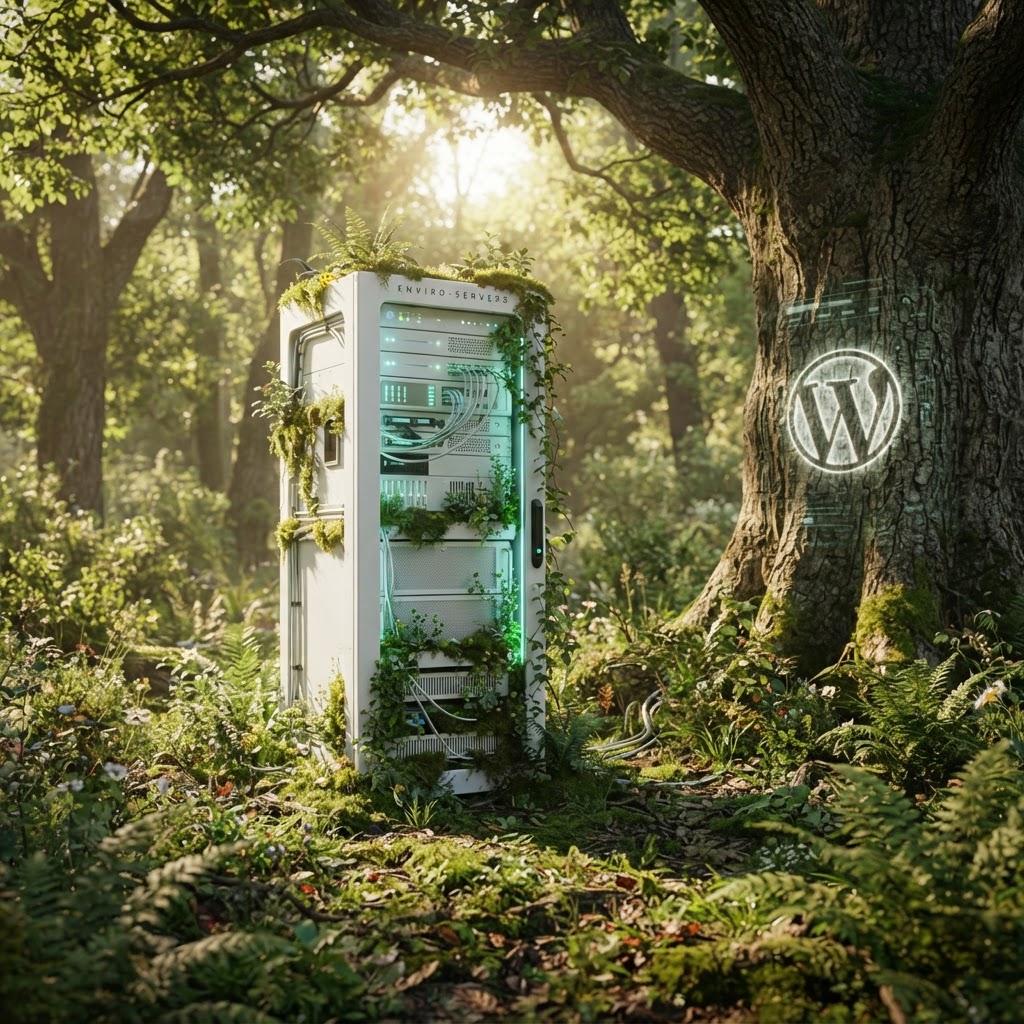
Sustainable WordPress isn't just a trend—it's a necessity. We're looking at why your bloated website is an environmental disaster and how to fix it.
Talking Points:
* The hidden physical cost of digital data storage
* Why page weight statistics indicate an environmental crisis
* Challenging the illusion of cloud-based operations
Every time you load a webpage, you are effectively burning coal. The average site now hits your browser at 2.28MB, up from 810KB just a decade ago. That is a massive amount of invisible weight dragging down the planet. We treat the internet like it is some magical, airy space. It is not. It is a series of physical cables, humming server farms, and energy-hungry hardware. Your website has a carbon footprint, and it is likely uglier than you think.
I spent years chasing the highest traffic numbers I could find. I threw every plugin I could find into my WordPress installs to track users, pop-up chat boxes, and flashy animations. I did not care about the server load or the data transfer. I just wanted those clicks. Looking back, I realize I was contributing to a global mess. We are drowning in data, and most of it is useless, heavy noise that wastes electricity for no measurable gain.
Talking Points:
* Identifying the source of page bloat in themes
* The hidden environmental cost of plugin overuse
* Why bloated code acts as an energy sink
WordPress is a beast. If you do not watch it, your theme will consume more energy than a small town. Most themes are packed with junk code, unused CSS, and libraries you will never touch. They are built to look pretty on a demo page, not to function efficiently in the real world. That page weight adds up, forcing servers to work harder just to display a header image that nobody cares about.
Plugins are the other side of this ecological disaster. I once audited a client site that had forty-two plugins running at once. Half of them were redundant, doing the exact same task while pinging external servers for every single request. Every time a visitor lands on your page, your server is performing unnecessary calculations. It is a slow, hot, inefficient mess. Stop installing things just because they sound cool.
Talking Points:
* Debunking the marketing myths of green hosting
* Why server location matters more than a green badge
* Taking responsibility for your hosting provider choices
Marketing departments love a good “green” label. Many hosts claim they are carbon neutral because they buy credits. That is often just a accounting trick. Do they actually use renewable energy in their data centers, or are they just buying their way out of guilt? You need to dig into the actual infrastructure. If a host cannot prove their energy source, ignore the marketing jargon.
Sustainable WordPress requires a look at where your data lives. If your audience is in London but your server is in Virginia, you are pushing data across an ocean for no reason. That increases latency and burns electricity during every single hop. You have to be honest about your hosting needs. A fast, local server is better for the planet than a “green” server on the other side of the world.
Talking Points:
* Reducing page weight through smart asset delivery
* The environmental impact of high-resolution images
* Why code bloat burns more energy than you realize
Your frontend is likely a graveyard of forgotten assets. I see sites loading five different font files, three tracking scripts, and a massive hero image that is not even optimized. That is a crime against efficiency. You are making your users download junk, and their devices have to use energy to render it all. That is a double-hit to the environment.
Image compression is the lowest hanging fruit. Most people just upload a 5MB photo from their phone and call it a day. Stop that immediately. Use modern formats like WebP or AVIF. Strip the metadata. Resize your images to the exact dimensions needed before you hit the upload button. It takes thirty seconds, and it saves everyone energy.
Talking Points:
* Minimizing API requests to keep servers quiet
* The importance of efficient server-side processing
* Writing code that respects the server
Poorly written code is an environmental disaster. If your theme triggers a complex database query for every single visitor just to check if they are logged in, you are wasting cycles. Every API request is a signal that travels through a network, consumes power, and waits for a response. Keep your server-side processing as light as a feather. If it can be static, make it static.
I remember struggling with a site that kept crashing under load. The issue was a plugin that was calling an external API for every visitor to check the weather. Why on earth did a blog about knitting need real-time weather data? It was a simple fix, but it required me to actually look at the code. Most developers are too lazy to do that. Be the one who actually checks.
Talking Points:
* Why caching is a mandatory green practice
* Preventing redundant calculations on your server
* The direct link between speed and power savings
Caching is not just about speed. It is about conservation. If you cache your pages, you are telling the server to stop recalculating the same thing a thousand times. You serve a flat file instead of building the page from scratch for every single user. This is basic logic, yet so many sites skip it. A site that caches effectively is a site that uses less electricity.
Think of it as turning off the lights when you leave a room. Your server should not be firing up its full power to recreate a homepage that hasn’t changed in three weeks. Use a good caching plugin. Configure your headers. Stop making your hardware work for no reason. It is the easiest way to improve your site’s energy efficiency right now.
Talking Points:
* Using carbon calculators as a guide, not a judge
* Identifying the biggest areas for improvement
* Moving beyond vanity metrics to real impact
Go find a carbon calculator and test your site. Will it give you an exact, perfect number? No, and don’t expect it to. Use it as a diagnostic tool. If your homepage is in the worst percentile for energy, find out why. Is it the images? Is it the third-party scripts? Use that data to start pruning your site.
I once used a calculator on my own portfolio and was horrified. I was loading a massive video background that nobody watched. It was killing my numbers and slowing everything down. I deleted it, replaced it with a simple, high-contrast illustration, and my site was faster and cleaner. It did not just feel better; it actually was better. Stop lying to yourself and look at the results.
Talking Points:
* Minimalist design as a functional requirement
* Moving away from bloat-first development
* How user experience benefits from sustainable choices
Minimalism is not just for hipsters with white desks. It is a necessary design philosophy for the modern web. Every element you remove from your page is one less thing the user has to download. One less thing the browser has to parse. One less thing that contributes to your page’s overall weight.
Ask yourself if every button, every image, and every animation is strictly necessary. If a user can find the information they need without the fancy parallax scrolling, remove the parallax. Your site should be a tool, not a landfill. When you design for necessity, you end up with a faster, more effective site anyway. It is a win for the user and a win for the planet.
Talking Points:
* The danger of greenwashing your development process
* Committing to long-term architectural health
* Taking ownership of your digital footprint
You cannot just buy your way out of a bloated website with a “green host” sticker. You have to fix the architecture. Look at your themes, your plugins, and your assets. Take responsibility for what you put out into the world. It is about being a conscientious steward of the internet, not just another person adding to the digital noise.
Stop pretending that your bloated site is harmless. Every byte counts. Every request matters. Start auditing your own work, remove the dead weight, and build something that actually respects the people and the planet it touches. I want to see you actually do the work. Start today and tell me what you found.