






Newsletter Subscribe
Join thousands of readers who get our Sunday Briefing: one email, five essential stories, zero fluff. Subscribe NOW!

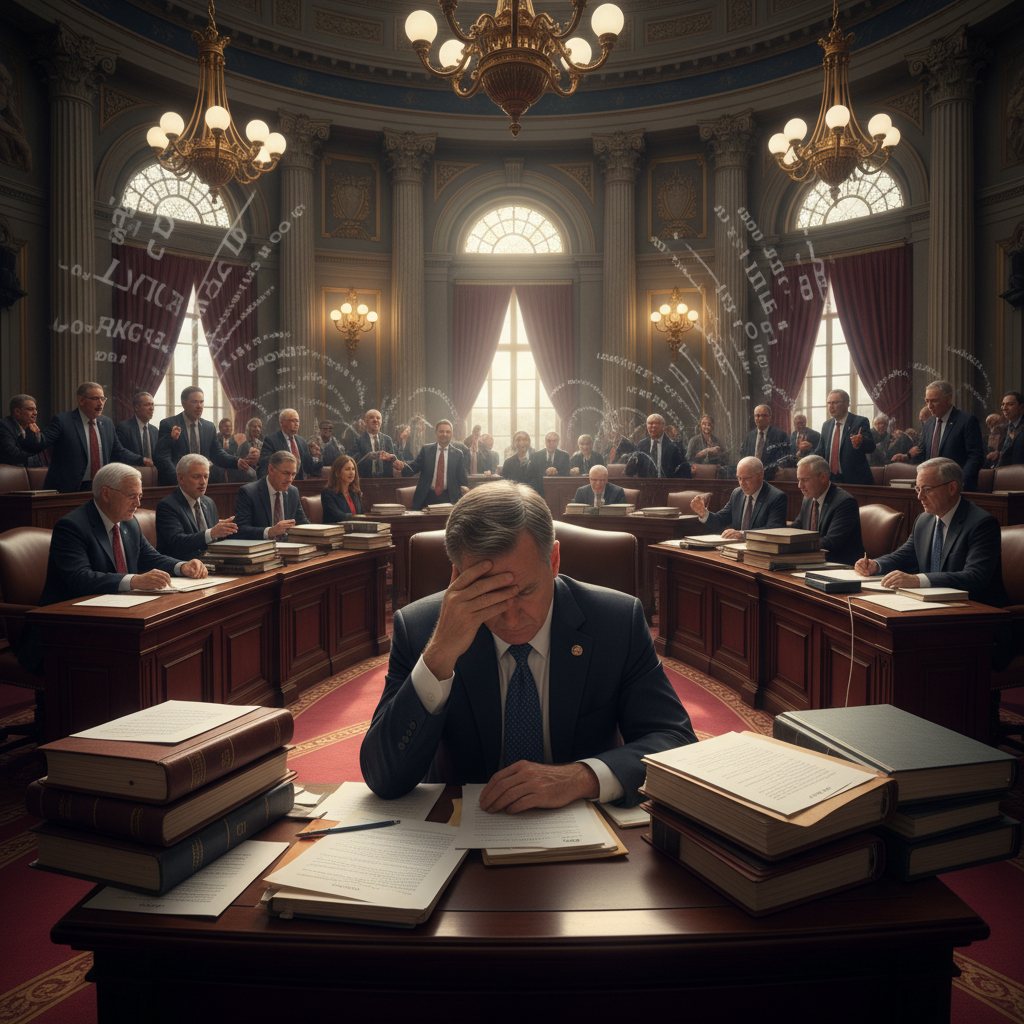
The U.S. Senate, while designed to represent all states equally, has become a bastion of inequality and obstructionism. This article dives into the Senate's flaws, from its inequitable structure to the gridlock enforced by the filibuster, urging a critical reevaluation of its role in American democracy.
Talking Points:
In the grand amphitheater of American governance, the U.S. Senate stands as a curious contradiction. A chamber teeming with the promise of representation, yet riddled with practices that suppress it—like the filibuster, a vestige of a bygone era that has mutated into a weapon for obstruction. Who knew that the very bodies meant to advocate for us often stall the most critical conversations?
How did we end up here?
The Senate’s history is a testament to compromise, but that groundwork came at the expense of equality, reinforcing a political construct that increasingly looks like it’s designed to protect the few rather than serve the many.
Talking Points:
Let’s rewind to 1787, where Constitution Convention debates got as heated as a high-stakes poker game. The Connecticut Compromise birthed the Senate. Each state, regardless of population, received two senators. Sure, it sounded fair on paper, but this arrangement sowed seeds of political inequality.
Fast-forward to today: a handful of states control a significant portion of Senate votes. Think about it—how often do you hear legislative debates focusing primarily on the needs of Wyoming, rather than California? This glaring imbalance signals a problem, skewing representation further away from a genuinely democratic process and fostering what feels more like minority rule. The resulting institutional inertia brews resentment and cynicism among the populace as they perceive the Senate as a self-serving entity rather than a platform for progress.
Talking Points:
Unequal representation doesn’t just seem unfair; it is unfair. Citizens live in states where one senator can represent as few as 580,000 people, while another represents nearly 40 million. How does that make sense? This disparity fosters a deep distrust in the democratic process. Politicians cater to the whims of those with power, neglecting the broader population’s needs.
Why should citizens in populous states shoulder the burdens of legislation passed by smaller states with vastly different priorities? The Senate’s current structure assiduously protects privilege, stymying the voices of those who would advocate for sweeping reforms.
Talking Points:
If you thought the Senate suffered from woes regarding representation, the filibuster is the icing on the cake of obstructionism. It demands a supermajority of 60 votes to close debate—an insatiable hunger for consensus that often doesn’t exist. So, when the Senate slows down to a crawl not because of careful consideration, but pure stall tactics—rest assured, the filibuster plays its part.
The uptick in filibuster usage is alarming. In 2019 alone, there were nearly 100 occurrences, each representing the minority’s privilege to derail important national discussions. If you’ve ever felt frustrated during a lengthy discussion over what seemed like trivial matters, multiply that by ten amid critical legislative needs. The frustrations stem from a system that caters more to a selected few rather than the urgency of the times.
Talking Points:
Ever been stuck in traffic and thought, “Where the heck is everyone going?” Now imagine being behind the wheel of the U.S. Senate amidst converging crises, only to find everyone has hit the brakes. That’s the reality of legislative gridlock. With the obstruction stemming from a reliance on the filibuster and fierce partisanship, the Senate has transformed from an arena of collaboration to a battlefield of stalled initiatives.
Major issues remain untouched while politicians squabble. Climate change? Healthcare? Please. The gears of change spin slowly, if at all. Let’s be frank, without a commitment to progress, we’re flirting with disaster and a civic culture that views its representatives as incapable or unwilling to act in our interest. This leads to an erosion of trust that takes generations to build.
Talking Points:
Just when you thought the political climate couldn’t grow more heated, welcome to the fever pitch of polarization. It’s like watching two toddlers fight over a toy—the bag of legislation continues to rot as they neglect the common good. The Senate’s structure invites a refusal to compromise, intensifying party lines into more rigid postures.
It’s about time we unpacked what this political identity means. Each party operates with a fierce loyalty that often borders on irrational. This trend pushes away moderates and encourages extremes—fanning the flames of dissent rather than addressing pressing national issues.
Talking Points:
So, what’s the solution? Some suggest reforming outdated practices like the filibuster. I mean, let’s be real—do we need a system that encourages inaction over dynamism? Legislative reform proposals range from eliminating or modifying the filibuster to implementing term limits. After all, who doesn’t love fresh ideas?
We’re witnessing a surge in activism as citizens hold their elected officials accountable, demanding changes that reflect the populace, not the privileged few. Social movements have popped up, igniting conversations about what true representation looks like and how to reclaim the House of the People. It’s an encouraging sign that perhaps the winds of change are blowing.
Talking Points:
In a nutshell, the Senate, often hailed as a bastion of democracy, harbors several flaws that point to a deeper systemic rot. The inadequacy of representation, paired with tools that favor minority obstruction, contributes to a cycle of distrust that jeopardizes the very foundation of our democracy.
As engaged citizens, it’s our prerogative to challenge the status quo, advocating for reforms that align with our shared values. Let’s not just sit back and watch as the institution falters; let’s push for a Senate that genuinely represents us all and upholds accountability as its core tenet. Share your thoughts or experiences in the comments below. Let’s have a conversation!
Q1: Why was the Senate structured to favor small states?
A: The Senate was designed during the Constitutional Convention to ensure that smaller states retained influence against populous states, which led to the compromise that gives each state two senators.
Q2: How does the filibuster work in the Senate?
A: The filibuster allows a minority of senators to prolong debate on a bill, effectively blocking it unless a supermajority of 60 votes is reached to invoke cloture and close the debate.
Q3: What are the potential reforms for the Senate?
A: Proposals include eliminating the filibuster, redistributing Senate seats based on population, term limits for senators, and promoting greater transparency in voting practices.
Q4: How does legislative gridlock affect everyday Americans?
A: Legislative gridlock stifles urgent policy-making, preventing Congress from addressing critical issues such as healthcare and climate change, thus impacting the daily lives of every citizen.
Q5: How can citizens influence Senate reforms?
A: Citizen engagement through voting, activism, and grassroots organizing is crucial. By voicing demands and participating in the political process, voters can push for significant reforms in how the Senate functions.