






Newsletter Subscribe
Join thousands of readers who get our Sunday Briefing: one email, five essential stories, zero fluff. Subscribe NOW!

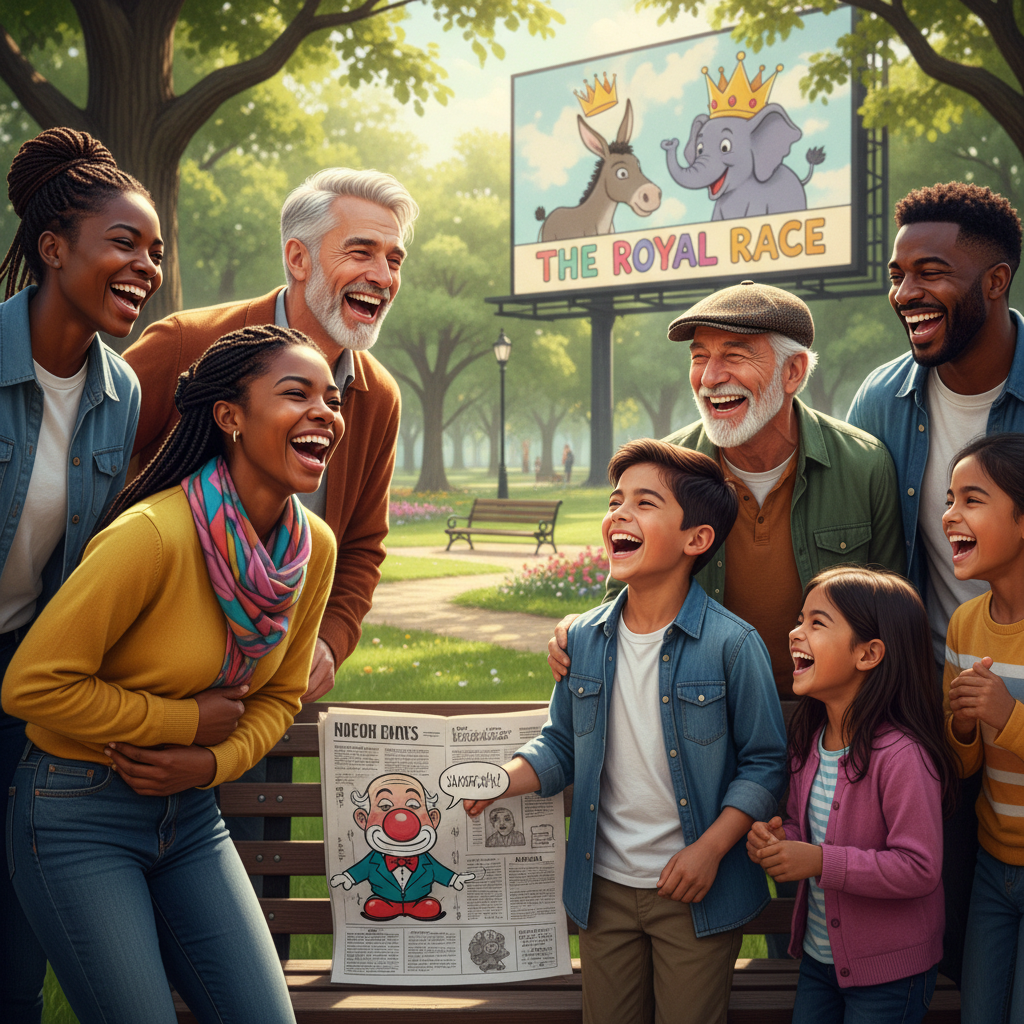
Discover how political humor influences civic engagement, education, and public opinion while also exploring the ethical dilemma of misinformation in satire. This article delves into its evolution, significant impacts on social discourse, and future directions in a polarized world.
Political humor often serves as a strange little lens through which we catch glimpses of society’s absurdities. I remember the first time I stumbled across a late-night show host riffing on a political scandal—genuine laughter escaped me, but the more profound joy was realizing I’d just learned something about the issue at hand. It’s funny how our digital age has led us to rely on political satire as a conduit for critical thought and engagement. In today’s environment, where straightforward political discourse often feels muddled, humor emerges as a powerful player on the stage of civic participation.
Talking Points:
Political humor isn’t just a source of giggles; it’s a catalyst for critical reflection. It helps to simplify complex political issues, making them more accessible. Think about it: when someone cracks a joke about a policy decision, does it not resonate deeper than a dry textbook analysis? A well-timed skit can highlight the absurdity of a situation in ways that traditional media simply can’t. Let’s face it: who knew telling a joke about tax reform could spark an interest in public policy?
Furthermore, political satire has a knack for slipping under the radar of dismissal. It promotes political engagement by prompting viewers to think more critically about the issues at hand. With a good punchline, we’re caught in the middle of serious discourse presented in a light and humorous format. It’s an approachable way to discuss topics that might otherwise be avoided.
Talking Points:
Once upon a time, political humor was largely confined to late-night television. While we still see comedy favorites like Jon Stewart or John Oliver, social media has drastically reshaped the landscape. Now, platforms like Twitter and TikTok are where these jokes go viral, reaching audiences far beyond the standard cable channel viewership. It’s unfiltered, immediate, and sometimes merely 280 characters long.
Social media not only democratizes the spread of such humor but reshapes how audiences interact with it. We no longer passively watch; we engage, share, and remix jokes, turning them into commentary that can ripple across algorithms. The immediacy of memes means they can become an integral part of political discourse, changing how political narratives are shaped.
Talking Points:
It’s telling that research indicates political satire doesn’t just entertain; it can also enhance political knowledge. Remember that study where they interviewed college students about their consumption of conservative satire? Funny enough, those who consumed it showed a noticeable bump in their political efficacy. Who would’ve thought?
The catch is not simply about laughing but engaging with the material. Political humor can push individuals to seek out more information, participate in discussions, and even vote. It’s this cyclic relationship where humor fuels knowledge and knowledge fuels action.
Talking Points:
But all this fun doesn’t come without its risks. Sometimes humor can veer dangerously close to the land of misinformation. Jokes can lift the veil but can also mislead audiences into thinking they have a grasp on issues when they’ve only scratched the surface.
Additionally, one must consider the echo chamber effect. Political humor often caters to specific ideological groups, reinforcing existing biases rather than challenging them. So, while we’re all chuckling, are we missing out on a fuller understanding of the complexities involved in political issues?
Talking Points:
Let’s throw a spotlight on some real-world applications. Look back at the recent elections; the role of humor in shaping public opinion about candidates is glaringly apparent. For example, think of how satirical portrayals become a reference point for political identity. They simplify complex narratives around candidates and drive voters’ perceptions, often influencing their choices.
Remember those campaign ads that parodied candidates? They turned contentious debates into absurdity, making them accessible. That kind of political humor has a significant impact beyond just a laugh or two; they convert complex policy discussions into entertaining soundbites, paving the way for deeper discussions.
Talking Points:
However, let’s not kid ourselves—the dark side exists. Political satire can polarize; think of the way specific narratives play out in jokes—those who laugh tend to lean one way, while others might scoff dismissively. This can deepen societal divides, pushing people further into their respective ideological corners. An innocent chuckle could solidify their stance more than they realize.
Moreover, as we indulge in laughter, critical consumption must come into play. The challenge is to spot biases entangled in the humor and not let it cloud our understanding. Engaging critically with humor rather than accepting it at face value is imperative.
Talking Points:
The landscape is changing. Moving forward, how will political humor evolve in response to deepening divisions? There’s a chance for satire to adapt, becoming even more inclusive and educating rather than merely entertaining.
As we navigate through this polarized space, consider how we consume and share political humor. This could mean looking for pieces that challenge rather than simply affirm our biases.
Political humor has a unique role in shaping the aspects of civic engagement, promoting conversations, and making our public life more engaging. The value of laughter should never be underestimated. It isn’t just a release; it acts as a mirror reflecting our societal absurdities.
As you engage with political content, consider what humor you gravitate toward. Challenge yourself to seek out pieces that provoke thought rather than simply amusement. Because, at the end of the day, political humor is more than just chuckles; it can illuminate, educate, and invite discourse in a way few other mediums can.
What are your thoughts on political humor? Share your experiences or favorite examples in the comments below!
Q: How does political humor affect public opinion?
A: Political humor can shape public opinion by simplifying complex topics and making them easily digestible, often leading viewers to develop stronger beliefs or alter their perceptions of political figures.
Q: Is all political satire harmful?
A: Not all political satire is harmful, but some can reinforce biases and provide a skewed understanding of issues. The key is critical engagement with the material.
Q: Can exposure to political comedy really increase civic participation?
A: Yes, studies show that exposure to political comedy can enhance political knowledge and encourage individuals to become more active in civic matters, leading to greater public involvement.
Q: How can one critically engage with political humor?
A: To engage critically, examine not just the humor but the underlying message, considering how it aligns with or challenges your beliefs.
Q: What’s the future of political humor?
A: Political humor is likely to evolve further with the changing landscapes of media consumption, potentially becoming a more inclusive tool for social commentary that challenges conventional political narratives.